National Diet Library of Japan: Complete History, Collections, Services, Architecture, and Importance
Introduction
The National Diet Library (NDL) is Japan’s national library and one of the country’s most important institutions for preserving, organizing, and providing access to knowledge. Located primarily in Tokyo and Kyoto, the library serves the National Diet of Japan, researchers, government officials, academics, students, and the general public. Its mission extends far beyond the traditional role of a library because it functions as a national center for collecting and preserving Japan’s published intellectual heritage.
The National Diet Library was established in 1948, following the creation of Japan’s postwar constitutional system. Its development was influenced by both Japanese library traditions and international ideas about democratic access to information. The institution was designed to support the work of the National Diet while also helping citizens and researchers access a vast range of documentary resources.
Over the decades, the National Diet Library has developed enormous collections covering Japanese books, newspapers, magazines, government publications, maps, manuscripts, photographs, recordings, digital resources, and many other forms of information. Its collections document Japan’s political, social, economic, scientific, literary, and cultural development across centuries.
Today, the National Diet Library is particularly important because the nature of information has changed dramatically. Modern libraries must preserve not only printed books but also websites, electronic publications, digital documents, historical materials, and other forms of born-digital information. The NDL has therefore become an important participant in Japan’s digital preservation efforts.
This article explores the history, mission, collections, buildings, services, digital resources, research functions, cultural importance, and future of the National Diet Library.
What Is the National Diet Library?
The National Diet Library of Japan is the national library of Japan. Its Japanese name is Kokuritsu Kokkai Toshokan, commonly abbreviated as NDL.
The institution has two closely connected roles.
First, it is a library for the National Diet, Japan’s national legislature. Members of the House of Representatives and House of Councillors can use its research and information services when working on legislation, policy, and parliamentary activities.
Second, it serves as Japan’s national library, preserving and making available an extensive record of the nation’s published and documentary heritage.
This combination makes the NDL different from an ordinary public library or university library. Its responsibilities are national in scope.
The library collects materials through Japan’s legal deposit system. Under this system, publishers and other organizations are required to submit copies of publications to the National Diet Library. This allows the institution to preserve a comprehensive record of Japanese publishing.
The library also collects foreign publications that are relevant to Japan, Japanese studies, international affairs, law, politics, economics, and other research areas.
History of the National Diet Library
Origins Before 1948
Although the National Diet Library itself was established after World War II, its roots can be traced to earlier Japanese parliamentary and library institutions.
Japan had developed various forms of libraries and documentary collections before the modern national library system emerged. Government offices, universities, temples, scholars, and private organizations preserved books and manuscripts.
The development of Japan’s modern parliamentary system during the late nineteenth and early twentieth centuries also created a need for specialized information services.
After the establishment of the Imperial Diet in 1890, parliamentary libraries and related collections developed to support legislative work.
These earlier institutions eventually contributed collections, experience, and organizational traditions to the postwar National Diet Library.
Establishment in 1948
The National Diet Library officially began operations in 1948.
Its creation was closely associated with Japan’s new postwar political system and the Constitution of Japan, which came into force in 1947.
The idea was that a democratic legislature needed reliable access to information. Members of parliament would require historical documents, laws, statistics, economic information, scientific research, and international materials when considering legislation.
The library was therefore established as an institution capable of supporting informed legislative work.
At the same time, its responsibilities were broader than simply serving lawmakers. The NDL was intended to become a national center for knowledge and documentary preservation.
The Postwar Development of the Library
The decades following its establishment were a period of rapid growth.
Japan experienced major economic, technological, and social changes during the second half of the twentieth century. Publishing expanded, universities grew, scientific research increased, and the volume of newspapers, magazines, books, reports, and other documents increased dramatically.
The National Diet Library had to develop systems capable of collecting, cataloging, storing, preserving, and providing access to this growing information.
Its collections expanded far beyond traditional books.
They came to include:
- Books
- Newspapers
- Magazines
- Government documents
- Parliamentary publications
- Maps
- Manuscripts
- Photographs
- Microforms
- Audio recordings
- Video materials
- Scientific and technical documents
- Foreign publications
- Digital materials
The library also developed specialized research services for the National Diet and researchers.
The National Diet Library and Japan’s Constitution
The National Diet Library has a close relationship with Japan’s constitutional system.
Japan’s Constitution established the Diet as the country’s highest organ of state power and sole law-making body. Legislators require extensive information when debating laws and public policy.
A national legislative library therefore provides an important information infrastructure.
Researchers at the library can investigate subjects such as:
- Japanese law
- International law
- Economics
- Public finance
- Social policy
- International relations
- Science and technology
- Education
- Public administration
- History
- Demography
- Environmental policy
The purpose is not to make political decisions for legislators. Instead, the library provides information and research resources that can support parliamentary work.
This distinction is important because libraries are information institutions. Their value comes from preserving and organizing knowledge and making it accessible.
Main Locations of the National Diet Library
The National Diet Library operates through several important facilities.
The best-known facilities are associated with:
- Tokyo
- Kyoto
- Kansai
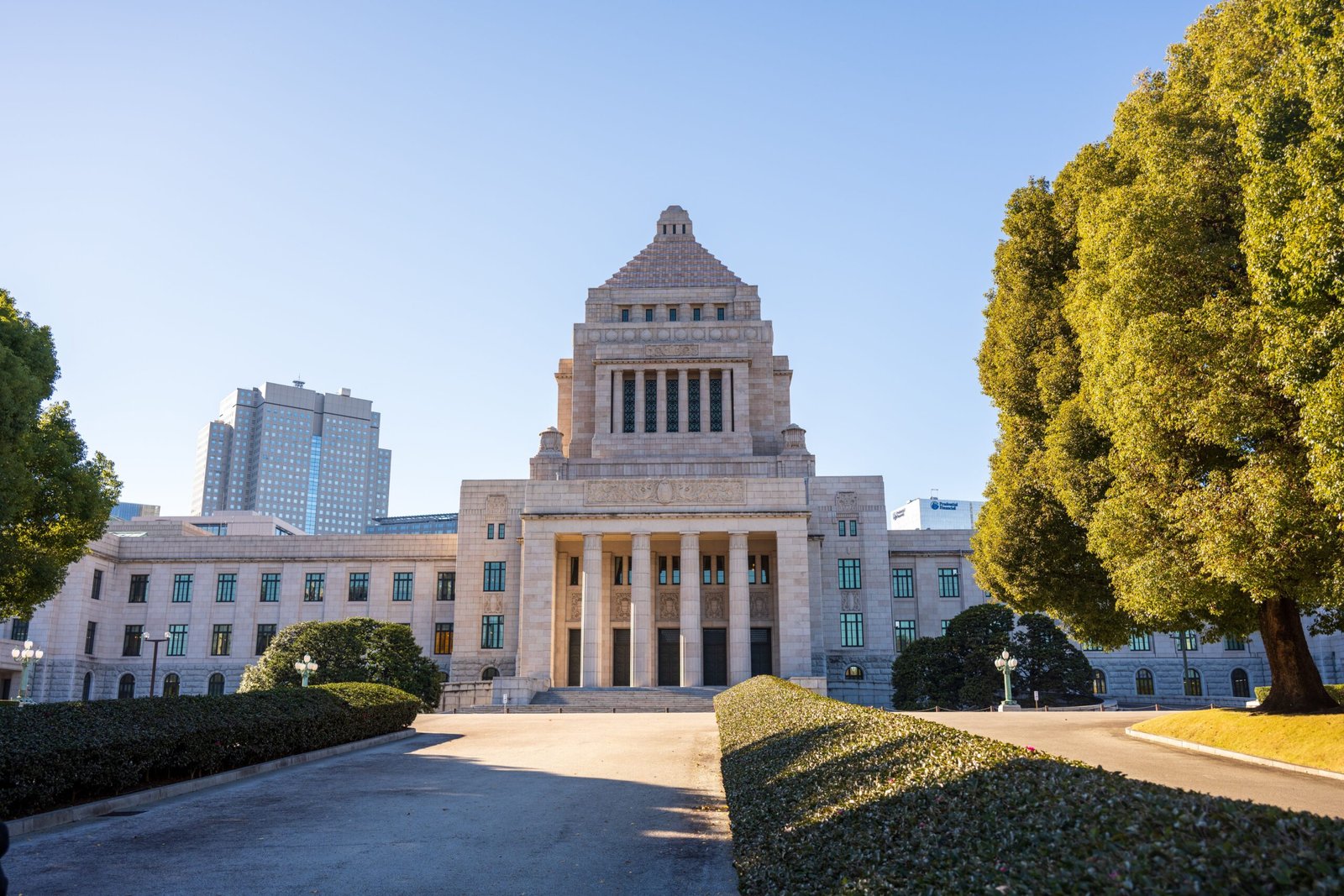
The central library complex is located in Tokyo near the National Diet.
Another major facility is the Kansai-kan of the National Diet Library, located in Kyoto Prefecture.
The library also operates specialized facilities and services supporting different types of collections and users.
The Tokyo Main Library
The Tokyo facilities are closely connected to Japan’s National Diet.
The main library complex is located in the Nagatacho area of Tokyo, near the Japanese parliament.
Its location reflects its primary historical role as a legislative library.
Researchers visiting the Tokyo facilities can access extensive collections and specialized services.
The Tokyo site also contains important historical and modern research materials.
The Kansai-kan of the National Diet Library
The Kansai-kan is one of the most important modern facilities of the National Diet Library.
It opened in 2002 in the Kansai Science City area of Kyoto Prefecture.
The Kansai-kan was developed partly to address the increasing space and technological requirements of a modern national library.
Its functions include:
- Large-scale collection storage
- Research services
- Digital information services
- Interlibrary cooperation
- Electronic resource access
- Preservation activities
- User services
The building also represents the transformation of the traditional library into a modern information center.
Kyoto and Japan’s Cultural Heritage
The location of major National Diet Library facilities in the Kyoto region is especially significant because Kyoto has been one of Japan’s most important cultural and intellectual centers for centuries.
Kyoto contains numerous historic temples, archives, universities, museums, and cultural institutions.
The Kansai-kan therefore operates within a region that has a particularly rich documentary and cultural heritage.
Its location also supports cooperation with universities and research institutions in the Kansai region.
The National Diet Library’s Mission
The mission of the National Diet Library can broadly be understood through several major responsibilities.
Supporting the National Diet
One of its most important responsibilities is providing research and information services to members of the National Diet.
Preserving Japan’s Publications
The library collects and preserves Japanese publications for future generations.
Supporting Research
Researchers from universities, government institutions, and other organizations can use its resources.
Providing Public Access
The library provides a variety of services allowing members of the public to access information and digital materials.
Preserving Historical Documents
The NDL plays an important role in protecting materials that document Japanese history.
Developing Digital Libraries
The institution increasingly provides access to digitized and born-digital resources.
The Legal Deposit System
One of the most important foundations of the National Diet Library is Japan’s legal deposit system.
Legal deposit means that publishers and other organizations are required to provide copies of certain publications to the national library.
This system is extremely valuable because it allows the NDL to build a comprehensive national collection.
Instead of relying entirely on purchases or donations, the library receives publications through a legal framework.
The system covers many types of published material.
These may include:
- Books
- Periodicals
- Newspapers
- Government publications
- Maps
- Musical publications
- Other published documents
Digital publishing has created new challenges for legal deposit systems around the world. The National Diet Library has therefore developed additional systems for electronic publications and online materials.
Why Legal Deposit Matters
Without legal deposit, many publications could disappear.
A book might go out of print. A magazine might stop publishing. A newspaper edition might become difficult to find. A small publisher might cease operations.
When copies are preserved by a national library, future researchers can still study these materials.
This makes the National Diet Library a form of national memory.
The library does not merely store books. It preserves evidence of how Japanese society has developed.
The Collections of the National Diet Library
The NDL holds enormous collections covering a wide range of subjects.
Its collections include both modern and historical materials.
Books
Books form one of the central components of the collection.
They cover literature, history, science, medicine, law, economics, education, philosophy, politics, technology, and many other disciplines.
Japanese books form the core of the national collection, while foreign books support research in international subjects and Japanese studies.
Newspapers
Newspapers are especially valuable historical sources.
The NDL preserves newspapers that document:
- Political developments
- Wars
- Elections
- Natural disasters
- Economic changes
- Social movements
- Cultural trends
- Major public events
Historical newspapers allow researchers to examine how events were reported at particular moments.
Magazines and Periodicals
The library also preserves large numbers of magazines and periodicals.
These sources can provide valuable evidence about changing Japanese society.
Researchers can use magazines to study:
- Fashion
- Popular culture
- Technology
- Business
- Education
- Literature
- Entertainment
- Social attitudes
- Advertising
Periodicals can sometimes reveal everyday life more effectively than official government documents.
Government Publications
Government documents form another major part of the collection.
These materials can include:
- Laws
- Statistical reports
- Policy documents
- Parliamentary publications
- Administrative reports
- Government research
- Official records
Such documents are particularly valuable to researchers studying public administration and Japanese political history.
Parliamentary Materials
Because the library serves the National Diet, it maintains important parliamentary materials.
These may include records and publications related to legislative proceedings.
Researchers can use parliamentary materials to examine how laws developed and how political debates changed over time.
Maps
Maps are another important category.
Historical maps can help researchers understand how Japanese cities, transportation networks, administrative boundaries, and landscapes changed.
Maps can be valuable sources for:
- Historical geography
- Urban studies
- Military history
- Transportation history
- Environmental research
- Regional studies
Rare Books and Historical Materials
The National Diet Library also preserves historical and rare materials.
Japan has a long written tradition extending back many centuries.
Historical collections can include old books, manuscripts, prints, maps, and other documentary materials.
Some materials are particularly valuable because they survive in only a limited number of copies.
Preserving these resources requires specialized environmental conditions and conservation techniques.
Japanese Literature
The NDL has extensive resources for studying Japanese literature.
Researchers can investigate classical literature as well as modern novels, poetry, criticism, children’s literature, and popular writing.
The collections support research into major periods of Japanese literary history.
They also preserve works by many writers who contributed to Japanese culture.
Science and Technology Collections
The National Diet Library is not limited to humanities.
It also provides resources for science and technology research.
Its collections cover fields such as:
- Engineering
- Medicine
- Computer science
- Environmental science
- Agriculture
- Energy
- Manufacturing
- Telecommunications
Scientific and technical publications are important for both historical research and contemporary policy research.
Foreign Language Collections
The NDL also collects publications from outside Japan.
Foreign-language materials support research into international relations, foreign law, economics, politics, history, and other subjects.
They are especially important for Japanese researchers studying other countries.
The library also supports international cooperation with libraries and research institutions abroad.
Digital Transformation
One of the biggest developments in the National Diet Library’s history has been the transition from physical collections toward digital access.
Traditional libraries required users to visit buildings.
Digital libraries can allow researchers to discover information from almost anywhere.
The NDL has invested heavily in digitization and online information systems.
Its digital activities include:
- Digitizing historical books
- Creating searchable databases
- Providing digital images
- Preserving electronic publications
- Archiving websites
- Supporting online research
The National Diet Library Digital Collections
The National Diet Library Digital Collections are among the most important online resources associated with the institution.
They provide access to digitized materials from the library’s collections.
Depending on copyright status and access restrictions, users may be able to view materials online.
Digitization is particularly valuable for fragile historical materials.
Instead of repeatedly handling the original item, researchers can often study a digital copy.
Digitization and Preservation
Digitization serves two major purposes.
First, it improves access.
Researchers can discover and sometimes view materials without traveling to Tokyo or Kyoto.
Second, it contributes to preservation.
Digital copies can reduce the need to handle fragile originals.
However, digitization itself does not completely solve preservation problems. Digital files require continuing management, storage, format migration, metadata, and technical infrastructure.
The NDL therefore faces both traditional conservation challenges and modern digital preservation challenges.
Website Archiving
The modern internet has become an important part of Japan’s documentary heritage.
Websites contain information that may disappear when organizations redesign websites, close projects, or discontinue online services.
The National Diet Library has developed web archiving activities to preserve selected Japanese websites and online information.
This work is increasingly important for future historians.
A researcher decades from now may want to understand how Japanese institutions communicated with the public during a particular period.
Archived websites can provide evidence that would otherwise disappear.
Digital Archives and Research
The library’s digital resources can be useful for many types of research.
A historian might use digitized newspapers.
A literature researcher might study old editions of Japanese novels.
A political scientist might examine parliamentary documents.
A genealogist or local historian might investigate historical publications.
A student might search digitized reference materials for a school or university project.
This demonstrates how national libraries increasingly function as digital research platforms.
Services for Researchers
The National Diet Library provides specialized services for researchers.
Users may access:
- Reference assistance
- Bibliographic databases
- Research materials
- Digital collections
- Reading rooms
- Interlibrary services
- Specialized research resources
Researchers often use the library alongside university libraries, archives, museums, and other information institutions.
Reference Services
Reference services are an important part of professional library work.
Library specialists can help users identify sources, understand collections, and locate relevant materials.
This can be particularly valuable when researching difficult historical questions.
For example, a researcher might know that a particular government report existed but not know its exact title.
Professional bibliographic tools and reference services can help locate it.
National Diet Research Services
One of the distinctive features of the National Diet Library is its specialized research support for members of parliament.
Research specialists study subjects relevant to legislation and public policy.
Areas may include:
- Domestic policy
- International affairs
- Economics
- Law
- Science and technology
- Social welfare
- Education
- Agriculture
- Environment
These services help provide legislators with information needed for parliamentary activities.
The Research and Legislative Reference Bureau
The National Diet Library includes a specialized research organization often known as the Research and Legislative Reference Bureau.
It conducts research and prepares materials related to legislative issues.
Its work can include:
- Research reports
- Legislative information
- Comparative studies
- Background research
- Legal research
- Policy analysis
This makes the NDL different from many national libraries whose responsibilities focus primarily on collecting and preserving publications.
Libraries for the Public
Although its legislative role is important, the National Diet Library is also an important resource for the general public.
Members of the public may use eligible collections and services according to library rules.
Researchers, students, writers, journalists, historians, and other users can benefit from its resources.
Some materials are available online, while others may require physical access.
Interlibrary Cooperation
National libraries rarely operate alone.
The National Diet Library works with libraries and information institutions across Japan.
Cooperation can involve:
- Bibliographic information
- Interlibrary services
- Preservation
- Digitization
- Professional training
- Information standards
- Resource sharing
Such cooperation helps strengthen Japan’s overall library infrastructure.
Role in Japanese Education
The National Diet Library can support education at many levels.
University students may use its digital resources for research.
Graduate students may use specialized collections.
Teachers may use historical materials.
Researchers may consult primary sources.
Although it is not primarily a school library, its resources contribute to Japanese education and scholarship.
Importance for Historians
Historians depend heavily on documentary evidence.
The National Diet Library provides a huge amount of evidence about Japan’s past.
Researchers can examine:
- Old newspapers
- Books
- Government reports
- Maps
- Parliamentary records
- Photographs
- Statistical publications
- Periodicals
By comparing different sources, historians can build more detailed interpretations of historical events.
Importance for Genealogy and Local History
People researching family or local history may also find national library resources useful.
Historical newspapers, maps, directories, local publications, and government documents can provide clues about people and communities.
Genealogical research often requires consulting multiple institutions, and the NDL can be one important source among them.
Preservation of Japanese Cultural Heritage
The National Diet Library has a major responsibility for cultural preservation.
Cultural heritage is not limited to temples, castles, paintings, and archaeological sites.
Books and documents are also cultural heritage.
A novel can reveal social values.
A newspaper can document a major event.
A map can reveal how a city changed.
A government report can show how the state responded to a social problem.
A magazine can demonstrate popular culture.
Together, these materials form an enormous documentary record of Japan.
Conservation of Physical Materials
Old books and documents can deteriorate due to:
- Humidity
- Temperature
- Light
- Dust
- Insects
- Acidity
- Repeated handling
- Natural aging
National libraries therefore require specialized preservation systems.
Conservation specialists may repair damaged materials, stabilize fragile objects, and prepare materials for long-term storage.
The Architecture of the National Diet Library
The architecture of the NDL reflects its role as a major national institution.
The Tokyo complex is associated with Japan’s parliamentary district.
The Kansai-kan represents a more modern approach to library architecture and technology.
Large national libraries require more than reading rooms.
They need:
- Storage areas
- Preservation facilities
- Digital infrastructure
- Research spaces
- Offices
- Delivery systems
- Security systems
- Environmental controls
The architecture therefore supports both public access and behind-the-scenes preservation work.
The Challenge of Storage
A national library’s greatest physical challenge is often space.
Every year, new publications appear.
If a national library attempts to preserve a comprehensive national publishing record, its collections continuously grow.
This creates demand for:
- High-density storage
- Off-site storage
- Automated systems
- Digital preservation
- Collection management
The Kansai-kan was partly developed to address the need for additional large-scale storage and modern services.
National Diet Library and Technology
Technology has transformed the library’s work.
Modern library operations depend on computer systems for:
- Cataloging
- Search
- Digitization
- Metadata
- Digital storage
- Preservation
- User authentication
- Online delivery
The library must also ensure that digital systems remain reliable over long periods.
A national library may need to preserve digital material for decades or even centuries.
That requires careful planning because computer hardware and file formats change rapidly.
Metadata and Cataloging
A huge collection is useful only if users can discover its contents.
Cataloging and metadata therefore play a central role.
Metadata provides information such as:
- Title
- Author
- Publisher
- Publication date
- Subject
- Language
- Format
- Identifier
Good metadata allows researchers to search large collections efficiently.
The National Diet Library has developed extensive bibliographic systems to support discovery of Japanese publications.
National Bibliography
One of the traditional responsibilities of a national library is maintaining a record of national publishing.
Bibliographic records help document what has been published in Japan.
This information is valuable to:
- Libraries
- Researchers
- Publishers
- Universities
- Booksellers
- Historians
A national bibliography is essentially a structured record of a country’s publishing output.
International Cooperation
The National Diet Library also participates in international library cooperation.
National libraries around the world face similar challenges:
- Digital preservation
- Copyright
- Collection growth
- Rare-book conservation
- Metadata standards
- Electronic publishing
- Online access
International cooperation allows institutions to share knowledge and develop common approaches.
The NDL and Copyright
Copyright is an important issue for digital libraries.
A library may own a physical book but that does not necessarily mean it can freely distribute a digital copy online.
Copyright laws determine how works can be reproduced and made available.
As a result, the National Diet Library must balance two important goals:
- Preserving and providing access to knowledge
- Respecting the rights of copyright holders
This is particularly important for modern digitization projects.
Access Restrictions
Not every item in the National Diet Library can necessarily be viewed online.
Restrictions can result from:
- Copyright
- Privacy
- Physical condition
- Collection policies
- Legal requirements
- Security considerations
Some materials may be available only inside designated library facilities.
Others may be available through affiliated libraries or authorized services.
The National Diet Library and Newspapers
Newspapers deserve special attention because they provide a daily record of Japanese society.
A newspaper archive can reveal changes in:
- Politics
- Business
- Technology
- Culture
- Sports
- Education
- International relations
Researchers can compare newspapers from different years to see how language, priorities, and public discussion changed.
Children’s and Young People’s Materials
National library collections also preserve publications created for younger readers.
Children’s books are important cultural documents because they reveal how societies educate and entertain younger generations.
Researchers can study historical children’s literature to understand changing ideas about:
- Childhood
- Education
- Morality
- Family
- Society
- Imagination
Popular Culture Collections
Popular culture is also part of national heritage.
Magazines, comics, entertainment publications, posters, and other materials can document Japan’s cultural development.
Japan is internationally recognized for cultural forms such as manga and anime, and documentary collections can help researchers investigate their historical development.
Manga and the National Collection
Manga is an important component of modern Japanese culture.
Libraries and archives face particular challenges when preserving manga because publications can be numerous, serialized, and distributed through many formats.
National-level collection efforts help ensure that important examples of Japanese manga culture remain available for future researchers.
Historical Research Through Library Collections
Imagine a researcher studying Japanese society during the twentieth century.
The researcher might combine:
- Newspaper articles
- Government statistics
- Political publications
- Books
- Magazines
- Maps
- Photographs
No single source provides the entire story.
The strength of a national library is that it brings together enormous quantities of documentary evidence.
Researchers can compare sources and develop a more complete understanding.
The National Diet Library in the Digital Age
The traditional image of a library is a quiet building filled with shelves.
The modern National Diet Library is much more than that.
It is simultaneously:
- A physical library
- A research institution
- A national archive of publications
- A digital library
- A legislative information center
- A preservation organization
- A bibliographic institution
This combination makes the NDL particularly important in the twenty-first century.
Challenges Facing the National Diet Library
Despite its importance, the library faces many challenges.
Rapid Growth of Information
The amount of information published every year continues to increase.
Digital Preservation
Digital information can become inaccessible when technologies become obsolete.
Copyright
Copyright restrictions can limit online availability.
Limited Resources
Preserving enormous collections requires staff, technology, buildings, and funding.
Physical Preservation
Historical documents continue to age.
Web Preservation
The internet changes rapidly, making long-term archiving difficult.
The Future of the National Diet Library
The future of the National Diet Library will likely involve continued development of digital services.
Potential areas of continuing importance include:
- Digitization
- Artificial intelligence-assisted search
- Better metadata
- Digital preservation
- Online research services
- Electronic legal deposit
- Web archiving
- International cooperation
Artificial intelligence and machine learning may also assist with tasks such as optical character recognition, text search, classification, and discovery.
However, technological tools must be used carefully, especially when dealing with historical texts and imperfect source materials.
Artificial Intelligence and Historical Collections
AI could transform the way researchers use large collections.
For example, optical character recognition can convert scanned documents into searchable text.
Machine learning can help identify names, places, dates, and subjects.
Researchers could eventually search millions of historical pages more efficiently than before.
However, AI-generated transcriptions can contain errors.
Human verification remains important when precise historical evidence is required.
Why the National Diet Library Matters
The National Diet Library matters because a country needs institutions capable of preserving its documentary memory.
Japan has experienced enormous changes over the last several centuries.
Political systems have changed.
Cities have expanded.
Industries have developed.
Technology has transformed everyday life.
Cultural traditions have evolved.
The written record of these changes is preserved through books, newspapers, maps, government publications, photographs, and other materials.
The NDL helps ensure that these records remain available.
National Memory and Future Generations
A national library serves people who do not yet exist.
A book published today might not seem important.
But fifty or one hundred years later, researchers may find it valuable.
A local newspaper may provide evidence about everyday life.
A government report may help explain an economic transformation.
A magazine may document changing fashion.
A map may reveal urban development.
Preserving these materials means future generations can investigate their past using primary evidence.
National Diet Library vs. Public Library
The National Diet Library differs from a typical public library.
A public library primarily focuses on serving the local community.
A national library has a national preservation mission.
A public library may focus on:
- Community services
- Children’s programs
- Popular books
- Local information
- General reading
The National Diet Library focuses more heavily on:
- National publishing
- Research
- Preservation
- Legislative information
- Bibliography
- Historical collections
- Digital archives
Both types of libraries are important, but their missions are different.
National Diet Library vs. University Library
University libraries primarily support students, faculty, and academic research at their institutions.
The National Diet Library has a broader national mission.
Its collections are not designed around the curriculum of one university.
Instead, they cover a wide range of subjects and documentary materials relevant to Japan as a whole.
Researchers may use both university libraries and the NDL depending on their projects.
A Gateway to Japanese Knowledge
For researchers interested in Japan, the National Diet Library can serve as a gateway to a huge body of knowledge.
Its collections can help users investigate:
- Japanese history
- Japanese literature
- Japanese politics
- Japanese law
- Japanese economics
- Japanese society
- Japanese science
- Japanese technology
- Japanese culture
This makes the institution important not only within Japan but also for international scholarship.
Tips for Using National Diet Library Resources
Researchers planning to use the NDL should begin by identifying their research question.
Then they can:
- Search the library catalog.
- Identify relevant books and periodicals.
- Check digital availability.
- Investigate related bibliographic records.
- Examine historical collections.
- Consult reference services when necessary.
- Verify information against primary sources.
- Record publication details carefully.
For historical research, researchers should avoid relying on a single source.
Comparing multiple documents usually produces a stronger understanding.
Importance for Writers and Journalists
Writers and journalists can also benefit from national library collections.
A writer researching historical fiction might need old newspapers and maps.
A journalist investigating a long-term social issue might consult government reports and statistics.
An author writing a biography might use books, periodicals, and historical documents.
The library can therefore support both academic and professional research.
Importance for International Researchers
International scholars studying Japan may find the National Diet Library particularly valuable.
Japan has extensive Japanese-language documentary resources that may not be available in foreign libraries.
Digital collections can make some materials easier to discover internationally.
Foreign researchers can also benefit from the library’s bibliographic information even when they cannot access every original document remotely.
Preservation of Japanese Publishing History
The publishing history of a country is an important part of its cultural history.
Japan has one of the world’s long-established publishing traditions.
From historical woodblock-printed works to modern digital publications, the nature of Japanese publishing has changed significantly.
The National Diet Library helps document these transformations.
Its collection therefore represents not just individual books but the broader history of Japanese communication.
The Library as a Symbol of Knowledge
Libraries are often symbols of learning and intellectual freedom.
The National Diet Library represents this idea at a national level.
Its mission is based on the principle that reliable information is essential for research, public understanding, cultural preservation, and democratic institutions.
The library does not simply provide books.
It provides infrastructure for discovering evidence.
Conclusion
The National Diet Library of Japan is one of the country’s most important cultural, research, and information institutions. Established in 1948, it was created to support the National Diet while developing a comprehensive national library capable of preserving Japan’s documentary heritage.
Its collections cover an extraordinary range of materials, including books, newspapers, magazines, government publications, maps, manuscripts, photographs, scientific documents, historical works, and digital resources.
Through the legal deposit system, the library preserves a substantial record of Japanese publishing. Through digitization and online services, it is increasingly making historical and modern resources easier to discover and use.
The NDL also plays a specialized role in supporting legislative research. Its research services provide information on law, economics, international affairs, science, technology, social policy, and many other subjects relevant to parliamentary activities.
Its responsibilities extend into the future. Preserving printed books remains important, but modern national libraries must also preserve websites, electronic publications, digital documents, and other forms of information that can disappear quickly.
The National Diet Library therefore represents much more than a collection of books. It is a national memory institution, a research center, a legislative information resource, a preservation organization, and an increasingly important digital library.
For students, historians, researchers, writers, journalists, policymakers, and anyone interested in Japan’s intellectual and cultural history, the National Diet Library provides an extraordinary window into the country’s past and present.
As information continues to grow and technology continues to change, the role of the National Diet Library will remain important: to collect, preserve, organize, and provide access to knowledge so that Japan’s documentary heritage can remain available for generations to come.