National Library of Brazil: Complete History, Collections, Architecture, and Cultural Importance
Introduction
The National Library of Brazil, officially known as the Biblioteca Nacional (BN), is one of the most important cultural institutions in Brazil and one of the major libraries of the Portuguese-speaking world. Located in Rio de Janeiro, the library preserves an enormous collection of books, manuscripts, newspapers, maps, photographs, prints, drawings, musical scores, and other historical documents.
The institution has a history closely connected with the political and cultural development of Brazil. Its origins are associated with the transfer of the Portuguese royal court to Rio de Janeiro in the early nineteenth century. Over the following two centuries, the library developed from a royal collection into a national institution responsible for preserving Brazil’s documentary heritage.
Today, the National Library serves researchers, students, historians, writers, educators, artists, and the general public. Its collections provide valuable evidence about Brazilian history, Portuguese history, Latin American culture, literature, science, politics, religion, geography, music, and society.
The library is particularly important because many historical documents that might otherwise have been lost have been preserved within its collections. Through conservation, cataloguing, research services, exhibitions, publications, and digitization programs, the institution continues to make its heritage available to future generations.
This article explores the history, architecture, collections, services, digital resources, cultural significance, and future of the National Library of Brazil.
1. What Is the National Library of Brazil?
The National Library of Brazil is the country’s principal library for the preservation of documentary and bibliographic heritage. In Portuguese, it is called Biblioteca Nacional, often abbreviated as BN.
It is located in Rio de Janeiro, a city that played a central role in Brazil’s political and cultural history. The library is situated in the historic center of Rio de Janeiro, close to important cultural institutions, theaters, museums, and government buildings.
Unlike an ordinary public library whose primary purpose is to provide recreational and educational reading materials, a national library has a much broader heritage mission. The National Library of Brazil collects, preserves, organizes, studies, and provides access to materials that document the history and culture of Brazil.
Its responsibilities include preserving rare books, manuscripts, newspapers, maps, photographs, engravings, musical works, and other forms of documentary heritage.
The institution also has an important role in Brazil’s national bibliography. Through the legal deposit system, publications produced in Brazil can become part of the country’s national documentary record.
2. The Historical Origins of the Library
The history of the National Library of Brazil begins before the institution officially became a Brazilian national library.
A major event occurred in the early nineteenth century when the Portuguese royal court moved from Lisbon to Rio de Janeiro in response to the Napoleonic invasion of Portugal.
The arrival of the Portuguese court transformed Rio de Janeiro. The city became the center of the Portuguese monarchy and experienced major institutional, political, economic, and cultural changes.
Among the royal possessions brought to Brazil were books and other cultural materials.
These collections became the foundation of what would eventually develop into the National Library of Brazil.
The creation of such a collection was significant because books were extremely valuable cultural objects during the period. Large libraries represented education, political authority, religious knowledge, scientific learning, literature, and intellectual prestige.
The royal library therefore became an important cultural institution in Rio de Janeiro.
3. The Portuguese Royal Library and Its Transfer to Brazil
The Portuguese Royal Library had accumulated books and manuscripts over many years. When the Portuguese royal family moved to Brazil, substantial portions of the collection were transferred across the Atlantic.
The movement of such a large collection was not a simple operation.
Books had to be packed, transported, catalogued, and eventually organized in their new location. The process occurred over a period of time, and additional materials arrived later.
The presence of the royal library in Rio de Janeiro was historically important because it helped establish the city as a major center of intellectual and cultural activity.
The collection contained works dealing with literature, religion, philosophy, history, science, geography, law, politics, and many other subjects.
After Brazil’s independence, the collection remained in the country and gradually became part of the national cultural heritage.
4. Brazil’s Independence and the Development of the National Library
Brazil declared independence from Portugal in 1822.
The political transformation changed the status and meaning of many institutions that had originated under Portuguese rule.
The royal library gradually became associated with the new Brazilian state and its cultural identity.
During the nineteenth century, the library developed as a repository of printed and documentary materials.
Its mission increasingly extended beyond preserving books brought from Portugal. It became important for documenting Brazilian publishing and Brazilian intellectual life.
As Brazil expanded economically and socially, its literary and publishing culture also grew.
Newspapers, magazines, books, political pamphlets, scientific publications, maps, and other materials were produced in increasing numbers.
The National Library became an important institution for preserving this growing documentary record.
5. The Legal Deposit System
One of the most important responsibilities associated with national libraries is the preservation of publications through legal deposit.
Legal deposit means that publishers or printers are required under national law to provide copies of certain publications to a designated national institution.
In Brazil, this system has played an important role in the development of the National Library’s collections.
Through legal deposit, the library can preserve publications produced in Brazil and create a long-term record of the nation’s publishing history.
This is particularly important because individual publications can disappear from bookstores and private collections over time.
A legal-deposit system helps ensure that copies remain available for researchers and future generations.
The resulting collection can include books, periodicals, newspapers, maps, music publications, and other printed materials.
6. The Library in Rio de Janeiro
Rio de Janeiro has been central to the history of the National Library.
For much of Brazil’s history, Rio was the political and cultural center of the country.
The city became home to numerous institutions, including museums, academies, theaters, archives, educational organizations, and libraries.
The National Library became part of this larger cultural environment.
Its location in the historic center of Rio de Janeiro is particularly significant.
Visitors to the area can find other major cultural landmarks nearby, making the library part of an important cultural district.
The physical location also reflects the institution’s historical importance.
7. The Current Building
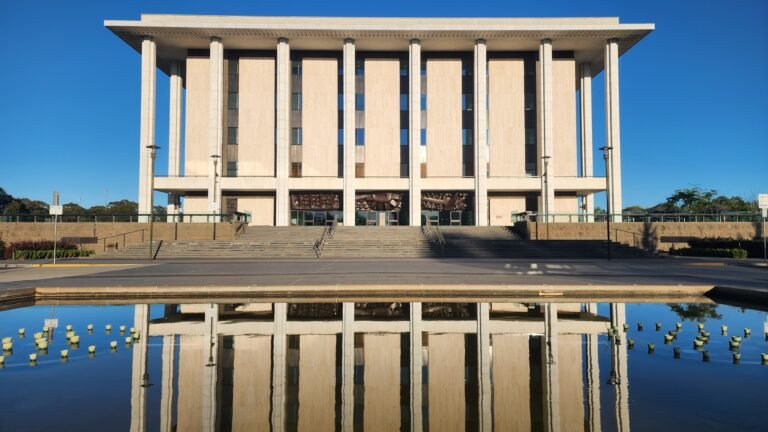
The National Library’s present building is one of the notable historic structures in central Rio de Janeiro.
The building reflects the architectural traditions associated with major public cultural institutions of the early twentieth century.
Its design emphasizes monumentality, symmetry, decoration, and the importance of knowledge.
The structure was constructed during a period when Brazil was investing in public institutions and developing its urban infrastructure.
The building was intended not simply as a storage facility for books but as an important national cultural monument.
Its architectural appearance communicates the idea that books, historical documents, education, and culture are matters of national importance.
8. Architecture of the National Library
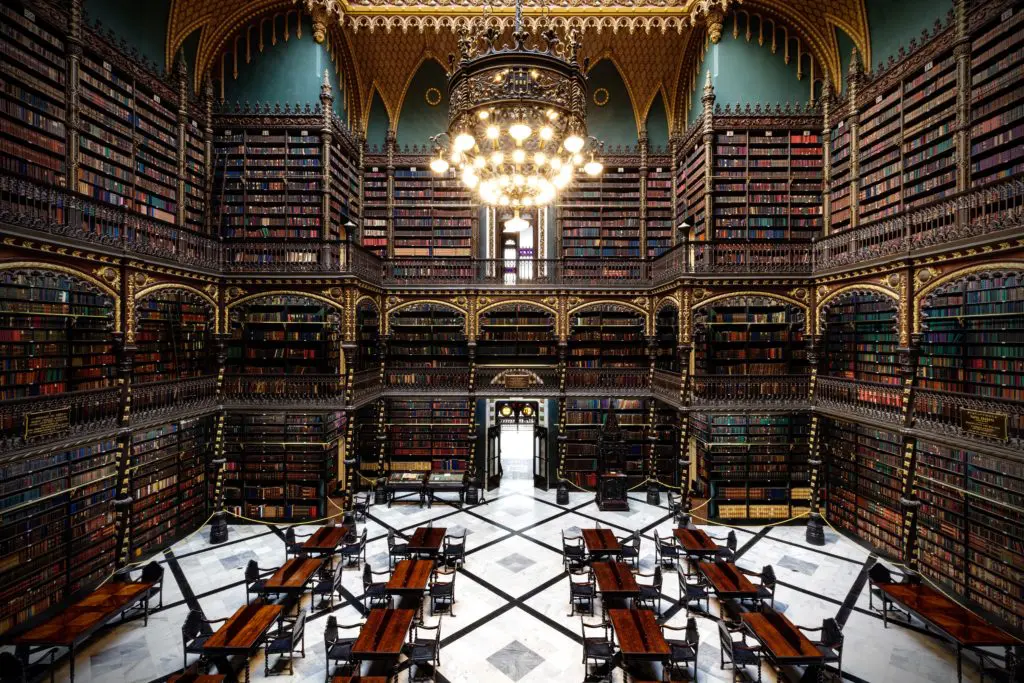
The architecture of the National Library is one of its most recognizable features.
The building combines functional library requirements with monumental architectural design.
Large reading areas, storage facilities, offices, and research spaces were incorporated into the building.
Decorative elements contribute to the institution’s identity as a cultural monument.
The architecture also reflects the intellectual ideals of the period in which it was built.
Public libraries were increasingly viewed as institutions that could promote education, citizenship, scientific knowledge, and cultural development.
The National Library’s architecture reflects these ideas.
9. A National Cultural Monument
The National Library building is important not only because it contains valuable collections but also because the building itself is part of Brazil’s cultural heritage.
Its architecture contributes to the historical character of central Rio de Janeiro.
The library therefore has two interconnected forms of heritage.
The first is the documentary heritage stored inside the building.
The second is the architectural and historical heritage represented by the building itself.
Protecting both is an important part of the institution’s mission.
10. The Size and Diversity of Its Collections
The National Library has developed one of the largest and most diverse documentary collections in Latin America.
Its holdings include many different types of materials.
Among the important categories are:
- Books
- Manuscripts
- Newspapers
- Periodicals
- Maps
- Photographs
- Prints
- Drawings
- Musical scores
- Rare publications
- Historical documents
- Political pamphlets
- Iconographic materials
- Audiovisual and other specialized resources
The diversity of the collections makes the library useful to researchers from many academic disciplines.
A historian may study government documents or newspapers.
A literary scholar may examine rare editions and manuscripts.
A musicologist may investigate musical scores.
A geographer may research historical maps.
An art historian may study engravings, drawings, and photographs.
11. Rare Books
Rare books are among the most important materials preserved by the National Library.
Rare books provide evidence about the history of printing, publishing, education, religion, science, politics, and literature.
Some books are valuable because of their age.
Others are significant because of their rarity, provenance, illustrations, authorship, printing history, or connection with important historical events.
Researchers can use rare books to understand how knowledge was produced and circulated in earlier periods.
Preserving such materials requires careful environmental control and specialized conservation techniques.
12. Manuscripts
Manuscripts provide another major source of historical information.
Unlike printed books, manuscripts can preserve handwritten notes, letters, drafts, diaries, official documents, and other unique records.
They can reveal information about the personal and professional lives of writers, politicians, intellectuals, artists, scientists, and other historical figures.
Manuscript collections are especially valuable because each handwritten document may represent a unique historical object.
Researchers can examine handwriting, annotations, revisions, signatures, paper, ink, and other physical characteristics.
13. Newspapers and Periodicals
Newspapers are among the most useful resources for studying modern history.
The National Library’s newspaper and periodical collections provide evidence about Brazilian society across different historical periods.
Newspapers can reveal:
- Political debates
- Elections
- Social movements
- Economic changes
- International events
- Cultural developments
- Sporting events
- Advertisements
- Public opinion
- Local events
Historical newspapers are particularly valuable because they capture events close to the time when they occurred.
Researchers can compare newspaper coverage from different publications to investigate how events were interpreted.
14. Historical Maps
The library also preserves important cartographic materials.
Historical maps can reveal how geographical knowledge changed over time.
They can document changing political boundaries, settlements, transportation networks, coastlines, territorial claims, and urban development.
Maps are useful to historians, geographers, architects, environmental researchers, and urban planners.
A map can sometimes provide information that is not available in a conventional written document.
For example, historical maps can show how a city looked before modern development.
15. Photographic Collections
Photography is another important part of the National Library’s documentary heritage.
Historical photographs can provide visual evidence of Brazilian cities, people, architecture, events, landscapes, and everyday life.
Photographs are especially useful for studying urban history.
Rio de Janeiro, for example, underwent enormous changes during the nineteenth and twentieth centuries.
Photographic records help researchers understand how streets, buildings, neighborhoods, transportation systems, and public spaces changed.
Photography also preserves aspects of social history that may not have been extensively documented in written sources.
16. Prints, Engravings, and Drawings
The National Library holds important iconographic materials, including prints, engravings, and drawings.
These materials are valuable for the study of art, architecture, social history, and visual culture.
Historical engravings can show how cities and landscapes were represented before modern photography became widespread.
Drawings may document buildings, people, scientific observations, or artistic projects.
Such materials provide researchers with alternative perspectives on historical periods.
17. Musical Collections
Music is another important area of the library’s heritage.
Musical scores and other music-related documents can help researchers study Brazilian musical traditions and the history of music publishing.
Brazil has produced major musical traditions, including classical, popular, regional, and folk forms.
Preserving musical documentation helps ensure that the development of these traditions can be studied by future generations.
Music collections may also provide evidence about composers, performers, publishers, and cultural institutions.
18. Brazilian Literature and the National Library
The National Library has a particularly important relationship with Brazilian literature.
Brazil has produced many influential writers and literary movements.
The library’s collections help preserve editions of Brazilian literary works and materials connected with writers and literary history.
Researchers can investigate the development of Brazilian literature through:
- First editions
- Later editions
- Manuscripts
- Letters
- Literary journals
- Newspaper reviews
- Illustrations
- Publishing records
Such materials can help scholars understand not only individual authors but also broader literary movements.
19. Portuguese Heritage
The library’s history also gives it an important connection to Portuguese cultural heritage.
Because its origins are linked to the Portuguese royal library, its collections contain significant materials related to Portugal and the Portuguese-speaking world.
This makes the institution important for researchers studying the history of Portugal, Brazil, and relations between Portuguese-speaking societies.
The collections can help scholars explore colonial history, language development, literature, religion, geography, and political relationships.
20. The Library and Brazilian History
The National Library can be viewed as a documentary record of Brazil’s historical development.
Its collections span periods before and after independence.
They can support research into:
- Colonial Brazil
- Portuguese administration
- Brazilian independence
- The Empire of Brazil
- The Brazilian Republic
- Industrialization
- Immigration
- Urbanization
- Social movements
- Cultural history
- Modern politics
- Scientific development
Because different types of sources are preserved together, researchers can study historical events from multiple perspectives.
21. Importance for Researchers
Researchers are among the library’s most important users.
Academic researchers may visit the institution to consult rare materials that are unavailable elsewhere.
Historical research often depends on primary sources.
Primary sources include documents created during the period being studied.
Examples include letters, newspapers, manuscripts, government publications, maps, photographs, and original editions of books.
The National Library provides access to many such resources.
22. Importance for Students
The library also has value for students.
University students studying history, literature, journalism, art, music, sociology, political science, geography, architecture, and other subjects may benefit from its resources.
Students can learn how to conduct research using primary sources.
This is an important academic skill because historical research should not rely exclusively on modern summaries.
Examining original documents allows students to develop a deeper understanding of evidence and interpretation.
23. Digital Transformation
Modern national libraries increasingly use digital technology to preserve and provide access to their collections.
The National Library of Brazil has developed digital initiatives that allow users to explore historical materials online.
Digitization can provide several benefits.
First, it improves access.
A researcher who cannot travel to Rio de Janeiro may still be able to view digitized documents.
Second, digitization can reduce unnecessary handling of fragile originals.
Third, digital collections can be searched and organized using modern information technologies.
24. The Brazilian Digital Library
One of the important developments associated with the National Library is the creation of digital resources for accessing historical documents.
Digital library platforms allow users to explore collections such as newspapers, photographs, manuscripts, maps, books, and other materials.
Digital access has changed the relationship between national libraries and international researchers.
A scholar in Europe, Asia, Africa, North America, or another part of Latin America can potentially study Brazilian documentary heritage without physically traveling to Brazil for every research question.
25. Digitization and Preservation
Digitization is not a replacement for physical preservation.
Instead, the two activities support each other.
Original documents still need to be conserved because digital copies cannot fully reproduce the physical characteristics of historical objects.
However, high-quality digital images can provide researchers with access to textual and visual information without requiring frequent handling of fragile originals.
Digitization can therefore reduce physical wear while expanding public access.
26. Conservation of Historical Materials
Preserving old documents is a complex scientific and technical task.
Paper can deteriorate because of:
- Humidity
- Heat
- Light
- Insects
- Mold
- Chemical instability
- Improper handling
- Air pollution
- Aging materials
Libraries must carefully control storage conditions.
Conservation specialists may repair damaged documents, stabilize fragile materials, clean objects, and develop appropriate storage systems.
The goal is to slow deterioration while preserving as much of the original material as possible.
27. Restoration Work
Restoration can involve highly specialized procedures.
A damaged historical book may require careful treatment of its paper, binding, pages, illustrations, and other components.
The conservator must consider the historical value of the object.
Modern materials should not unnecessarily alter the original appearance.
The work therefore combines scientific knowledge, technical skill, historical research, and ethical principles.
28. Cataloguing and Organization
A collection as large as the National Library’s cannot be useful unless its materials are properly organized.
Cataloguing allows researchers to identify what materials exist and where they can be found.
Bibliographic records can contain information about:
- Author
- Title
- Publication date
- Publisher
- Subject
- Language
- Edition
- Physical characteristics
- Collection
- Location
Modern digital catalogues make it easier for researchers to discover relevant resources.
29. The Library’s Role in National Bibliography
A national library has an important responsibility to document the publishing output of its country.
National bibliography helps create a record of publications produced within a particular nation.
For Brazil, this is particularly important because the country’s publishing industry produces a vast range of materials.
A national bibliographic record helps researchers, libraries, publishers, booksellers, and cultural institutions understand the country’s publishing history.
30. Cultural Exhibitions
Libraries are no longer limited to quiet reading rooms.
Modern national libraries often organize exhibitions that introduce important collections to wider audiences.
Exhibitions can focus on:
- Writers
- Historical events
- Artistic movements
- Maps
- Photography
- Music
- Rare books
- National celebrations
- Brazilian cultural heritage
Such exhibitions transform specialized collections into public cultural experiences.
31. Educational Activities
Cultural institutions have an important educational role.
The National Library can contribute to education through lectures, exhibitions, publications, research support, digital resources, and cultural programming.
These activities help connect documentary heritage with schools, universities, researchers, and the general public.
Education is important because preservation has little meaning if future generations do not understand why historical materials matter.
32. The Library as a Research Center
The National Library should not be viewed only as a storage facility.
It is also a center for research and cultural scholarship.
Its collections support studies in numerous disciplines.
A historian might investigate political newspapers.
A literature scholar might study an author’s first edition.
An art historian might examine engravings.
A music researcher might investigate historical scores.
An urban historian might use photographs and maps.
This interdisciplinary character is one of the institution’s greatest strengths.
33. Importance for Journalism
Journalists and media researchers can also benefit from historical newspaper collections.
Old newspapers can provide background information for stories involving historical events, public figures, cities, institutions, and cultural developments.
Researchers can compare contemporary reporting with modern interpretations.
Historical newspapers can also help journalists verify dates and understand the context behind events.
34. Importance for Genealogical Research
Historical collections can also be useful to people researching family history.
Newspapers, books, directories, photographs, and other documents may contain information about individuals and families.
Genealogical research often requires combining information from many different sources.
National libraries can provide valuable documentary evidence for such work.
Researchers should nevertheless verify personal information through multiple independent sources when possible.
35. The Library and Brazilian Identity
Libraries play an important role in the construction and preservation of national identity.
The National Library preserves materials created by different generations of Brazilians.
These documents reflect changing ideas about Brazil.
They show how people wrote about the country’s geography, society, politics, literature, culture, and future.
The library therefore provides a physical and digital connection between Brazil’s past and present.
36. A Window into Social History
Not all historical evidence comes from government documents or famous writers.
Ordinary publications can reveal how everyday people lived.
Advertisements can show consumer habits.
Newspapers can reveal popular concerns.
Magazines can illustrate fashion and entertainment.
Maps can show neighborhood development.
Photographs can document streets and public spaces.
These sources allow researchers to reconstruct aspects of everyday life.
37. The Library and Art History
The visual collections of the National Library are particularly valuable for art historians.
Prints, drawings, engravings, photographs, and illustrated publications can document artistic techniques and visual trends.
Researchers can study how artists represented Brazilian landscapes, cities, people, and historical events.
The materials can also reveal connections between Brazilian artists and international artistic movements.
38. The Library and Architecture
Architects and architectural historians can use historical photographs, maps, drawings, books, and newspapers to study buildings and urban development.
Rio de Janeiro has experienced major architectural transformations.
Historical documentary materials can help researchers compare earlier versions of buildings with their current forms.
This information is valuable for restoration, heritage management, and academic research.
39. International Importance
Although the National Library belongs to Brazil, its importance extends beyond national borders.
Brazil is one of the world’s largest Portuguese-speaking countries.
Its history is deeply connected with Portugal, Africa, Latin America, and other parts of the world.
Researchers studying the Portuguese-speaking world can therefore find important resources in Rio de Janeiro.
The institution also contributes to international cultural cooperation and scholarly research.
40. The National Library and UNESCO
The National Library’s collections have also been associated with international documentary heritage recognition.
Parts of its historical collections have been recognized within broader international heritage initiatives.
Such recognition reflects the importance of preserving documentary materials not only for one country but for global historical research.
Documentary heritage can provide evidence about events and cultural developments that affected multiple regions.
41. Challenges Facing the National Library
Like other major heritage institutions, the National Library faces ongoing challenges.
These may include:
- Preservation costs
- Climate control
- Digitization expenses
- Storage requirements
- Staff training
- Technological change
- Access management
- Conservation of fragile materials
- Cybersecurity for digital resources
- Long-term digital preservation
A national library must balance access with preservation.
The public wants to see and use historical materials, but excessive handling can damage fragile objects.
42. Climate and Preservation
Rio de Janeiro’s climate creates particular challenges for the preservation of paper and other sensitive materials.
Humidity and temperature must be carefully managed.
Poor environmental conditions can accelerate the deterioration of books and manuscripts.
Modern preservation therefore depends partly on building systems that maintain stable environmental conditions.
Conservation specialists must continually monitor collections and respond to risks.
43. Digital Preservation Challenges
Digitization creates new responsibilities.
Digital files can also become obsolete.
File formats change.
Storage technologies change.
Hardware becomes outdated.
Web platforms evolve.
For this reason, digital preservation requires long-term planning.
Institutions must maintain multiple copies, monitor file integrity, migrate materials when necessary, and preserve metadata.
The National Library’s future therefore depends on both physical conservation and digital preservation.
44. Access and Intellectual Property
National libraries must balance public access with copyright law.
Older works may be in the public domain and can often be made freely available.
More recent publications may still be protected by copyright.
Digital access therefore requires careful legal management.
Libraries must determine what can be displayed online, what can be reproduced, and what may require permission.
45. The Importance of Metadata
Metadata is essential for digital libraries.
A scanned document is much more useful when researchers can discover it through accurate information.
Metadata can identify:
- Author
- Date
- Subject
- Collection
- Language
- Geographic location
- Publication information
- Document type
Good metadata transforms a large collection of digital images into a searchable research resource.
46. The Role of Technology
Technology has changed nearly every part of library operations.
Modern technologies can assist with:
- Digital catalogues
- Scanning
- Optical character recognition
- Online databases
- Digital preservation
- Collection management
- Search systems
- Remote research
- Virtual exhibitions
Technology does not replace librarians and archivists.
Instead, it provides tools that allow specialists to manage and share collections more effectively.
47. Librarians and Specialized Staff
The National Library depends on professionals with different areas of expertise.
These may include:
- Librarians
- Archivists
- Conservators
- Historians
- Cataloguers
- Digitization specialists
- Information professionals
- IT specialists
- Cultural-program staff
- Researchers
Each group contributes to the preservation and accessibility of national heritage.
48. The Human Side of Preservation
Behind every digital catalogue and carefully preserved document are people who work to protect cultural heritage.
Preservation requires patience.
A fragile manuscript cannot simply be handled like a modern paperback.
A damaged photograph may require careful cleaning.
A rare book may need specialized storage.
A digitization project may require thousands of individual images to be processed and catalogued.
The work is often invisible to visitors, but it is essential.
49. The Library for Future Generations
The most important purpose of a national library is long-term preservation.
A book printed today may still be useful hundreds of years from now.
A newspaper describing a major event may become a primary historical source.
A photograph of a city street may become valuable evidence of urban history.
A handwritten letter may provide insights into the life of a historical figure.
Preserving such materials ensures that future generations can conduct research that is impossible to imagine today.
50. Why the National Library of Brazil Matters
The National Library of Brazil matters because it protects knowledge.
Its collections represent centuries of intellectual activity.
They document the development of Brazil from its colonial past through independence, empire, republic, modernization, and the contemporary period.
The library is also important because it connects physical heritage with digital access.
A historical manuscript stored in Rio can potentially become available to a researcher thousands of kilometers away through digitization.
51. Visiting the National Library
People interested in Brazilian history and culture may wish to visit the National Library in Rio de Janeiro.
Before planning a research visit, visitors should check the institution’s official information regarding opening hours, access requirements, research procedures, exhibitions, and available services because these can change.
Researchers interested in rare materials may need to follow specific consultation procedures.
Some collections require advance arrangements because of their fragile or specialized nature.
52. What Researchers Can Learn from the Library
Researchers can use the National Library to investigate questions such as:
- How did Brazilian literature develop?
- How did Rio de Janeiro change over time?
- How were political events reported?
- How did Brazilian publishing develop?
- How did maps of Brazil change?
- How did visual representations of Brazilian society evolve?
- How did music publishing develop?
- How did newspapers influence public discussion?
- How did Brazilian intellectual life change?
- How did Brazil’s relationship with Portugal develop?
The range of possible research topics is enormous.
53. National Library Compared with Ordinary Libraries
An ordinary public library generally focuses on providing current books and information to local communities.
A national library has a broader national heritage responsibility.
The National Library of Brazil is therefore not simply a large reading library.
Its responsibilities include preserving historical materials, documenting national publishing, supporting advanced research, and maintaining documentary heritage.
This difference explains why rare manuscripts and historical newspapers receive such careful treatment.
54. The Library’s Contribution to Scholarship
Academic scholarship depends on reliable evidence.
The National Library provides researchers with access to primary and secondary sources.
By preserving different types of documents together, the institution allows scholars to compare evidence.
For example, a historian might examine a political event using newspapers, government publications, photographs, maps, and personal correspondence.
Such interdisciplinary research can produce a more detailed understanding of the past.
55. Preserving Multiple Voices
Historical collections often contain different perspectives.
Different newspapers may report the same event differently.
Different writers may have opposing opinions.
Different communities may describe the same period in different ways.
A large national collection allows researchers to encounter these differences.
This is important because history is rarely represented by a single document.
56. The Importance of Original Documents
Digital copies are extremely useful, but original documents remain important.
The physical object can contain information that is difficult to reproduce digitally.
Paper quality, binding, handwriting, annotations, stamps, watermarks, and physical damage can all provide historical evidence.
Therefore, the National Library must continue to preserve original materials even as digital access expands.
57. The Future of the National Library
The future of the National Library will likely involve an increasing combination of traditional preservation and digital technology.
More collections can potentially be digitized.
Search systems can become more sophisticated.
Researchers can gain broader online access.
Digital exhibitions can reach international audiences.
At the same time, the institution must continue protecting physical collections.
The challenge is to combine accessibility with long-term preservation.
58. Artificial Intelligence and Digital Heritage
New technologies such as artificial intelligence may also influence the future of digital libraries.
AI-assisted tools can potentially help with tasks such as text recognition, document classification, metadata creation, handwriting analysis, and searching large collections.
However, automated systems require human oversight.
Historical documents can contain unusual spelling, damaged text, handwritten scripts, old terminology, and complex layouts.
Human specialists remain important for verifying accuracy and historical context.
59. The National Library in the Digital Age
The meaning of a library has changed dramatically in the digital age.
A library once depended primarily on physical shelves.
Today, a national library can also function as a digital gateway to historical knowledge.
Users may discover documents through online catalogues and digital collections before ever entering the physical building.
This combination of physical and digital access makes national libraries more important, not less.
60. Conclusion
The National Library of Brazil is one of Brazil’s most important cultural and documentary institutions.
Its history is closely connected with the arrival of the Portuguese royal court in Rio de Janeiro and the transfer of the royal library to Brazil. Over the centuries, the institution developed into a national library responsible for preserving an enormous range of materials documenting Brazil and the Portuguese-speaking world.
Its collections include books, manuscripts, newspapers, periodicals, maps, photographs, prints, drawings, musical materials, and many other forms of documentary heritage.
The library is valuable to historians, writers, students, journalists, artists, musicians, architects, genealogists, and researchers from many disciplines.
Its historic building is itself an important part of Rio de Janeiro’s cultural landscape, while the collections inside represent centuries of intellectual and cultural development.
Digitization has expanded the library’s reach, allowing more people to discover Brazilian documentary heritage from outside Rio de Janeiro and outside Brazil. At the same time, conservation remains essential because the original physical documents contain historical information that digital copies cannot completely replace.
The National Library of Brazil therefore represents much more than a collection of books. It is a memory institution, a research resource, a cultural center, an architectural landmark, and a guardian of national documentary heritage.
Its continuing mission is to ensure that the records of Brazil’s past remain available for the present and for future generations.
For anyone interested in Brazilian history, literature, culture, publishing, art, music, geography, or society, the National Library of Brazil provides an extraordinary window into the country’s documentary past.
As technology continues to transform the way people discover information, the library’s role will continue to evolve. Yet its fundamental purpose remains unchanged: to preserve knowledge, protect cultural heritage, support research, and connect generations through the documentary record of Brazil.
Frequently Asked Questions
1. What is the National Library of Brazil?
The National Library of Brazil, known in Portuguese as Biblioteca Nacional, is Brazil’s principal institution for preserving and providing access to the country’s bibliographic and documentary heritage.
2. Where is the National Library of Brazil located?
The National Library is located in Rio de Janeiro, Brazil, in the historic central area of the city.
3. When did the origins of the National Library begin?
Its origins are connected with the Portuguese Royal Library and the transfer of the Portuguese royal court and its collections to Rio de Janeiro in the early nineteenth century.
4. What does the National Library collect?
Its collections include books, manuscripts, newspapers, magazines, maps, photographs, prints, drawings, musical scores, and other historical documents.
5. Why is the National Library important?
It preserves Brazil’s documentary heritage and provides valuable resources for researchers studying Brazilian and Portuguese-speaking history and culture.
6. Can researchers use the National Library?
Yes. The institution provides research services and access to collections according to its rules and procedures. Researchers should check current requirements before visiting.
7. Does the National Library have digital collections?
Yes. The institution has developed digital resources that allow users to access and explore parts of its historical collections online.
8. What types of historical documents can be found there?
Researchers can find rare books, manuscripts, newspapers, maps, photographs, prints, drawings, music-related materials, and other documentary resources.
9. Is the National Library only important for Brazil?
No. Its collections are also important for studying Portugal, the Portuguese-speaking world, Latin America, and international connections involving Brazil.
10. Why is digitization important?
Digitization increases access to historical materials and can reduce the need to handle fragile originals while allowing researchers around the world to study digital copies.
Final Thoughts
The National Library of Brazil stands as a remarkable symbol of the country’s intellectual and cultural heritage. From its origins in the collections associated with the Portuguese monarchy to its modern role as a national research and preservation institution, it has accumulated an extraordinary documentary record.
Its books, manuscripts, newspapers, maps, photographs, musical materials, and other collections tell countless stories about Brazil and the wider Portuguese-speaking world.
The library’s greatest achievement is not simply the number of objects it preserves. Its deeper importance lies in ensuring that evidence of the past remains available to people who want to understand, study, and learn from it.
For Brazil, the National Library is a bridge between history and the future.