National Library of China: History, Collections, Architecture, Services, and Cultural Importance
National Library of China: History, Collections, Architecture, Services, and Cultural Importance
Introduction
The National Library of China (NLC) is one of the most important libraries in China and one of the major research libraries in the world. Located in Beijing, the library serves as a national center for books, documents, historical materials, research resources, and cultural preservation. Its collections represent thousands of years of Chinese civilization while also providing access to modern publications and international knowledge.
A national library is more than a building filled with books. It is an institution responsible for collecting, preserving, organizing, and providing access to a country’s documentary heritage. The National Library of China performs this role on a particularly large scale. Its holdings include ancient manuscripts, rare books, historical documents, maps, newspapers, journals, modern publications, digital resources, and materials related to Chinese culture.
The history of the National Library is closely connected with the development of modern Chinese education, scholarship, publishing, and cultural institutions. From its early beginnings in the late Qing period to its development into a modern digital library, the institution has experienced major changes alongside Chinese society.
Today, the National Library of China provides services to researchers, students, educators, writers, historians, librarians, and members of the general public. It also participates in international cooperation and contributes to the preservation and promotion of Chinese cultural heritage.
This article explores the history, collections, architecture, services, digital development, cultural importance, and future role of the National Library of China.
What Is the National Library of China?
The National Library of China is China’s national-level library and an important institution for preserving the country’s documentary heritage. It is located in Beijing, the capital of China.
The library is commonly abbreviated as NLC. Its Chinese name is 中国国家图书馆 (Zhōngguó Guójiā Túshūguǎn).
The institution serves several major functions. It acts as:
- A national library
- A major research library
- A center for Chinese bibliography
- A preservation institution
- A cultural and educational organization
- A provider of digital information
- A center for library science and professional cooperation
- A place for exhibitions and cultural activities
One of its most important responsibilities is the preservation of China’s documentary heritage. This includes materials that are valuable not only because of their information but also because of their historical, artistic, linguistic, and cultural significance.
A Brief History of the National Library of China
The Beginning of the Library
The origins of the National Library of China can be traced to the beginning of the twentieth century, when China was experiencing major political, educational, and cultural changes.
In the late Qing period, Chinese intellectuals and officials increasingly recognized the importance of modern educational and cultural institutions. Libraries were viewed as essential places for preserving knowledge and supporting education.
The institution that eventually became the National Library developed from these early efforts to create a modern national library.
Its establishment was connected with the broader modernization of China’s educational system. At the beginning of the twentieth century, Chinese society was experiencing increasing interaction with modern science, technology, education, and international scholarship.
The creation of a national library reflected the idea that a modern country needed a central institution dedicated to collecting and preserving knowledge.
The Imperial Library of Peking
One important stage in the institution’s history was the establishment of the Imperial Library of Peking.
The library was founded in the early twentieth century, during the final years of the Qing dynasty. It was created as a national-level institution for collecting books and important documents.
The institution officially opened to the public in the early Republican period.
Its early collections included important Chinese books and manuscripts. Many materials came from existing imperial collections, private libraries, educational institutions, and other sources.
The development of this collection created the foundation for what would eventually become one of China’s most significant research libraries.
Development During the Republican Period
Following the establishment of the Republic of China in 1912, the institution continued to develop.
It became increasingly important for scholars and researchers. During this period, the library expanded its collections and developed more systematic approaches to cataloging and preservation.
The institution was also influenced by changes in Chinese scholarship. Researchers became increasingly interested in history, archaeology, literature, philosophy, linguistics, science, and other academic disciplines.
The library’s role therefore expanded beyond simply storing books. It became an important center for research and intellectual activity.
The National Library After 1949
The establishment of the People’s Republic of China in 1949 brought significant institutional changes.
The library continued to develop as a major national cultural institution. Over subsequent decades, its collections expanded significantly.
China’s publishing industry grew rapidly, producing increasing numbers of books, journals, newspapers, and other documents. A national library had to develop systems for collecting and organizing this expanding documentary output.
The library also became increasingly important for academic research.
Researchers studying Chinese history, literature, philosophy, language, politics, science, and society could use its extensive collections.
The Modern Name: National Library of China
The institution has had several names throughout its history. In the twentieth century, it was known by names including the Beijing Library.
In 1998, the institution officially adopted the name National Library of China.
The name reflects its national responsibilities and its role as China’s central library institution.
The change also occurred during a period when China was rapidly developing information technology and modern library infrastructure.
The National Library’s Collections
One of the greatest strengths of the National Library of China is its enormous and diverse collection.
Its holdings cover many centuries and many areas of knowledge.
The collection includes:
- Books
- Manuscripts
- Ancient texts
- Newspapers
- Journals
- Maps
- Periodicals
- Government publications
- Academic publications
- Audio materials
- Visual materials
- Digital resources
- Rare books
- Historical documents
- Foreign-language publications
The library’s collections are particularly important for research into Chinese civilization.
Ancient Chinese Books
The National Library has extensive collections of ancient Chinese books.
Ancient Chinese texts provide evidence about the development of Chinese language, literature, philosophy, religion, science, government, education, and society.
Some historical books were produced through traditional woodblock printing, while others exist as manuscripts.
The preservation of these materials is extremely important because paper, ink, bindings, and other materials can deteriorate over time.
Special preservation methods are therefore required.
Rare Books
Rare books are among the most valuable materials held by the National Library.
A rare book can be important because of its age, historical importance, scarcity, printing technique, provenance, illustrations, or connection with an important historical period.
China has an exceptionally long history of printing and book production. The development of woodblock printing allowed texts to be reproduced on a large scale centuries before the modern printing press became common in Europe.
The library preserves examples of China’s long printing tradition.
Manuscripts
Manuscripts are another important part of the library’s collections.
Unlike printed books, manuscripts may preserve individual handwriting and provide evidence about how texts were created, copied, studied, and transmitted.
Historical manuscripts can contain information that does not appear in later printed editions.
They can therefore be extremely valuable to historians and scholars.
Historical Documents
The National Library preserves documents related to China’s political, social, economic, and cultural history.
Historical documents can help researchers understand:
- Government administration
- Education
- Religion
- Literature
- Science
- Technology
- Economic activity
- Social life
- International relations
- Local communities
These materials allow scholars to study history using original documentary evidence.
Newspapers and Periodicals
Newspapers and journals are essential historical sources.
The National Library collects a large range of periodicals and newspapers covering different periods.
Newspapers can help historians examine how events were reported at the time they occurred. Journals provide information about developments in academic disciplines, science, literature, politics, and culture.
Periodical collections are therefore important not only for contemporary readers but also for future generations of researchers.
Foreign-Language Collections
Although the National Library has a particularly strong focus on Chinese materials, its collections also include publications in foreign languages.
International publications support research in areas such as:
- Foreign literature
- International history
- Science
- Technology
- Social sciences
- International relations
- Language studies
- Comparative research
These collections help connect Chinese scholarship with global knowledge.
Maps and Geographic Materials
Maps are another valuable category of library material.
Historical maps can reveal how people understood geography during different periods.
They can show:
- Historical borders
- Cities
- Roads
- Rivers
- Mountains
- Administrative divisions
- Trade routes
- Geographic knowledge
For historians and geographers, historical maps can provide information that is difficult to obtain from ordinary written sources.
Digital Collections
The National Library has embraced digital technology as an important part of modern library services.
Digitization allows fragile historical materials to be converted into digital formats.
This provides several advantages.
First, researchers can access digital copies without repeatedly handling fragile originals.
Second, digital materials can potentially be accessed by users beyond Beijing.
Third, digitization helps protect cultural heritage by creating additional copies.
Digital libraries also make it possible to search large collections more efficiently.
The Digital Transformation of the Library
Modern libraries are changing rapidly because of the internet.
Traditional libraries primarily provided physical books and reading rooms. Modern national libraries increasingly provide digital databases, online catalogs, electronic publications, digitized manuscripts, research services, and virtual exhibitions.
The National Library of China has participated in this transformation.
Digital technology has become especially important for preserving China’s enormous documentary heritage.
A digital image cannot completely replace an original historical artifact, but it can make the information contained within that artifact more accessible.
Library Architecture
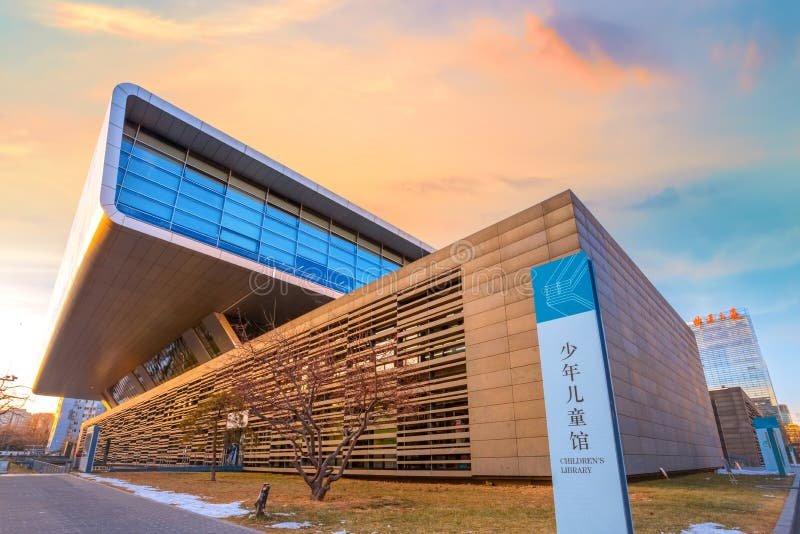
The National Library of China is also notable for its architecture.
Its modern facilities combine traditional cultural ideas with contemporary library design.
A large national library must accommodate enormous collections while also providing spaces for readers, researchers, exhibitions, lectures, technology, conservation, and administrative work.
Library architecture therefore has to solve complex problems.
It needs to provide:
- Storage
- Reading rooms
- Research areas
- Exhibition spaces
- Conservation laboratories
- Digital facilities
- Public spaces
- Staff facilities
- Educational areas
The design of a major library can also communicate cultural values.
The National Library in Beijing
The National Library is located in Beijing, one of China’s most historically important cities.
Beijing is home to many major cultural and educational institutions. The city’s role as China’s political and cultural center makes it a natural location for a national library.
The library’s location also places it within a wider network of universities, museums, research organizations, archives, and cultural institutions.
This environment supports cooperation between different fields of scholarship.
Reading Rooms
Reading rooms are among the most important spaces in any major research library.
The National Library provides reading environments for different kinds of users and research needs.
Readers may use the library to study:
- Books
- Newspapers
- Journals
- Historical materials
- Academic publications
- Digital resources
Quiet study areas are particularly important for researchers who may spend many hours examining documents.
Services for Researchers
Researchers are one of the major groups served by the National Library.
Historians, university professors, graduate students, writers, linguists, scientists, and other researchers may use the library’s collections.
Research services can include:
- Catalog access
- Reference assistance
- Collection consultation
- Digital resources
- Bibliographic information
- Special collections
- Research spaces
For advanced research, access to primary sources can be especially valuable.
Services for Students
Students can also benefit from national library resources.
University students may use libraries for research papers, theses, projects, and academic study.
A national library can provide access to materials that may not be available in a student’s local library.
Students studying Chinese history, literature, language, art, philosophy, politics, science, or other fields may find specialized materials particularly useful.
Educational Programs
Libraries today are not only repositories of information.
They also serve educational functions.
The National Library participates in cultural and educational activities that can introduce people to books, historical documents, reading, research, and Chinese cultural heritage.
Educational activities may include:
- Lectures
- Exhibitions
- Cultural events
- Research programs
- Public education
- Library science activities
Such programs help connect the library’s collections with wider society.
Exhibitions
Exhibitions provide an opportunity for the public to see important materials.
Rare books, manuscripts, historical documents, maps, and other objects can be presented in carefully designed exhibitions.
Exhibitions can tell stories about different periods of Chinese history.
They may focus on:
- Ancient literature
- Chinese printing
- Historical figures
- Traditional culture
- Science and technology
- Important historical events
- International cultural exchange
Exhibitions also help demonstrate why documentary heritage deserves preservation.
Preservation and Conservation
Preserving old documents is one of the most challenging responsibilities of a national library.
Paper and ink are vulnerable to:
- Humidity
- Heat
- Light
- Dust
- Insects
- Chemical deterioration
- Physical damage
- Improper handling
Professional conservation requires specialized knowledge.
Libraries must control environmental conditions and use appropriate storage systems.
Damaged documents may require careful restoration.
Why Preservation Matters
Historical documents are irreplaceable.
If an original manuscript is destroyed, it may be impossible to recreate exactly.
Preservation therefore protects cultural memory.
A national library’s responsibility extends beyond the present generation. Materials preserved today may be used by researchers decades or centuries in the future.
This long-term perspective is one of the defining characteristics of national libraries.
Chinese Printing Heritage
The National Library’s collections are especially important for understanding China’s contribution to the history of printing.
China played a major role in the development of printing technologies.
Woodblock printing became an important method for reproducing texts, images, religious works, educational materials, and literature.
Later developments included movable-type printing.
The preservation of historical printed books allows researchers to study the development of these technologies.
The Library and Chinese Literature
Chinese literature has a history stretching across many centuries.
The National Library preserves works connected with major literary traditions.
Its collections can support research into:
- Classical poetry
- Historical writing
- Novels
- Drama
- Philosophy
- Essays
- Religious literature
- Modern literature
- Contemporary writing
Literary scholars can compare different editions and manuscripts to understand how texts changed over time.
The Library and Chinese Philosophy
Chinese philosophical traditions are another major area of research.
Texts associated with traditions such as Confucianism, Daoism, and other intellectual traditions have enormous historical importance.
Researchers can use historical editions and manuscripts to investigate philosophical ideas and their transmission.
The library therefore contributes to the study of Chinese intellectual history.
The Library and History
Historical research depends heavily on documentary evidence.
A national library can provide access to primary and secondary sources that allow historians to investigate different periods.
Researchers can examine original documents, newspapers, books, maps, and other sources.
This makes the library an important research institution for understanding China’s past.
The Library and Science
Although historical and cultural collections are particularly prominent, a modern national library also supports scientific and technical research.
Books, journals, conference publications, reports, and digital resources provide information about scientific developments.
Researchers may use library resources in areas such as:
- Medicine
- Engineering
- Computer science
- Physics
- Chemistry
- Biology
- Environmental science
- Mathematics
National libraries can therefore contribute to both humanities research and scientific knowledge.
National Bibliographic Responsibility
One of the important functions of a national library is bibliographic control.
This means systematically recording and organizing information about publications.
Bibliographic records help researchers identify:
- Authors
- Titles
- Publishers
- Publication dates
- Editions
- Subjects
- Languages
A strong national bibliography makes a country’s published knowledge easier to discover and study.
Cooperation With Other Libraries
A national library does not operate alone.
It works within a larger library and information network.
Cooperation can involve:
- Other libraries
- Universities
- Archives
- Museums
- Research organizations
- Cultural institutions
- International library organizations
Such cooperation helps improve information sharing and professional standards.
International Cooperation
Knowledge does not stop at national borders.
The National Library of China participates in international library and cultural cooperation.
International cooperation can involve:
- Joint exhibitions
- Research cooperation
- Digital projects
- Professional exchanges
- Bibliographic cooperation
- Preservation initiatives
Such activities help promote understanding between different countries and cultural traditions.
Importance for Chinese Cultural Heritage
The National Library has an especially important role in preserving Chinese cultural heritage.
China’s written history spans thousands of years.
During this long period, people produced enormous quantities of books, manuscripts, inscriptions, maps, newspapers, and other documentary materials.
Preserving this heritage is a major cultural responsibility.
The National Library provides an institutional framework for collecting and protecting these materials.
A Bridge Between Past and Present
One useful way to understand the National Library is to think of it as a bridge between China’s past and present.
Ancient manuscripts represent historical knowledge.
Modern books represent contemporary society.
Digital resources represent the future of information access.
All of these forms of knowledge can exist within one national institution.
This combination makes the National Library relevant to both historical scholarship and modern information needs.
The Role of Technology
Technology has transformed almost every aspect of modern librarianship.
Computers help libraries catalog millions of items.
Digital databases allow users to search information rapidly.
Scanning technology allows historical documents to be digitized.
Artificial intelligence and advanced information systems may also provide new possibilities for searching and organizing large collections.
However, technology does not eliminate the need for professional librarians.
Human expertise remains important for evaluating, organizing, preserving, and interpreting complex collections.
Challenges Facing the National Library
Like major libraries around the world, the National Library of China faces several challenges.
Preservation
Ancient materials require long-term conservation.
Digitization
Millions of pages may need to be digitized, which requires substantial time and resources.
Digital Preservation
Digital materials themselves must be preserved as technologies change.
Information Growth
The volume of newly published information continues to increase.
User Expectations
Modern readers increasingly expect fast online access.
Copyright
Libraries must balance public access with copyright laws and intellectual property rights.
These challenges require continuous investment and professional development.
The Future of the National Library
The future of the National Library will likely involve an increasing combination of physical and digital services.
Physical books will remain important, especially for rare and historical collections.
At the same time, digital resources will become increasingly important for remote research and information access.
Future development may include:
- Expanded digitization
- Improved online catalogs
- Better digital preservation
- Advanced search systems
- Greater international cooperation
- More virtual exhibitions
- New educational programs
- Improved research services
The goal will be to make knowledge accessible while protecting the original materials.
Why the National Library of China Matters
The importance of the National Library extends beyond Beijing.
It matters because it preserves documentary evidence of Chinese civilization.
Books and manuscripts are not merely objects. They contain evidence about how people thought, communicated, governed, studied, created art, practiced religion, and understood the world.
When these materials are preserved, future generations can continue learning from them.
National Library and Modern Chinese Society
Modern China is a society with a rapidly developing economy, education system, scientific sector, and digital environment.
The National Library contributes to this society by supporting learning and research.
Students can use its resources.
Researchers can investigate historical and modern questions.
Readers can explore literature.
Professionals can access specialized information.
The public can participate in cultural activities.
In this way, the library serves many different groups.
Importance for International Researchers
Researchers outside China can also benefit from the National Library’s collections and scholarly resources.
China is central to research in many fields, including:
- East Asian history
- Chinese literature
- Chinese language
- Archaeology
- International relations
- Economics
- Political history
- Art history
- Philosophy
- Science and technology
Access to Chinese-language primary sources can be especially important for international scholarship.
Books as Cultural Memory
Books are sometimes described as containers of knowledge.
But historical books can also be viewed as forms of cultural memory.
A book can preserve the language of an earlier generation.
A manuscript can preserve the handwriting of a historical period.
A newspaper can capture contemporary reactions to an event.
A map can reveal how people understood geography.
Together, these materials create a documentary record of society.
The National Library and Reading Culture
Libraries also encourage reading.
Reading is important for education, personal development, research, and cultural participation.
A major national library can help create a culture in which books and knowledge remain important even as digital media become more popular.
Modern readers may use smartphones and computers, but libraries continue to provide structured access to reliable information.
Difference Between a National Library and an Ordinary Library
A national library has responsibilities that go beyond those of most public libraries.
A local library may primarily serve the residents of a city or community.
A university library may focus on the needs of students and faculty.
A national library has a broader responsibility to preserve a country’s documentary heritage.
Its responsibilities can include:
- National collection development
- Preservation of cultural heritage
- National bibliography
- Research support
- Library cooperation
- Digital preservation
- International cooperation
The National Library of China performs these functions on a national scale.
The Library as a Research Institution
Large research libraries are sometimes described as infrastructure for scholarship.
A researcher may spend years studying one historical question.
The quality and availability of primary sources can determine how much evidence the researcher can examine.
By preserving large collections, the National Library provides infrastructure that supports generations of scholarship.
The Importance of Rare Chinese Texts
Rare Chinese texts can provide evidence that is unavailable elsewhere.
Different editions of the same work may contain variations.
A researcher comparing editions can identify differences in:
- Language
- Typography
- Illustrations
- Chapters
- Commentary
- Publication history
Such comparisons can help scholars understand how knowledge changed over time.
Cultural Heritage in the Digital Age
The digital age creates both opportunities and challenges.
Digitization can make historical materials accessible to millions of people.
At the same time, digital files require long-term management.
File formats can become obsolete.
Storage systems can fail.
Digital information must therefore be preserved carefully.
The National Library’s future role will involve managing both physical and digital heritage.
Public Access and Knowledge Sharing
A national library must balance preservation with access.
If historical documents are never made available, their educational value is limited.
But excessive physical handling can damage fragile materials.
Digital copies provide one solution.
Researchers can study digital versions while original documents remain protected under controlled conditions.
This balance is increasingly important for modern libraries.
The National Library as a Symbol of Knowledge
Large national libraries often become symbols of a country’s intellectual life.
The National Library of China represents the importance of books, education, scholarship, history, and cultural preservation.
Its collections connect different generations.
Ancient texts can be studied using modern technology.
Modern publications can eventually become historical records.
This continuing relationship between past and future is one of the library’s most important characteristics.
Visiting the National Library of China
For people interested in Chinese culture, history, literature, and libraries, the National Library of China is an important cultural institution in Beijing.
Visitors should check official information before planning a visit because access rules, registration requirements, opening arrangements, exhibitions, and services can change.
Different areas of a national library may have different access policies.
Researchers interested in special collections should also check the relevant requirements in advance.
Tips for Researchers
Researchers planning to use the National Library can benefit from preparation.
Before visiting, it can be useful to:
- Identify the subject of research
- Search the library catalog
- Make a list of relevant titles
- Check access requirements
- Review available digital resources
- Identify special collections
- Prepare identification if required
- Allow enough time for research
- Take appropriate research notes
For historical research, identifying exact editions can be particularly important.
The Role of Librarians
A library as large as the National Library depends on professional staff.
Librarians help with:
- Cataloging
- Classification
- Preservation
- Research assistance
- Collection management
- Digitization
- Information services
- Exhibitions
- Education
Special collections may require librarians with expertise in history, languages, manuscripts, conservation, or bibliography.
Library Science and Professional Development
National libraries can also contribute to the development of librarianship.
Professional knowledge is necessary to manage large collections effectively.
Topics such as:
- Cataloging
- Digital libraries
- Preservation
- Metadata
- Archives
- Information technology
- Research services
are increasingly important.
The National Library therefore has significance not only for readers but also for library professionals.
The National Library and Future Generations
Perhaps the most important responsibility of a national library is long-term thinking.
A document preserved today may become especially valuable hundreds of years from now.
A newspaper that seems ordinary today could become an important historical source in the future.
A modern digital publication could become evidence of contemporary culture.
The library therefore preserves knowledge not only for today’s readers but also for people who have not yet been born.
Frequently Asked Questions
What is the National Library of China?
The National Library of China is China’s national library and one of the country’s most important institutions for collecting, preserving, organizing, and providing access to documentary heritage.
Where is the National Library of China located?
The National Library of China is located in Beijing, China.
When did the National Library of China begin?
Its institutional origins date to the early twentieth century, with the establishment of the Imperial Library of Peking during the final years of the Qing dynasty.
What kinds of materials does the library have?
Its collections include books, manuscripts, rare books, ancient Chinese texts, newspapers, journals, maps, foreign-language publications, government documents, and digital resources.
Why is the National Library important?
It preserves China’s documentary heritage and supports education, scholarship, research, cultural activities, and access to information.
Does the library have ancient Chinese books?
Yes. Ancient Chinese books and manuscripts are an important part of its collections.
Does the National Library have digital resources?
Yes. The library has developed digital resources and digitization programs to improve access to information and help preserve documentary materials.
Can researchers use the National Library?
The library provides research services, although access to particular collections or facilities may depend on registration and other requirements.
Is the National Library open to the public?
The institution provides public and research services, but visitors should check current official access rules before visiting.
Why are national libraries important?
National libraries preserve a country’s documentary heritage and provide resources for research, education, culture, and future generations.
Conclusion
The National Library of China is much more than a large collection of books. It is a major institution for preserving, organizing, studying, and sharing China’s documentary heritage.
Its history reflects the development of modern Chinese cultural and educational institutions. From its origins in the early twentieth century to its modern digital services, the library has continuously evolved to meet changing needs.
Its collections include ancient books, manuscripts, rare publications, newspapers, maps, journals, modern books, foreign-language materials, and digital resources. These collections provide valuable evidence for researchers studying China’s history, literature, philosophy, science, language, society, and culture.
The library also demonstrates how traditional knowledge can coexist with modern technology. Digitization, online catalogs, digital preservation, and electronic resources are transforming how people discover and use information.
At the same time, physical books and original historical documents remain essential. They preserve material evidence of earlier civilizations and allow future generations to connect directly with the documentary record of the past.
The National Library of China therefore serves several generations at once. It preserves ancient knowledge, supports modern research, encourages education and reading, and prepares documentary heritage for the future.
For anyone interested in Chinese civilization, books, history, libraries, or cultural heritage, the National Library of China represents an important gateway to an extraordinary body of knowledge.