University of Toronto Libraries: History, Collections, Services, Research, and Its Role in Global Scholarship
Introduction
The University of Toronto Libraries (UTL) is one of Canada’s most important academic library systems and a major center for learning, research, teaching, preservation, and digital scholarship. Serving the University of Toronto’s three campuses—St. George, Mississauga, and Scarborough—the library system connects students, professors, researchers, visiting scholars, and members of the broader community with an enormous range of books, journals, manuscripts, archival materials, maps, media, databases, electronic resources, and research data.
Today, the University of Toronto Libraries operate as a network of approximately 40 libraries and specialized collections. The system contains more than 12 million physical volumes, millions of electronic books, thousands of electronic journals and databases, extensive archives and special collections, and large quantities of research data. The Libraries describe themselves as the largest academic library system in Canada. (University of Toronto Libraries)
The importance of the University of Toronto Libraries goes far beyond the number of books stored on shelves. A modern research library must help scholars discover information, evaluate sources, preserve historical records, manage data, use digital research methods, understand new technologies, and communicate knowledge. UTL performs all of these functions while maintaining collections that document centuries of intellectual and cultural history.
Among its most recognizable facilities is Robarts Library, a major humanities and social sciences research library and the largest academic library in Canada. Another internationally significant institution within the system is the Thomas Fisher Rare Book Library, which holds rare books, manuscripts, archives, and other historical materials.
This article explores the history, development, collections, architecture, services, research facilities, digital resources, special collections, and continuing importance of the University of Toronto Libraries.
1. The Origins of University of Toronto Libraries
The history of the University of Toronto Libraries is closely connected with the history of the university itself.
The foundations of the university’s library tradition can be traced back to King’s College, which opened in 1843. From the beginning, books and scholarly resources were essential to teaching and learning at the institution.
Over time, the university developed an increasingly sophisticated library system. Books were acquired for different academic subjects, while specialized collections developed around individual faculties, colleges, and disciplines.
The library became much more than a room where books were stored. It became a central part of the university’s intellectual infrastructure.
Students needed books for their courses. Professors needed scholarly literature for teaching. Researchers required specialized publications, manuscripts, historical documents, maps, scientific literature, and primary sources.
As the University of Toronto expanded, its library collections expanded with it.
The growth of the institution also created the need for better library buildings and more organized professional services.
2. The 1890 Library Fire
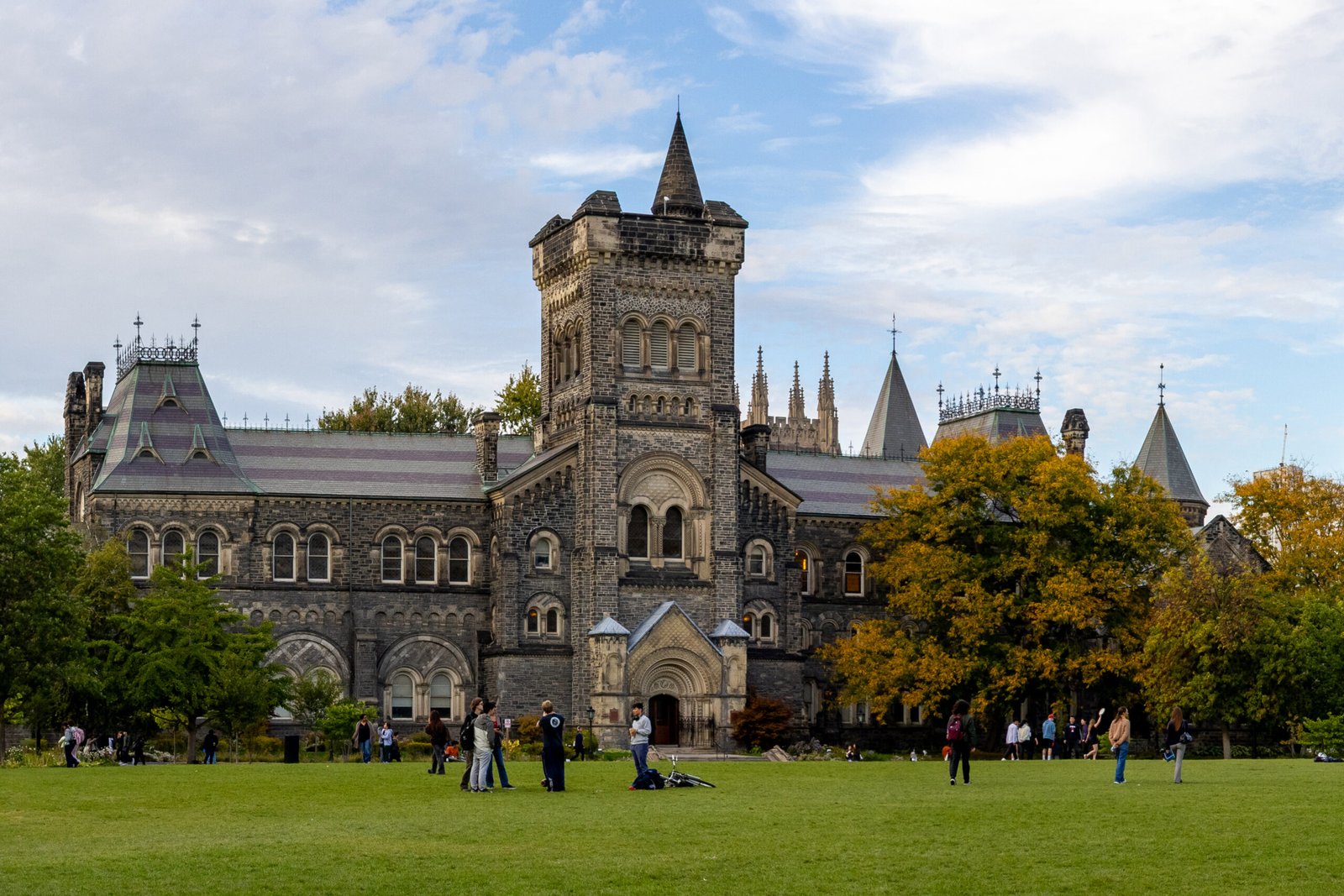
One of the most important events in the history of the University of Toronto Libraries occurred in February 1890, when a major fire devastated University College and destroyed a large portion of the university’s library.
The fire represented a major loss of books and scholarly resources.
However, the disaster also created an opportunity to rebuild the library system on a stronger foundation.
Following the fire, the university and supporters began collecting funds and books to reconstruct the library. Donations came from different places and helped rebuild the collection.
The rebuilding effort became an important chapter in the history of the university.
According to University of Toronto archival material, the opening of a new University of Toronto library building on King’s College Circle in October 1892 marked the beginning of the modern library system. Hugh Hornby Langton, appointed University Librarian in 1892, played an important role in rebuilding the library and its collections after the fire. (University of Toronto Archives)
The story demonstrates an important characteristic of research libraries: their strength depends not only on buildings but also on communities of scholars, donors, librarians, institutions, and researchers.
3. Development During the Twentieth Century
During the twentieth century, the University of Toronto grew significantly.
New academic departments were created. Enrollment increased. Research expanded into new fields. Scientific disciplines became more specialized, while the humanities and social sciences also developed new areas of study.
The library system had to adapt.
Instead of maintaining one general collection, the university increasingly developed specialized libraries.
These libraries served subjects such as:
- Medicine
- Science
- Engineering
- Business
- Education
- Music
- Architecture
- Geography
- East Asian studies
- Criminology
- Industrial relations
- Humanities
- Social sciences
This specialized approach allowed librarians to develop expertise in particular academic fields.
Students could obtain general research assistance while also accessing subject-specific databases, journals, books, archival resources, and research guides.
4. The University of Toronto Libraries Today
The modern University of Toronto Libraries are a large interconnected system serving the university’s three campuses.
The official library system currently describes a network of approximately 40 libraries supporting teaching, learning, and research. Its holdings include more than 12 million volumes, materials in hundreds of languages, nearly 4 million electronic books, thousands of electronic journals and databases, extensive archives and special collections, and approximately 3.5 petabytes of research data. (University of Toronto Libraries)
These figures demonstrate the scale of the institution.
But size is only one aspect of a major research library.
UTL also provides professional expertise. Librarians and staff assist researchers with finding sources, evaluating information, managing research data, using digital tools, understanding scholarly publishing, and working with specialized collections.
The library system also provides study spaces, research facilities, technology-rich environments, collaborative areas, and specialized services.
5. Robarts Library
One of the most famous buildings within the University of Toronto Libraries is Robarts Library.
Located on St. George Street, Robarts is a major center for humanities and social sciences research.
The building is often recognized as one of the most distinctive academic library structures in Canada.
Robarts contains extensive print and digital collections and provides numerous study and collaboration spaces.
The library includes areas such as:
- Reading rooms
- Silent study spaces
- Group study rooms
- Robarts Common
- Reflection Room
- Family Study Space
- Digital Studio
- Study carrels
- Specialized library collections
The official U of T Libraries site describes Robarts as Canada’s largest academic library and identifies it as a hub for humanities and social sciences at the University of Toronto. (University of Toronto Libraries)
Robarts is also home to several important specialized collections and facilities.
These include:
- Cheng Yu Tung East Asian Library
- Map and Data Library
- Petro Jacyk Central & East European Resource Centre
- Richard Charles Lee Canada–Hong Kong Library
This combination makes Robarts more than a traditional library building. It is a complex research environment containing multiple collections and services.
6. Robarts Common
One of the more modern developments at Robarts is Robarts Common.
The space reflects changes in how university students study.
Traditional libraries often focused heavily on individual reading. Modern academic libraries increasingly provide a mixture of individual and collaborative environments.
Students may need quiet spaces for reading, rooms for group projects, technology for presentations, and flexible spaces for discussion.
Robarts Common contributes to this changing model.
The building also contains hundreds of assigned study carrels and bookable study spaces.
Such facilities are particularly important at a large research university where thousands of students may need study space simultaneously.
7. Thomas Fisher Rare Book Library
The Thomas Fisher Rare Book Library is another internationally significant component of the University of Toronto Libraries.
Located at 120 St. George Street, the Fisher Library houses the Department of Rare Books and Special Collections and is also associated with University of Toronto Archives and Records Management Services.
The library contains materials covering an extraordinary chronological range.
Its holdings include a Babylonian cuneiform tablet dating to approximately 1789 BCE, as well as manuscripts, rare books, archives, and contemporary artists’ books.
This range illustrates the unique purpose of a rare book library.
A regular university library primarily supports current academic study.
A rare book library also preserves evidence of how knowledge was created, transmitted, printed, illustrated, collected, and preserved throughout history.
8. Rare Books and Manuscripts
The Fisher Library’s rare book and manuscript collections cover numerous disciplines.
Researchers may find materials related to:
- Literature
- History
- Philosophy
- Religion
- Science
- Medicine
- Politics
- Economics
- Book history
- Printing
- Canadian history
- Theatre
- Publishing
- Personal correspondence
The library holds approximately 1,000 bound manuscripts, representing different disciplines, languages, and historical periods. (University of Toronto Libraries)
The manuscript collections include materials in languages such as:
- Arabic
- English
- French
- Persian
- German
- Hebrew
- Latin
The chronological range extends from ancient materials to more recent manuscripts.
For historians and literary scholars, these materials can provide evidence that cannot always be found in modern editions or digital databases.
9. Archival Collections
Archives are another important part of the University of Toronto Libraries.
The Fisher Library’s archival holdings include more than 750 archival collections, representing thousands of metres of material. These collections include Canadian literary, historical, and personal papers from individuals and organizations. (University of Toronto Libraries)
Among the holdings are papers connected with major Canadian writers and historical figures.
The collections include materials associated with authors such as:
- Margaret Atwood
- Leonard Cohen
- Gwendolyn MacEwen
- Mazo de la Roche
- Josef Skvorecky
The library also preserves records related to the history of science and medicine.
For example, its archival holdings include papers connected with researchers associated with the discovery of insulin.
Such documents can include letters, drafts, research notes, notebooks, photographs, institutional records, and other primary sources.
10. Canadian Literature and Culture
The University of Toronto Libraries have particularly important collections relating to Canada.
Canadian literature, publishing, politics, history, theatre, science, and cultural life are represented through books, manuscripts, archives, photographs, and other materials.
Researchers studying Canadian authors can sometimes examine the actual drafts and correspondence behind published works.
This changes the research experience.
Instead of simply reading the final version of a novel or poem, a scholar may examine how a work developed.
Drafts can show deleted passages, revisions, alternative wording, editorial decisions, and changes in the author’s thinking.
Correspondence can also reveal relationships between writers, publishers, editors, critics, and institutions.
This makes archival libraries particularly valuable for literary and cultural research.
11. Digital Collections
Modern libraries are no longer limited to physical shelves.
The University of Toronto Libraries have invested heavily in digitization.
The Collections U of T platform provides access to digitized library and archival collections.
According to the official platform, users can explore more than 250,000 digitized objects from University of Toronto libraries and archives. (University of Toronto Collections)
These materials can include:
- Books
- Manuscripts
- Photographs
- Maps
- Archival documents
- Historical records
- Sound materials
- Moving images
- Other digitized objects
Digitization provides an important advantage.
Researchers do not always have to travel to Toronto to begin working with historical materials.
Digital collections allow students and scholars around the world to discover materials online.
12. Digital Preservation
Digitization is not simply about scanning old documents.
Libraries must also preserve digital files.
Digital preservation involves maintaining files so that they remain usable over time.
Technology changes quickly.
A file format that is common today may become difficult to use in the future.
Libraries therefore have to think about:
- File formats
- Metadata
- Storage
- Backups
- Preservation
- Access
- Digital rights
- Long-term management
The University of Toronto Libraries’ work in digital scholarship and research data demonstrates how academic libraries have expanded beyond traditional print preservation.
13. LibrarySearch
For students and researchers, one of the most important tools is the library discovery system.
The University of Toronto Libraries provide LibrarySearch, which allows users to search for books, electronic books, articles, journals, and other resources. (University of Toronto Libraries)
A discovery system is particularly important in a large library network.
Without a centralized search system, finding a particular book or journal could require searching multiple catalogs.
LibrarySearch brings many resources together into one research environment.
Students can search by:
- Title
- Author
- Subject
- Keyword
- Publication
- Other bibliographic information
Advanced search options can help researchers refine results.
14. Electronic Books and Journals
Electronic resources have transformed university research.
Instead of visiting a library building to consult every source, students can access many resources online.
The University of Toronto Libraries provide access to millions of electronic books and extensive journal and database collections. (University of Toronto Libraries)
Electronic resources are especially valuable for researchers who work across multiple locations.
A graduate student can access scholarly literature from home.
A professor can retrieve an article while preparing a lecture.
A researcher can search thousands of journal articles within a short period.
However, electronic resources also require librarians to help users understand databases, search strategies, licensing, citation practices, and source evaluation.
15. Research Databases
Research databases are an essential part of academic scholarship.
A general internet search engine may provide millions of results, but academic research often requires more specialized sources.
University of Toronto librarians curate databases and research guides for different academic disciplines.
The library’s subject database system provides resources selected with the needs of particular fields in mind. (University of Toronto Libraries)
For example, a student studying history may need historical newspapers and archival databases.
A biology student may need scientific literature.
A business student may need financial and company information.
A literature student may require full-text literary criticism and historical editions.
Subject-specific library support helps students navigate these differences.
16. Research Guides
Another important service is the research guide.
Research guides help users understand:
- Which databases to use
- How to search effectively
- Which reference sources are appropriate
- How to find primary sources
- How to evaluate information
- How to cite sources
This is especially useful for students who are learning academic research for the first time.
A research paper is not simply an exercise in finding information.
Students must determine whether a source is authoritative, relevant, current, and appropriate for the research question.
Librarians can help develop these skills.
17. Research Consultations
University of Toronto Libraries provide opportunities for students and researchers to book research consultations.
A research consultation can be useful when a project becomes complicated.
For example, a researcher might need to locate obscure historical documents.
Another student may need help finding scholarly literature on a specialized topic.
A graduate student may need advice about research data.
A librarian can help identify databases, search strategies, archival sources, and other research tools.
The library describes research consultations as personalized support for research projects. (University of Toronto Libraries)
18. Digital Scholarship
Academic research is increasingly digital.
Researchers now use:
- Data visualization
- Geographic information systems
- Digital archives
- Text analysis
- Computational methods
- Digital publishing
- 3D technologies
- Research software
The University of Toronto Libraries provide digital scholarship services designed to support teaching and research involving digital methods and tools. (University of Toronto Libraries)
This represents a major change in the role of academic librarians.
The librarian of the future is not only a specialist in books.
Librarians may also help researchers understand data, metadata, digital preservation, software, and computational research methods.
19. Artificial Intelligence and Libraries
Artificial intelligence is changing education and research.
Students increasingly use AI tools to summarize information, generate ideas, analyze text, and assist with writing.
This creates new questions.
How should researchers verify AI-generated information?
How should students cite AI-assisted work?
What happens when an AI system provides an incorrect source?
How should researchers protect confidential or sensitive data?
The University of Toronto Libraries now provide resources addressing AI and research support. The library’s current services include guidance designed to help users navigate the changing AI environment. (University of Toronto Libraries)
This illustrates how the traditional mission of libraries—helping people evaluate information—remains important even as technology changes.
20. Map and Data Library
The Map and Data Library is another specialized research facility within the University of Toronto Libraries.
Maps and geographic information have long been important research materials.
Modern researchers, however, also work with digital datasets.
The Map and Data Library supports research involving geographic information, maps, and data.
These resources can be used in fields such as:
- Geography
- Urban studies
- History
- Environmental research
- Political science
- Sociology
- Planning
- Economics
Researchers can use maps to understand how places changed over time.
Digital data can then be combined with geographic tools to analyze spatial patterns.
21. Cheng Yu Tung East Asian Library
The Cheng Yu Tung East Asian Library is another important specialized collection associated with the University of Toronto Libraries.
East Asian collections support research in areas such as:
- Chinese studies
- Japanese studies
- Korean studies
- History
- Literature
- Religion
- Art
- Politics
- Culture
Specialized language collections are particularly important because researchers may need materials that are not widely available in English-language collections.
The existence of such specialized libraries reflects the international scope of the University of Toronto.
22. Richard Charles Lee Canada–Hong Kong Library
The Richard Charles Lee Canada–Hong Kong Library is located within the Robarts complex.
It supports research relating to Canada and Hong Kong and provides specialized materials for scholars working in this area.
Such a collection can be valuable for studying:
- Migration
- Diaspora
- International relations
- History
- Politics
- Culture
- Business
- Canadian studies
Libraries with focused collections can preserve perspectives and materials that might otherwise be scattered across many institutions.
23. Music Library
Music research requires resources beyond ordinary books.
Music libraries can contain:
- Scores
- Recordings
- Books
- Journals
- Manuscripts
- Performance materials
- Historical music resources
The University of Toronto Libraries include specialized music collections.
These resources support students and researchers studying music history, theory, performance, composition, and culture.
Music libraries also demonstrate how academic libraries adapt their collections to the needs of individual disciplines.
24. Science and Medical Research
The University of Toronto is a major research institution in science and medicine.
Its library system therefore includes specialized scientific and medical resources.
Researchers in these areas require access to:
- Scientific journals
- Medical literature
- Databases
- Technical reports
- Research data
- Historical scientific publications
The library’s special collections also preserve important documents relating to the history of science and medicine.
These resources can help historians understand how scientific discoveries developed.
25. Engineering and Computer Science Library
The Engineering and Computer Science Library supports students and researchers working in technical disciplines.
Engineering research often depends on specialized literature, standards, technical documentation, and databases.
Computer science changes particularly rapidly, making access to current research important.
A specialized library can help students locate relevant technical sources while also providing study space and research assistance.
The University of Toronto Libraries list the Engineering & Computer Science Library among their campus facilities. (University of Toronto Libraries)
26. Libraries Across Three Campuses
The University of Toronto has three major campuses:
- St. George
- Mississauga
- Scarborough
The Libraries support all three.
This creates a broad network rather than a single central library.
Students studying at different campuses can use resources appropriate to their programs while also benefiting from the larger UTL system.
Interlibrary services and shared collections further connect the campuses.
The result is a library network capable of supporting a very large and diverse academic community.
27. Study Spaces
A modern academic library needs more than books.
Students require places to:
- Read
- Write
- Study
- Meet
- Work on projects
- Use computers
- Participate in group work
- Conduct research
University of Toronto Libraries provide different types of study environments.
At Robarts, for example, users can find silent reading areas, group study rooms, study carrels, reflection space, family study space, and other environments. (University of Toronto Libraries)
This variety recognizes that students have different study habits.
Some students need silence.
Others need collaboration.
Some researchers need long uninterrupted periods of concentration.
The modern library tries to accommodate all of these needs.
28. Accessibility and Inclusion
Accessibility is an important responsibility for modern academic libraries.
Students and researchers may have different physical, sensory, learning, and technological requirements.
The University of Toronto Libraries identify accessibility, inclusion, diversity, and equity among their institutional values. (University of Toronto Libraries)
Services may include alternative formats, assistive technology, accessible spaces, and other forms of support.
The goal is to ensure that academic resources are usable by as many members of the university community as possible.
29. Archives and University History
University archives preserve the history of the institution itself.
The University of Toronto Libraries and Archives contain photographs, documents, records, publications, and other materials documenting the university’s development.
Digitized Heritage U of T materials include photographs, books, maps, drawings, films, sound recordings, and other historical materials. (University of Toronto Collections)
These collections can be useful for historians researching:
- University architecture
- Student life
- Academic development
- Faculty history
- Campus traditions
- Major events
- Institutional administration
A university’s archives allow later generations to understand how the institution evolved.
30. Exhibitions
Libraries are increasingly becoming exhibition spaces.
Rare books, manuscripts, photographs, maps, and historical documents can be displayed to the public.
Exhibitions transform research materials into educational experiences.
Visitors can see original documents and learn about their historical context.
The Thomas Fisher Rare Book Library regularly organizes exhibitions based on its collections.
Such exhibitions demonstrate that rare materials are not simply stored away.
They can be interpreted and shared with students, scholars, and the wider public.
31. Preservation of Historical Materials
Preservation is one of the most important responsibilities of a research library.
Old books can deteriorate.
Paper can become fragile.
Photographs can fade.
Magnetic media can degrade.
Digital files can become inaccessible.
Libraries therefore use preservation strategies to protect materials for future generations.
Rare books and manuscripts require particularly careful handling.
Researchers using special collections may have to follow specific procedures designed to protect fragile materials.
These policies ensure that scholars today can use resources without compromising their survival for future researchers.
32. International Research Importance
The University of Toronto Libraries serve an international scholarly community.
Researchers from around the world may use its collections.
The library’s materials cover many languages, geographic regions, academic disciplines, and historical periods.
Its special collections can attract researchers studying Canadian history, literature, medicine, science, publishing, book history, and many other subjects.
Digital collections expand this international reach.
A scholar in another country can discover and sometimes access digitized materials without traveling to Canada.
33. The Role of Librarians
Librarians are central to the success of a research library.
Their work involves much more than putting books on shelves.
Modern academic librarians may:
- Teach research skills
- Develop collections
- Build research guides
- Assist with databases
- Support digital scholarship
- Preserve archives
- Manage metadata
- Help with citation
- Support research data
- Advise on scholarly communication
- Assist with special collections
The University of Toronto Libraries emphasize professional expertise as a major part of their mission. (University of Toronto Libraries)
This human expertise remains valuable even when digital search tools become more powerful.
34. Information Literacy
One of the most important educational roles of a library is information literacy.
Information literacy means knowing how to:
- Find information.
- Evaluate information.
- Compare sources.
- Identify reliable evidence.
- Recognize misinformation.
- Use information ethically.
- Cite sources appropriately.
In the internet age, these skills are increasingly important.
A student can find thousands of pages online in seconds, but quantity does not guarantee quality.
Academic librarians teach students how to move from simply finding information to finding reliable and useful evidence.
35. Supporting Teaching
Libraries support university teaching in many ways.
Professors may work with librarians to create course research guides.
Libraries can provide readings and electronic resources.
Special collections can be incorporated into classes.
Students may visit rare book libraries to examine primary sources.
Digital collections can be used in online courses.
This makes the library part of the teaching environment rather than a separate institution.
36. Supporting Graduate Students
Graduate students often have complex research requirements.
A master’s or doctoral project may require thousands of scholarly sources, archival documents, specialized databases, historical materials, and research data.
University of Toronto Libraries provide services designed to support advanced research.
Graduate students can work with subject librarians, use specialized collections, access digital research tools, and conduct archival research.
For doctoral candidates, library collections can become central to the development of a dissertation.
37. Supporting Faculty Researchers
Faculty researchers also rely heavily on library services.
A professor may require access to:
- Specialized journals
- Historical books
- Primary documents
- Data
- Research databases
- Archives
- Digital scholarship tools
Librarians can assist researchers in identifying resources and developing research strategies.
Libraries also participate in broader scholarly communication.
This can include issues surrounding publishing, copyright, open access, research data, and digital preservation.
38. Open Access and Digital Scholarship
The academic publishing environment has changed dramatically.
Researchers increasingly want their work to be accessible beyond traditional subscription models.
Libraries play an important role in supporting open scholarship.
Digital repositories allow research materials to be stored and discovered online.
Open access can help make scholarly work available to researchers, educators, students, and members of the public who may not have access to expensive subscriptions.
The University of Toronto Libraries’ digital infrastructure supports this broader movement toward accessible scholarship.
39. Research Data
Modern universities produce enormous quantities of data.
Scientific experiments create datasets.
Social scientists conduct surveys.
Geographers create spatial datasets.
Humanities scholars digitize historical materials.
Computer scientists generate large computational datasets.
The University of Toronto Libraries report approximately 3.5 petabytes of research data within their holdings and services ecosystem. (University of Toronto Libraries)
Research data requires careful management.
Researchers must think about:
- Storage
- Documentation
- Metadata
- Security
- Preservation
- Sharing
- Reuse
Libraries increasingly help researchers manage these challenges.
40. The Importance of Multilingual Collections
A major research library must support scholarship in many languages.
The University of Toronto Libraries’ holdings extend across hundreds of languages. (University of Toronto Libraries)
Multilingual collections are essential for international research.
A historian studying China may need Chinese sources.
A scholar of European history may require French, German, Italian, or Latin materials.
A researcher studying the Middle East may need Arabic or Persian resources.
Language diversity strengthens the research possibilities of the library.
41. Rare Books as Historical Evidence
A rare book is not valuable simply because it is old.
It can provide evidence about:
- Printing technology
- Education
- Religion
- Political ideas
- Scientific knowledge
- Literary culture
- Social history
- Book ownership
- Reading practices
Physical characteristics can also be important.
Researchers may study:
- Paper
- Binding
- Typography
- Illustrations
- Marginal notes
- Ownership marks
- Printing methods
These details can provide information unavailable in modern digital reproductions.
42. Manuscripts and Personal Papers
Personal papers can provide an intimate view of history.
Letters can reveal relationships.
Drafts can reveal creative processes.
Research notebooks can document scientific work.
Diaries can record personal experiences.
Institutional records can show how organizations operated.
The Fisher Library’s archival collections provide many examples of this type of evidence. (University of Toronto Libraries)
Such materials are particularly important for historians and literary scholars.
43. The Library as a Place of Discovery
A good research library encourages discovery.
A student may enter looking for one book and discover several other relevant works.
A researcher searching a database may uncover an unexpected archive.
A visit to a rare book exhibition may lead to a new research question.
Libraries create opportunities for these unexpected discoveries.
This is one reason physical library spaces remain valuable even in an increasingly digital world.
44. The Changing Meaning of a Library
In the past, many people thought of a library primarily as a place containing books.
Today, a major research library is much more complicated.
It is simultaneously:
- A learning center
- A research institution
- A digital infrastructure
- An archive
- A preservation center
- A technology environment
- A community space
- A teaching partner
- A gateway to global scholarship
The University of Toronto Libraries illustrate this transformation particularly well.
45. Why University of Toronto Libraries Matter
The significance of UTL comes from the combination of scale, specialization, history, and technology.
It has large general collections.
It has specialized subject libraries.
It has rare books.
It has archives.
It has digital collections.
It has research data.
It has professional librarians.
It has study spaces.
It supports three campuses.
This combination creates a comprehensive research environment.
46. A Global Knowledge Network
The University of Toronto Libraries also participate in a global knowledge network.
Academic research depends on cooperation.
No single university can own every book, journal, manuscript, dataset, and database required by modern scholarship.
Libraries therefore cooperate through:
- Interlibrary services
- Research partnerships
- Digital initiatives
- Professional organizations
- Scholarly networks
- Preservation collaborations
UTL’s partnerships extend access to resources beyond its own collections. (University of Toronto Libraries)
47. Students and Everyday Library Life
For many students, the library is simply part of daily university life.
Students may visit to:
- Prepare for exams
- Write assignments
- Read textbooks
- Work on group projects
- Meet classmates
- Use computers
- Print materials
- Ask research questions
- Find quiet study space
The importance of these everyday activities should not be underestimated.
Academic success often depends on having reliable access to information and an appropriate environment for concentrated study.
48. Libraries and Student Success
A strong library can contribute to student success by reducing barriers to information.
Students may not know where to find scholarly sources.
They may struggle with database searches.
They may not understand the difference between primary and secondary sources.
They may need help evaluating websites.
Librarians can provide guidance at each stage.
This makes the library an important educational partner.
49. The Future of University of Toronto Libraries
The future of UTL will likely involve an increasing combination of physical and digital scholarship.
Printed books will remain important.
At the same time, electronic resources, digital archives, research data, AI tools, and computational research will continue to grow.
Libraries will therefore need to maintain balance.
They must preserve historical collections while developing modern services.
They must provide physical spaces while supporting remote research.
They must embrace new technology while teaching users to evaluate technology critically.
50. Artificial Intelligence and the Future Research Library
AI is likely to influence how researchers discover and analyze information.
Researchers may increasingly use AI for:
- Text analysis
- Data processing
- Information discovery
- Translation assistance
- Pattern recognition
- Research organization
But AI also introduces risks.
AI systems can generate inaccurate information.
They can produce fabricated citations.
They may reflect biases in training data.
They may not clearly distinguish between reliable evidence and weak sources.
Academic libraries therefore have an important role in teaching responsible AI use.
51. Preserving the Past While Supporting the Future
One of the most interesting features of the University of Toronto Libraries is the combination of very old and very new materials.
The Fisher Library can hold an ancient cuneiform tablet.
At the same time, the wider library system manages modern electronic resources and research data.
This creates a bridge across thousands of years of human knowledge.
A researcher can study an ancient manuscript and then use modern digital tools to analyze it.
A historian can examine a nineteenth-century document online.
A student can read a current electronic journal from a laptop.
The library connects these different forms of knowledge.
52. University of Toronto Libraries and Canadian Scholarship
Because the University of Toronto is one of Canada’s major research universities, its libraries play an important role in Canadian scholarship.
The collections document aspects of Canada’s:
- Literature
- Science
- Medicine
- Politics
- Publishing
- Education
- Cultural history
- Immigration
- Academic history
Special collections preserve primary sources that may become increasingly valuable to future generations.
53. Public and Community Access
Although UTL is fundamentally an academic library system, some facilities and collections provide access to visitors and researchers beyond the immediate student population.
The Thomas Fisher Rare Book Library, for example, states that it is open and accessible to researchers and visitors.
This broader access allows members of the public and external scholars to engage with important historical resources.
It also strengthens the relationship between universities and society.
54. Learning Beyond the Classroom
University education does not happen only inside lecture halls.
Students learn through:
- Books
- Journals
- Archives
- Databases
- Exhibitions
- Discussions
- Research projects
- Independent study
Libraries provide the infrastructure for much of this learning.
A student who learns how to conduct effective research in university can use those skills throughout a professional career.
55. The Educational Value of Special Collections
Special collections offer a different kind of learning experience.
Reading a digital copy of a historical book is useful.
Seeing the original object can provide additional information.
Students may notice:
- Binding materials
- Paper quality
- Handwriting
- Marginal notes
- Illustrations
- Printing techniques
- Signs of ownership
These details can make history tangible.
For this reason, special collections are valuable not only for advanced researchers but also for teaching.
56. Exhibitions and Public Education
Exhibitions allow libraries to communicate research beyond academic specialists.
A carefully designed exhibition can introduce historical materials to visitors who may never otherwise encounter them.
The Thomas Fisher Rare Book Library regularly presents exhibitions based on its collections, demonstrating how rare materials can become part of public education.
Digital exhibitions expand this reach further.
Someone thousands of kilometres away can explore historical materials through an online collection.
57. A Library System Built on Change
The history of University of Toronto Libraries shows continuous adaptation.
The system survived a devastating fire.
It rebuilt collections.
It developed specialized libraries.
It created major research facilities.
It expanded into digital resources.
It developed digitization programs.
It began supporting research data.
It now provides guidance on emerging technologies such as artificial intelligence.
This pattern of adaptation is likely to continue.
58. Conclusion
The University of Toronto Libraries represent much more than a collection of books.
They are a vast research and learning network supporting one of Canada’s major universities.
With approximately 40 libraries, more than 12 million physical volumes, millions of electronic books, thousands of journals and databases, extensive archives, special collections, digital resources, and large-scale research data, UTL provides an enormous scholarly infrastructure. (University of Toronto Libraries)
Its history is equally important.
The library tradition began with the early University of Toronto and developed through the nineteenth and twentieth centuries. The devastating fire of 1890 became a major turning point, leading to rebuilding and the creation of a stronger library system. (University of Toronto Archives)
Today, facilities such as Robarts Library demonstrate the importance of large modern academic libraries, while the Thomas Fisher Rare Book Library preserves extraordinary historical materials ranging from ancient artifacts to contemporary artists’ books.
The Libraries also demonstrate how academic libraries are changing.
They provide digital collections, research data services, specialized databases, research consultations, digital scholarship support, accessibility services, exhibitions, and guidance on emerging technologies.
Their role is therefore both historical and forward-looking.
The University of Toronto Libraries preserve the intellectual record of the past while providing tools for researchers working on the problems of the present and future.
For students, they provide places to study and learn.
For professors, they provide scholarly resources and research support.
For historians and literary scholars, they provide rare books, manuscripts, and archives.
For digital researchers, they provide datasets, digitized collections, and technological support.
For the broader public, exhibitions and digital collections provide opportunities to explore important cultural and historical materials.
Ultimately, the University of Toronto Libraries demonstrate why research libraries remain essential in the digital age. Information may now be available through computers and mobile devices, but finding trustworthy sources, preserving knowledge, understanding historical context, managing research data, and connecting evidence with new ideas still require institutions with expertise, resources, and long-term commitment.
The University of Toronto Libraries bring all of these responsibilities together. Their collections connect ancient history with modern scholarship, while their services connect students and researchers with the information they need to create new knowledge.
In this sense, the University of Toronto Libraries are not simply a place where knowledge is stored. They are an active environment where knowledge is discovered, preserved, studied, interpreted, and created.
Frequently Asked Questions About University of Toronto Libraries
1. What are the University of Toronto Libraries?
The University of Toronto Libraries are the academic library system supporting the University of Toronto’s three campuses: St. George, Mississauga, and Scarborough. The system includes approximately 40 libraries and specialized collections. (University of Toronto Libraries)
2. How large are the University of Toronto Libraries?
UTL reports more than 12 million physical volumes, nearly 4 million electronic books, thousands of electronic journals and databases, extensive archives and special collections, and approximately 3.5 petabytes of research data. (University of Toronto Libraries)
3. What is Robarts Library?
Robarts Library is the major humanities and social sciences library at the University of Toronto and is described by UTL as Canada’s largest academic library. (University of Toronto Libraries)
4. What is the Thomas Fisher Rare Book Library?
The Thomas Fisher Rare Book Library is a major rare book, manuscript, and special collections library at the University of Toronto. Its collections range from ancient materials to contemporary artists’ books.
5. Can researchers access Fisher Library collections?
Yes. The Fisher Library states that it is accessible to researchers and visitors, subject to its collection access procedures and policies.
6. Does University of Toronto Libraries have digital collections?
Yes. Collections U of T provides access to more than 250,000 digitized objects from University of Toronto libraries and archives. (University of Toronto Collections)
7. Can students get research help?
Yes. The Libraries provide research consultations, research guides, databases, reference assistance, and other services designed to support academic research. (University of Toronto Libraries)
8. Does the library support research data?
Yes. Research data is an important part of the modern University of Toronto Libraries environment, which reports approximately 3.5 petabytes of research data. (University of Toronto Libraries)
9. Does the library have rare manuscripts?
Yes. The Thomas Fisher Rare Book Library holds approximately 1,000 bound manuscripts covering different disciplines, languages, and historical periods. (University of Toronto Libraries)
10. Why is the University of Toronto Libraries important?
UTL is important because it combines large-scale academic collections, specialized libraries, rare books, archives, digital resources, research data, professional research support, and study spaces across the university’s three campuses.
Final Thought
The University of Toronto Libraries represent the continuing evolution of the academic library. From rebuilding after the 1890 fire to managing massive digital collections and supporting modern research technologies, the system has repeatedly adapted to the changing needs of scholarship. Its greatest strength is the combination of historical preservation, academic expertise, modern technology, and access to knowledge.