Harvard Library: History, Collections, Architecture, Digital Resources, and Global Importance
Introduction
Harvard Library is one of the most important academic library systems in the world. Located at Harvard University in Cambridge, Massachusetts, the library serves students, faculty members, researchers, historians, writers, and visitors from many different fields of study. Rather than being a single traditional library building, Harvard Library is a large network of libraries, archives, special collections, research centers, and digital resources distributed throughout Harvard University.
The history of Harvard Library is closely connected with the history of Harvard University itself. For centuries, the library has collected books, manuscripts, maps, photographs, newspapers, works of art, scientific materials, government documents, rare publications, and many other forms of recorded knowledge. These collections provide researchers with opportunities to study subjects ranging from ancient civilizations and medieval manuscripts to modern science, technology, literature, politics, economics, and culture.
Harvard Library is particularly notable because of the extraordinary age and variety of its collections. Some materials are centuries old, while others are newly created digital resources. The library therefore represents both the preservation of historical knowledge and the development of modern research.
The importance of Harvard Library extends far beyond Harvard’s campus. Researchers from around the world use its catalogs, digital collections, publications, archives, and scholarly resources. Its collections have contributed to research in countless academic disciplines, while its preservation programs help ensure that valuable historical materials remain available for future generations.
This article explores the history of Harvard Library, its major collections, important libraries within the system, architecture, digital resources, research services, rare books, manuscripts, cultural significance, and continuing role in education and scholarship.
1. The Origins of Harvard Library
The history of Harvard Library begins in the early history of Harvard University. Harvard was founded in 1636, making it one of the oldest institutions of higher education in the United States. In the early colonial period, books were extremely valuable possessions. Printed materials were expensive, difficult to obtain, and often transported across the Atlantic from Europe.
The development of a library was therefore essential to the university’s educational mission. One of the most important early contributions came from John Harvard, a clergyman whose name became permanently associated with the institution.
John Harvard died in 1638 and left a significant portion of his estate to Harvard College. His bequest included a collection of books. These books became an important foundation for the college’s library.
Although the collection was relatively small by modern standards, its significance was enormous. At a time when printed books were scarce in colonial America, receiving a personal library could dramatically increase the intellectual resources available to students and teachers.
The early Harvard Library continued to grow through donations, purchases, and gifts from members of the university community. Over time, it became an essential part of Harvard’s academic environment.
2. Growth Through the Centuries
Harvard Library expanded gradually as Harvard University developed. As the university added new academic departments and professional schools, specialized collections became increasingly necessary.
Students and scholars studying theology required religious texts. Students of law needed legal publications. Scientists needed scientific journals and technical literature. Historians required primary sources and archival materials. Literary scholars needed editions of classic and contemporary works.
Instead of maintaining only one general collection, Harvard developed a network of specialized libraries.
This approach allowed different academic communities to build collections specifically suited to their research needs.
During the eighteenth and nineteenth centuries, Harvard Library acquired books from Europe and North America and received important private collections. The expansion of printing and publishing also made it possible for the library to acquire materials on an increasingly large scale.
By the nineteenth century, Harvard had developed into a major research institution, and its libraries reflected this transformation.
3. Harvard Library as a Library System
One of the most important things to understand about Harvard Library is that it is not simply one building.
Harvard Library is a system consisting of many libraries and research collections. These libraries serve different schools, departments, disciplines, and research communities.
Among the most famous libraries associated with Harvard are Widener Library, Houghton Library, Lamont Library, Cabot Science Library, Harvard Law School Library, Harvard Medical School’s library resources, and numerous departmental and professional libraries.
Each has a distinctive purpose.
For example, Houghton Library is particularly famous for rare books and manuscripts. Widener Library provides extensive research collections across the humanities and social sciences. Lamont Library has traditionally been strongly associated with undergraduate study and student research.
Together, these libraries create a large intellectual infrastructure.
4. Widener Library
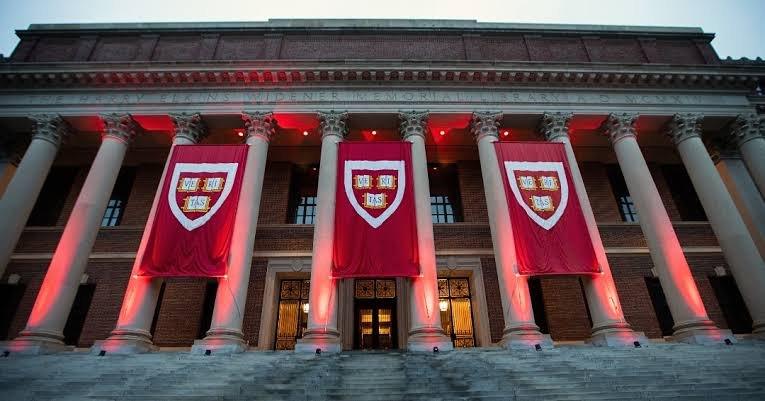
Widener Library is perhaps the most recognizable library building at Harvard.
Located in Harvard Yard, the building is named after Harry Elkins Widener, a Harvard graduate and book collector. Widener died aboard the RMS Titanic in 1912.
His family contributed substantially toward the construction of a major library in his memory. The resulting building became one of Harvard’s most recognizable architectural landmarks.
Widener Library opened in the early twentieth century and became an important center for Harvard’s humanities and social science collections.
The building’s architecture reflects the monumental style often associated with major academic institutions of the period. Its large reading rooms, corridors, stacks, and formal spaces were designed to accommodate an enormous research collection.
Widener’s collections cover a broad range of subjects. Researchers can find materials relating to history, literature, philosophy, political thought, languages, cultures, and many other areas.
The building is also deeply connected with Harvard’s institutional identity.
For generations of students, walking through Harvard Yard and seeing Widener Library has been part of the traditional Harvard experience.
5. The Story Behind Widener Library
The history of Widener Library includes a famous connection to the Widener family.
Harry Elkins Widener was an enthusiastic book collector. His interests included literature, history, and rare books.
According to accounts of the family’s history, his mother, Eleanor Elkins Widener, supported the construction of the library as a memorial to her son.
The building became a lasting monument to his passion for books.
The Widener story is also connected to the Titanic disaster, making the library’s history particularly memorable.
Today, the name Widener represents not only a person but also one of the world’s best-known academic library buildings.
6. Houghton Library
Houghton Library is another major component of Harvard Library.
Unlike a general research library, Houghton focuses heavily on rare books, manuscripts, and special collections.
The library opened in the twentieth century and was created to provide specialized facilities for preserving valuable materials.
Its collections include rare printed books, manuscripts, literary materials, historical documents, photographs, maps, and other unique or scarce resources.
Researchers who work with original historical materials often use Houghton.
Special collections can provide evidence that cannot always be found in modern books or online databases. A handwritten manuscript, early printed edition, author’s correspondence, or historical document may reveal information that has disappeared from later copies.
For this reason, Houghton plays an important role in advanced scholarship.
7. Rare Books at Harvard Library
One of Harvard Library’s most important strengths is its collection of rare books.
Rare books can be valuable for many reasons. Some are important because very few copies survive. Others are significant because of their historical importance, authorship, illustrations, printing methods, ownership history, or physical characteristics.
Harvard’s collections include materials from many periods and regions.
Researchers may encounter early European printed books, medieval manuscripts, Renaissance works, American publications, literary first editions, scientific works, religious texts, and other rare materials.
The study of rare books is not simply about owning old objects.
A book can be a historical artifact. Its paper, binding, annotations, illustrations, typography, ownership marks, and publication history can all provide evidence about the society that produced and used it.
8. Manuscripts and Archival Collections
Manuscripts are another major part of Harvard’s research resources.
A manuscript can be a handwritten document, notebook, letter, diary, draft, personal record, or other original material.
Archival collections may preserve the papers of authors, scholars, politicians, organizations, scientists, artists, and other individuals.
These collections are especially valuable for historians and biographers.
For example, a scholar studying a famous writer may learn more by examining the writer’s correspondence and drafts than by reading only the writer’s published books.
Personal papers can reveal how ideas developed, how works changed during composition, and how individuals communicated with their contemporaries.
Harvard’s archival collections therefore contribute significantly to historical research.
9. Harvard Library and American History
Harvard Library holds extensive resources for studying the history of the United States.
The collections cover colonial America, the American Revolution, the early republic, nineteenth-century social and political development, the Civil War era, industrialization, immigration, modern American history, and many other periods.
Primary sources are especially valuable for historical research.
Researchers can examine newspapers, pamphlets, letters, government documents, maps, photographs, personal papers, and books published during particular historical periods.
These materials help historians reconstruct the experiences and ideas of earlier generations.
10. International Collections
Harvard Library is not limited to American history.
Its collections are international in scope.
Researchers can find materials relating to Europe, Asia, Africa, the Middle East, Latin America, and other regions.
The library has developed collections in numerous languages and academic traditions.
International collections are important because modern scholarship frequently requires researchers to examine sources across national boundaries.
A historian studying global trade, for example, may need documents from several countries. A literary scholar may need editions in multiple languages. A researcher studying ancient civilizations may require translations, original-language texts, archaeological reports, and historical interpretations.
Harvard’s international collections support these kinds of research projects.
11. Harvard Library and Literature
Literature is one of the major areas supported by Harvard Library.
The library preserves works by writers from different centuries and cultures.
Literary collections can include first editions, manuscripts, correspondence, personal papers, criticism, translations, and scholarly editions.
Researchers studying authors can compare different editions of the same work and examine how texts changed over time.
Manuscripts are particularly valuable because they can reveal an author’s writing process.
Drafts may contain deleted passages, alternative endings, corrections, notes, and revisions.
These details can help scholars understand how literary works were created.
12. Scientific Collections
Although Harvard Library is strongly associated with the humanities, it also supports scientific research.
Scientific libraries contain books, journals, technical publications, historical scientific works, data resources, and other research materials.
Historical scientific literature is especially important for researchers studying the development of scientific ideas.
Old scientific publications can demonstrate how theories changed over time, how experiments were interpreted, and how scientific communities communicated.
The preservation of scientific literature is therefore part of the broader mission of academic libraries.
13. Harvard Law School Library
The Harvard Law School Library is one of the most important specialized libraries associated with Harvard University.
Legal research requires access to statutes, court decisions, legal treatises, international law materials, historical documents, and scholarly publications.
The Harvard Law School Library has extensive collections supporting legal education and research.
Its resources are used by law students, professors, historians, legal researchers, and scholars.
Legal collections also have historical importance because laws and legal institutions change over time.
Researchers can study how societies have approached questions involving government, property, rights, courts, commerce, and international relations.
14. Harvard Medical Library Resources
Medicine and health sciences also require specialized information resources.
Harvard’s medical education and research communities rely on libraries, databases, journals, archives, and digital resources.
Medical libraries preserve scientific publications and provide access to current research literature.
Historical medical collections can also be valuable.
They allow researchers to study how medical theories, treatments, institutions, and professional practices developed over time.
15. Lamont Library
Lamont Library is another well-known Harvard library.
It has traditionally served Harvard undergraduates and provides resources designed for student learning and research.
Unlike specialized rare-book libraries, undergraduate libraries need to support everyday academic activities.
Students may use library spaces for reading, writing, group work, research, and preparation for assignments.
This combination of study space and research resources makes Lamont an important part of Harvard’s student experience.
16. Digital Transformation
Modern libraries are no longer limited to physical books.
Harvard Library has embraced digital technology to expand access to its collections and services.
Digital transformation allows libraries to scan historical documents, books, photographs, maps, manuscripts, and other materials.
Digitization provides several benefits.
First, it allows researchers to examine materials remotely.
Second, digital copies can reduce the need to handle fragile originals.
Third, digitized collections can make rare materials available to a much wider audience.
A researcher in another country may be able to study a historical document online without traveling to Cambridge.
This represents a major transformation in scholarly research.
17. Harvard Library’s Online Catalogs
Library catalogs are essential for discovering research materials.
Harvard Library provides online tools through which users can search for books, journals, manuscripts, archives, and other resources.
Researchers can search by author, title, subject, keyword, publication information, and other fields.
Digital catalogs have made research considerably easier than traditional card catalogs.
However, finding a source is only one part of research.
Researchers must also evaluate the source, understand its historical context, compare it with other evidence, and determine how it can be used responsibly.
18. Digitization and Preservation
Digitization is closely connected with preservation.
Many historical materials are physically fragile.
Paper can deteriorate. Bindings can weaken. Ink can fade. Photographs can be damaged by environmental conditions.
Professional preservation programs help protect these materials.
Digitization can provide researchers with a high-quality digital representation while reducing unnecessary handling of the original.
However, digital preservation also creates challenges.
Digital files must be stored, maintained, backed up, and migrated as technologies change.
Therefore, modern library preservation involves both physical conservation and digital preservation.
19. Maps and Geographic Collections
Harvard Library also has important map collections.
Historical maps are valuable resources for studying geography, exploration, political boundaries, urban development, transportation, trade, and environmental change.
A map is more than a representation of physical space.
Maps can reveal how people understood territories during particular historical periods.
They can show changing borders, settlement patterns, roads, cities, coastlines, and political relationships.
Researchers from history, geography, urban studies, environmental studies, and other disciplines can therefore benefit from map collections.
20. Photographs and Visual Materials
Photography has become an important historical source.
Harvard’s collections include photographs and other visual materials that can support research into people, places, events, architecture, culture, and social life.
Photographs can provide evidence that written documents may not contain.
They can show clothing, buildings, streets, landscapes, technologies, and everyday activities.
However, photographs also need to be interpreted carefully.
Researchers must consider who created an image, why it was created, when it was produced, and how it may have been edited or selected.
21. Archives of Personal Papers
Personal archives are particularly valuable for understanding historical individuals.
A personal archive may include letters, diaries, notebooks, photographs, financial records, manuscripts, and other documents.
These materials can provide insight into a person’s professional and intellectual life.
They can also help historians understand broader historical events.
A single person’s correspondence, for example, may contain references to institutions, political events, scientific discoveries, cultural movements, or social changes.
When combined with other sources, personal archives can contribute to a much richer understanding of history.
22. Harvard Library and Teaching
Libraries are central to education.
Students learn not only by reading textbooks but also by examining original research and primary sources.
Harvard Library provides students with access to scholarly materials that support coursework.
Assignments may require students to locate academic books, journal articles, historical documents, archival materials, or statistical resources.
Library instruction can also teach students how to search effectively, evaluate sources, cite information, and conduct independent research.
These skills are valuable beyond university.
23. Research Support
Modern academic librarians do much more than organize books.
Librarians can help researchers identify relevant resources, understand specialized databases, locate archival materials, and develop research strategies.
Subject specialists may have expertise in particular academic fields.
Researchers working on complicated projects can therefore benefit from professional guidance.
This human element remains important even in an increasingly digital research environment.
Search engines can produce enormous quantities of information, but identifying reliable and academically useful sources requires knowledge and judgment.
24. Harvard Library and Students
For students, libraries provide both resources and physical spaces.
Students may visit libraries to study independently, work on group projects, read, write, or access specialized materials.
The library environment can support focused academic work.
Different Harvard libraries serve different purposes, so students may choose spaces based on their needs.
Some locations are designed for quiet research, while others provide collaborative study environments.
25. Architecture and Harvard Yard
Harvard’s libraries contribute significantly to the architectural character of Harvard Yard.
The Yard is one of the most recognizable parts of Harvard’s campus.
Buildings such as Widener Library create a historic academic atmosphere.
The architecture reflects different periods of Harvard’s development.
Visitors can see how institutional architecture evolved alongside the university.
Libraries are therefore not only functional buildings. They can also become cultural and architectural landmarks.
26. The Cultural Importance of Harvard Library
Libraries preserve collective memory.
Harvard Library’s collections contain evidence of human intellectual activity across centuries.
Books record ideas.
Letters record communication.
Maps record geographic knowledge.
Photographs record visual history.
Manuscripts record creative processes.
Government documents record institutions.
Scientific publications record discoveries and debates.
Together, these materials form a vast record of human knowledge.
This is one reason major research libraries are culturally important.
27. Rare Manuscripts and Scholarly Research
Rare manuscripts can answer questions that ordinary publications cannot.
Suppose a researcher wants to understand how a famous historical text was created.
A published edition may present the final version.
A manuscript, however, might show earlier drafts.
Researchers can compare handwriting, corrections, deletions, additions, and annotations.
Such evidence can reveal the evolution of a text.
This type of research is common in literary studies, history, religious studies, and other humanities disciplines.
28. The Importance of Conservation
Conservation is essential for long-term access.
Books and manuscripts require controlled environments.
Temperature, humidity, light, pests, dust, and physical handling can all affect materials.
Professional conservators may repair damaged books, stabilize paper, create protective enclosures, and develop appropriate storage methods.
Some materials require highly specialized treatment.
The goal is not necessarily to make an old object look new.
Instead, conservation often seeks to stabilize the material while preserving its historical characteristics.
29. Harvard Library and the Future of Scholarship
The future of scholarship will increasingly combine physical and digital resources.
Researchers will continue to need original documents, rare books, manuscripts, and artifacts.
At the same time, digital databases, online collections, machine-readable data, and computational tools will become increasingly important.
Libraries must therefore adapt.
Harvard Library’s future role includes preserving physical collections while expanding digital access.
This creates opportunities for new forms of research.
Researchers can use computational methods to analyze large collections of texts, images, and historical data.
Digital humanities projects, for example, may allow scholars to study patterns across thousands of documents.
30. Artificial Intelligence and Libraries
Artificial intelligence is creating new possibilities for libraries and researchers.
AI-assisted technologies can potentially help with text recognition, metadata creation, search, translation, transcription, and analysis.
Historical documents that are difficult for humans to read may become more searchable through improved optical character recognition and handwriting recognition.
However, AI-generated results require careful verification.
Historical documents can contain unusual spellings, damaged text, multiple languages, and complex contexts.
Libraries therefore have an important role in ensuring that technology supports scholarly accuracy rather than replacing careful research.
31. Open Access and Knowledge Sharing
Another important issue in modern academic libraries is access to knowledge.
Universities produce enormous amounts of research.
Libraries can support broader access through repositories, digitized collections, open educational resources, and scholarly communication programs.
Open access can allow researchers, students, teachers, and members of the public to read academic materials without traditional subscription barriers when licensing and copyright permit.
Digital collections can similarly make historical resources available beyond the physical campus.
32. Copyright and Intellectual Property
Libraries must also operate within copyright law.
Not every book, photograph, manuscript, or document can simply be placed online.
Copyright may restrict reproduction or distribution.
Libraries must therefore consider ownership, licensing, privacy, donor agreements, and other legal issues when digitizing collections.
Public-domain materials are generally easier to make available digitally, while newer copyrighted works may require additional permissions.
These considerations are an important part of modern library administration.
33. Harvard Library as a Global Research Resource
Although Harvard Library belongs to Harvard University, its influence extends internationally.
Scholars around the world consult Harvard’s catalogs and digital resources.
International researchers may visit Cambridge to examine materials that cannot be fully digitized.
The library also participates in broader scholarly networks.
Academic libraries increasingly collaborate on preservation, metadata, digitization, and resource sharing.
This collaboration strengthens global scholarship.
34. The Role of Libraries in Preserving Cultural Heritage
Cultural heritage can be fragile.
Wars, natural disasters, political changes, neglect, and technological change can threaten historical records.
Research libraries help preserve materials that document human civilization.
Harvard’s international collections contribute to this broader preservation mission.
Preserving cultural heritage is not only about maintaining famous works.
Ordinary documents can also be historically valuable.
Letters, newspapers, advertisements, diaries, photographs, and local publications can reveal everyday life in ways that famous books cannot.
35. Harvard Library and Future Generations
The ultimate purpose of preservation is future access.
A book preserved today may be studied by a researcher decades from now.
A manuscript digitized today may become part of a research project many years in the future.
The questions asked by future scholars may be very different from those asked today.
This uncertainty makes comprehensive collecting important.
Libraries cannot always predict which materials will become historically significant.
Preserving a diverse range of resources gives future researchers greater opportunities.
36. Why Harvard Library Matters
Harvard Library matters because it combines several functions.
It is a place for students to study.
It is a research infrastructure for scholars.
It is a repository of rare books and manuscripts.
It is a preservation institution.
It is a digital resource center.
It is a cultural archive.
It is also part of the intellectual history of Harvard University.
Its collections allow researchers to connect the past with the present.
37. Visiting Harvard Library
Visitors interested in Harvard’s libraries should understand that access policies vary among different locations.
Some areas are primarily intended for Harvard students, faculty, and affiliated researchers.
Special collections may require appointments, registration, identification, or advance arrangements.
Researchers planning a visit should consult the relevant library’s current official information before traveling.
Because access rules and hours can change, checking current information is particularly important.
38. Harvard Library Compared with Traditional Libraries
Traditional libraries were often imagined as buildings filled with shelves of books.
Modern research libraries are much more complex.
Harvard Library demonstrates this transformation.
Its activities include:
- Physical book collections
- Rare books
- Manuscripts
- Archives
- Maps
- Photographs
- Digital collections
- Scholarly databases
- Preservation
- Research assistance
- Digitization
- Metadata creation
- Academic instruction
- Special collections research
This broad mission reflects the changing nature of information.
39. Libraries as Centers of Knowledge
A library is ultimately more than a collection of objects.
It is an organized system for connecting people with knowledge.
A student searching for a source, a historian examining an eighteenth-century letter, a scientist reading a research article, and a literary scholar comparing manuscripts are all participating in the same fundamental process: using recorded information to develop understanding.
Harvard Library supports this process on an enormous scale.
40. Conclusion
Harvard Library is one of the world’s great academic library systems, with a history stretching back to the earliest years of Harvard University.
From the books associated with John Harvard’s seventeenth-century bequest to today’s digital research environment, the library has continuously evolved.
Its network includes major libraries such as Widener and Houghton as well as numerous specialized collections serving different academic disciplines.
Its holdings include books, manuscripts, archives, maps, photographs, scientific publications, legal materials, literary collections, historical documents, and digital resources.
The importance of Harvard Library lies not simply in the size of its collections but in the variety and historical depth of the materials it preserves.
Rare books and manuscripts allow researchers to study the physical history of texts. Archives provide evidence about individuals and institutions. Maps reveal changing understandings of geography. Photographs document visual history. Scientific and academic publications record the development of knowledge.
At the same time, digitization is changing how researchers interact with these resources. Digital collections can allow people around the world to discover and study materials that were once available only to visitors in Cambridge.
The library also demonstrates why preservation remains important in a rapidly changing technological world. Physical documents can survive for centuries when carefully protected, while digital resources require ongoing maintenance and technological adaptation.
Looking toward the future, Harvard Library will continue to balance preservation with access, physical collections with digital resources, and traditional scholarship with emerging technologies.
For students, scholars, historians, authors, and researchers, the library provides a connection between generations of knowledge.
Its collections preserve evidence of what people wrote, believed, discovered, created, recorded, and studied across centuries.
For that reason, Harvard Library is not simply a university library. It is an important center for the preservation, discovery, and study of human knowledge.
Frequently Asked Questions About Harvard Library
1. What is Harvard Library?
Harvard Library is the library system of Harvard University. It consists of numerous libraries, archives, special collections, research centers, and digital resources.
2. When was Harvard Library established?
Harvard Library’s origins date to the seventeenth century and the early history of Harvard College. John Harvard’s bequest of books in 1638 became an important early foundation for the collection.
3. What is the most famous Harvard library building?
Widener Library is one of the most famous and recognizable library buildings at Harvard University.
4. What is Houghton Library known for?
Houghton Library is particularly known for rare books, manuscripts, archives, and other special collections.
5. Can researchers access Harvard Library collections online?
Yes. Harvard provides numerous digital resources and digitized collections that allow researchers to discover and, where available, examine materials online.
6. Does Harvard Library contain rare books?
Yes. Harvard’s library system contains extensive rare-book and special-collections holdings.
7. Does Harvard Library have historical manuscripts?
Yes. Its special collections and archives contain manuscripts and historical documents from many periods and regions.
8. Why is Widener Library important?
Widener Library is a major research library and an important architectural and historical landmark on Harvard’s campus.
9. Who uses Harvard Library?
Harvard students, faculty, researchers, librarians, visiting scholars, and other eligible users make use of Harvard Library resources. Access to particular collections can vary.
10. Why is Harvard Library important to historians?
Its books, manuscripts, newspapers, archives, maps, photographs, and other primary sources provide evidence for studying history.
11. Does Harvard Library preserve digital materials?
Yes. Modern library preservation includes both physical materials and digital resources.
12. What subjects can researchers study using Harvard Library?
Researchers can study subjects including history, literature, languages, science, law, politics, philosophy, religion, geography, art, economics, and many other disciplines.
13. Can visitors enter Harvard libraries?
Access varies by library and by user status. Some spaces and collections have specific access requirements, so visitors should check current policies before visiting.
14. How does digitization help Harvard Library?
Digitization can improve access to historical materials, reduce unnecessary handling of fragile originals, and allow researchers to study collections remotely.
15. What is the future of Harvard Library?
The future of Harvard Library will likely involve continued preservation of physical collections, expansion of digital resources, improved research services, and responsible adoption of new technologies.
Final Thoughts
Harvard Library represents centuries of intellectual history. Its collections demonstrate how books, documents, manuscripts, photographs, maps, and digital information can preserve human knowledge across generations.
From the earliest books associated with Harvard College to modern digital research resources, Harvard Library continues to serve the fundamental purpose of a great research library: helping people discover, understand, preserve, and share knowledge.