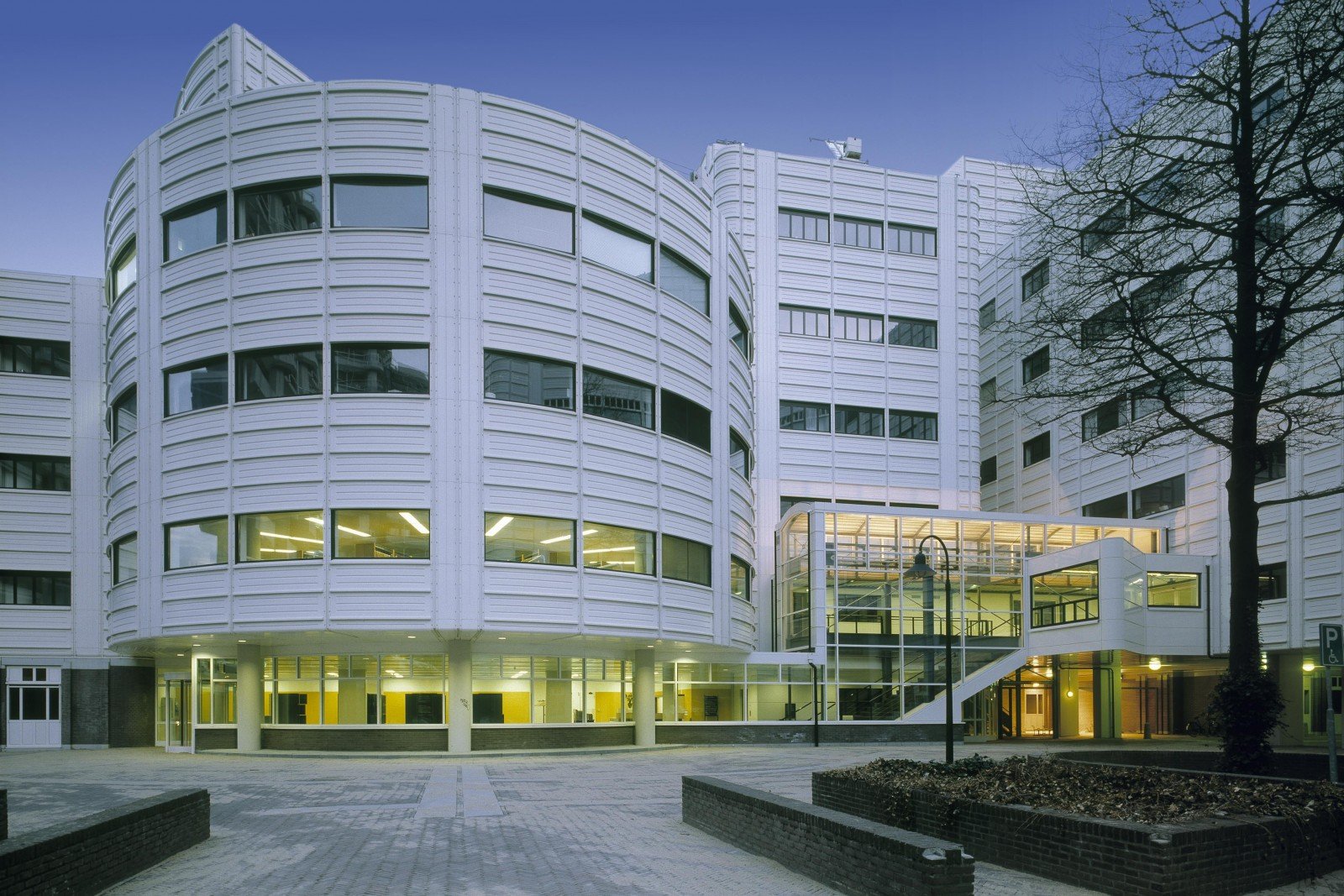
National Library of the Netherlands: History, Collections, Digital Services, and Cultural Importance
Introduction
The National Library of the Netherlands, commonly known as the Koninklijke Bibliotheek (KB), is one of the most important cultural and research institutions in the Netherlands. Located in The Hague, the library has played a major role in preserving Dutch written heritage, supporting education and research, and making knowledge accessible to the public. Although many people think of a national library simply as a large building filled with books, the modern KB is much more than that. It is a major center for cultural preservation, digital information, research support, and access to the intellectual history of the Netherlands.
The Netherlands has a long tradition of publishing, scholarship, printing, literature, journalism, and intellectual exchange. Over centuries, Dutch writers, scientists, historians, artists, philosophers, and publishers have produced an enormous body of material. Preserving this material is an important national responsibility. The KB contributes to this responsibility by collecting and preserving publications from the Netherlands and making them available to researchers, students, educators, and members of the public.
The library is particularly important because printed and digital information can easily disappear if it is not deliberately preserved. Newspapers become fragile, old books deteriorate, websites disappear, and digital files can become inaccessible because of technological changes. A modern national library therefore has to think not only about bookshelves and reading rooms but also about digitization, digital preservation, metadata, online collections, and long-term access.
The Koninklijke Bibliotheek has developed from a historical royal library into a modern national knowledge institution. Its work connects the past with the present. A researcher studying medieval manuscripts may use material preserved for centuries, while another researcher may investigate twentieth-century newspapers or contemporary digital publications. Students can use library resources for academic work, and the general public can explore Dutch cultural heritage through digital platforms.
This article provides a detailed overview of the National Library of the Netherlands, including its history, collections, building, services, digital transformation, role in education and research, preservation work, and importance to Dutch culture.
1. What Is the National Library of the Netherlands?
The National Library of the Netherlands is officially called the Koninklijke Bibliotheek, often abbreviated as KB. The word “Koninklijke” means “Royal,” while “Bibliotheek” means “Library.” The institution is based in The Hague, the political and administrative center of the Netherlands.
As the national library of the country, the KB has responsibilities that go beyond those of an ordinary public or university library. Its role includes collecting, preserving, describing, and providing access to Dutch publications and cultural heritage.
A national library serves as a kind of collective memory for a country. It preserves materials that help future generations understand how people lived, thought, communicated, studied, and created culture in earlier periods.
The KB performs this function through both physical and digital collections. Its holdings include books, newspapers, magazines, manuscripts, maps, and other forms of documentary heritage. Increasingly, its collections also include digital publications and online material.
The library works with researchers, cultural organizations, universities, archives, museums, publishers, and other institutions. These partnerships help strengthen the preservation and accessibility of Dutch heritage.
2. The History of the Koninklijke Bibliotheek
The history of the National Library of the Netherlands is closely connected with the development of the Dutch state, monarchy, publishing industry, and intellectual culture.
The institution was established in 1798, during a period of major political and social transformation in the Netherlands. At the time, the country was experiencing changes influenced by the political developments of the late eighteenth century. The creation of a national library reflected an increasing recognition that important books and documents should be preserved for the benefit of society.
The early collection was connected with the former library of the Dutch stadtholder, particularly the collection associated with the House of Orange-Nassau. These historical holdings provided an important foundation for the new institution.
During the nineteenth century, the library gradually expanded its collections and responsibilities. More books and publications were acquired, and the institution became increasingly important to scholars and researchers.
The growth of Dutch publishing created another important responsibility. As more books, newspapers, periodicals, and other publications were produced, the national library had to develop methods for collecting and organizing them.
The library’s development continued throughout the twentieth century. New technologies changed how information was produced, stored, catalogued, and accessed. The rise of mass newspapers, modern publishing, photography, microfilm, computers, and eventually the internet transformed the work of national libraries around the world.
The KB responded to these developments by expanding its technological capabilities and developing digital collections.
Today, the institution combines traditional library functions with modern digital preservation and access.
3. The Library and Dutch Cultural Heritage
One of the most important responsibilities of the KB is preserving Dutch cultural heritage.
Cultural heritage includes more than famous works of literature. It can include ordinary newspapers, magazines, government publications, advertisements, children’s books, scientific publications, maps, and other materials that collectively tell the story of a society.
A single newspaper may seem unimportant when viewed by itself. However, when newspapers from hundreds of years are preserved together, they provide valuable evidence about social and political life.
Similarly, children’s books can reveal changing attitudes toward education, family life, morality, language, and childhood.
Historical maps can show how Dutch cities and landscapes changed.
Academic publications can demonstrate the development of scientific knowledge.
Literary works can reveal changing styles, ideas, and cultural values.
The KB therefore acts as a long-term custodian of many different types of information.
Its preservation activities help ensure that future generations will not have to rely only on modern interpretations of history. They can examine original documents and publications themselves.
4. Collections of the National Library of the Netherlands
The collections of the KB cover a broad range of subjects and formats.
Among the most important categories are books, newspapers, magazines, manuscripts, maps, and digital resources.
Books
Books form a central part of the library’s collections. They represent centuries of Dutch publishing and intellectual activity.
The collection includes historical books as well as modern publications. Researchers can use these materials to study literature, history, religion, science, philosophy, language, art, and many other subjects.
Newspapers
Newspapers are particularly valuable historical sources.
They document daily events and provide contemporary perspectives on political developments, social changes, international affairs, disasters, cultural events, and ordinary life.
The KB has invested heavily in making historical newspapers available digitally. Digital newspaper collections have made it much easier for researchers to search large quantities of historical material.
Periodicals
Magazines and journals provide another important part of the national collection.
Academic journals are useful for scholarly research, while popular magazines can provide information about fashion, entertainment, social attitudes, advertising, and everyday life.
Manuscripts
Historical manuscripts provide direct evidence of earlier intellectual and literary activity.
They can include handwritten texts, literary documents, historical works, and other unique materials.
Manuscripts require specialized preservation because they can be extremely fragile.
Maps
Maps are valuable historical documents because they show how geographical knowledge and landscapes developed.
Dutch cartography has a particularly important place in European history. The Netherlands became famous for mapmaking, navigation, and geographical publishing.
The KB’s map-related materials contribute to the study of Dutch geography, urban development, exploration, and cartographic history.
5. Special Collections and Historical Treasures
Like many major national libraries, the KB possesses special collections containing rare and historically important materials.
These collections are important not simply because they are old but because they provide evidence about the development of Dutch culture and knowledge.
Rare books can demonstrate the evolution of printing technology.
Early printed works can show how texts were reproduced before modern publishing.
Medieval manuscripts can reveal the intellectual and religious culture of earlier periods.
Historical children’s literature can demonstrate how ideas about childhood changed over time.
Special collections are often used by scholars who need to examine original materials closely.
Modern digitization has also expanded access to these collections. Researchers can sometimes examine high-quality digital reproductions without physically handling fragile originals.
This reduces wear on valuable materials while increasing access.
6. Dutch Literature and the National Library
Literature occupies an important position within the KB’s cultural mission.
The Netherlands has produced many influential writers and literary traditions. Dutch literature includes novels, poetry, drama, essays, children’s literature, religious writing, travel literature, and many other genres.
A national library helps preserve these works across generations.
Researchers can use literary collections to study individual authors as well as broader movements in Dutch literature.
The library also contributes to the preservation of literary history by collecting editions, literary journals, criticism, and related publications.
Literary researchers can investigate how a particular novel was published, how its reception changed, or how different editions differed from one another.
The preservation of multiple editions is especially useful because books can change between editions.
7. The Importance of Children’s Books
Children’s literature is another fascinating area of cultural heritage.
Books written for children can provide insights into educational practices, social values, language, illustration, and ideas about childhood.
The Netherlands has a rich history of children’s publishing.
Historical children’s books can look very different from contemporary books. Their illustrations, vocabulary, stories, characters, and moral messages reflect the society in which they were produced.
By preserving these materials, the KB helps researchers examine the development of children’s culture and education.
Digitization makes many historical children’s books more accessible to teachers, students, historians, and members of the public.
8. The KB and Digital Transformation
Perhaps one of the biggest changes in the history of the National Library of the Netherlands has been the transition from physical collections to digital access.
Traditional libraries depended primarily on physical books and reading rooms.
Modern libraries increasingly provide online access to digitized collections.
The KB has developed extensive digital services that allow users to search and examine historical publications online.
This transformation has changed research methods.
A historian no longer necessarily needs to travel to The Hague to determine whether a particular newspaper contains an article about an event. Digital search systems can allow researchers to locate relevant pages from large historical collections.
Digitization also protects fragile originals because researchers can often work with digital copies instead of handling physical materials.
9. Delpher and Digital Historical Research
One of the best-known digital resources associated with Dutch cultural heritage is Delpher.
Delpher provides access to a large collection of digitized Dutch historical publications.
The service is particularly useful for researchers investigating newspapers, books, magazines, and other historical sources.
Searchable text makes it possible to locate names, places, events, phrases, and subjects across enormous collections.
For example, a researcher investigating the history of a Dutch city could search historical newspapers for references to that city.
A genealogist might search for family names.
A historian might examine reporting about a major historical event.
A literary scholar could investigate how an author or book was discussed in newspapers and magazines.
Digital databases such as Delpher demonstrate how modern technology can transform access to historical knowledge.
10. Digitization of Historical Materials
Digitization involves converting physical documents into digital representations.
For books, this often involves high-resolution scanning or photography.
The resulting digital files can be stored and displayed online.
However, digitization is not simply a matter of taking photographs.
Libraries must also create metadata that explains what each digital object represents.
Metadata may include information such as:
- Title
- Author
- Publication date
- Publisher
- Subject
- Language
- Edition
- Physical characteristics
- Collection information
Good metadata makes digital collections searchable and useful.
Optical character recognition can also be used to convert scanned printed pages into machine-readable text.
This enables full-text searching.
However, historical materials can present challenges. Old typefaces, damaged pages, unusual spelling, faded ink, and complex layouts can reduce recognition accuracy.
For this reason, digital historical research sometimes requires researchers to examine the original page images as well as the searchable text.
11. Preservation of Physical Books
Digital technology has not eliminated the need to preserve physical books.
Paper can deteriorate over time.
Factors such as humidity, temperature, light, insects, acidity, and handling can affect books and manuscripts.
National libraries therefore require carefully controlled storage environments.
Preservation professionals monitor collections and identify materials that require special treatment.
Some books may need conservation work.
Damaged bindings may be repaired.
Fragile pages may require protective enclosures.
Certain materials may need specialized storage.
Preservation is fundamentally a long-term activity. A book collected today may need to survive for hundreds of years.
12. Preservation of Digital Information
Digital preservation presents a different set of challenges.
A digital file may appear permanent because it does not physically decay like paper. However, digital information can become inaccessible when software, hardware, file formats, or storage systems become obsolete.
For example, a file created using an old computer program may not open easily on modern systems.
Storage media can also fail.
Digital preservation therefore requires continuous management.
Libraries need strategies for maintaining files, metadata, storage systems, and access technologies over long periods.
For a national library, this is particularly important because contemporary society produces enormous amounts of digital information.
13. Collecting Digital Publications
Modern publishing increasingly takes place online.
News websites, digital magazines, electronic books, and other digital publications are now important parts of cultural heritage.
A national library therefore needs ways to preserve digital publications.
This is more complicated than collecting printed books because online information can change or disappear quickly.
Web archiving is one solution.
Web archiving involves capturing and preserving websites or selected online content so that researchers can study it later.
Archived websites can become valuable historical sources.
A future historian may want to understand how Dutch society responded to an important event by examining websites and online publications from that period.
Without digital preservation, much of this evidence could disappear.
14. The Library’s Role in Research
The KB supports research across numerous academic disciplines.
Historians use its collections to study the past.
Literary scholars examine books, manuscripts, and literary journals.
Linguists investigate changes in language.
Social scientists can use newspapers and magazines as historical evidence.
Art historians can examine illustrations and visual materials.
Genealogists can search historical publications for names and family information.
Researchers can also combine KB resources with collections from universities, museums, archives, and international institutions.
This makes the library part of a larger research ecosystem.
15. Support for Students and Education
Libraries are essential educational institutions.
Students need reliable information for assignments, research papers, dissertations, and projects.
The KB provides resources that can support education at different levels.
Students can use digital collections to explore historical subjects.
Teachers can use historical materials in classroom activities.
University students can investigate primary sources.
Researchers can use specialized collections for advanced academic work.
Digital access is especially valuable because it allows students to use resources remotely.
Instead of requiring every researcher to travel to The Hague, many resources can be explored online.
16. The National Library and Public Access
Although national libraries have major research responsibilities, they also have an important public role.
Members of the public may be interested in exploring historical books, newspapers, photographs, manuscripts, and other materials for personal reasons.
Some people research family history.
Others are interested in local history.
Some explore Dutch literature.
Others simply want to discover historical documents.
Digital collections have made public engagement easier.
People can explore historical resources from different parts of the Netherlands and from other countries.
This broad access supports lifelong learning and public interest in cultural heritage.
17. The Library Building in The Hague
The KB’s presence in The Hague reflects the city’s importance as a national center of government, culture, and international activity.
The modern library complex provides facilities for collections, staff, research, digital services, and public activities.
A contemporary national library building must accommodate very different functions.
It needs spaces for storing physical collections.
It needs offices for librarians, researchers, conservators, and technical specialists.
It needs areas where users can consult materials.
It also needs technological infrastructure for digital collections.
The modern library is therefore a combination of traditional library architecture and advanced information infrastructure.
18. Reading Rooms and Research Facilities
Reading rooms are an important part of research libraries.
Researchers often need quiet spaces where they can study books, manuscripts, newspapers, and other documents.
Special collections may require additional procedures because of their rarity and fragility.
Researchers may need to request certain materials in advance.
Handling guidelines help protect valuable documents.
These procedures are not designed simply to restrict access. They are intended to ensure that materials remain available for future researchers.
The principle is straightforward: historical documents should be accessible, but access must be balanced with preservation.
19. The Library’s Relationship with Publishers
The relationship between a national library and publishers is essential.
Publishers produce the books, newspapers, magazines, and digital publications that become part of national cultural heritage.
The KB works within the Dutch publishing environment to collect and preserve publications.
This responsibility is especially important in an age when publishing formats are changing rapidly.
Traditional printed books coexist with electronic books, websites, online magazines, and other digital formats.
The national library must adapt its collection policies accordingly.
20. The Role of Cataloguing
A library collection is only useful if users can discover what it contains.
Cataloguing provides the structure needed to find materials.
Cataloguers create records describing books and other resources.
Information may include authors, titles, subjects, dates, publishers, languages, and other details.
Modern library catalogs also rely on standardized metadata systems.
Good cataloguing allows users to search collections efficiently.
It also helps libraries share information with other institutions.
21. Metadata and Knowledge Organization
Metadata is sometimes described as “data about data.”
For a book, metadata might identify its title, author, publication date, subject, and physical characteristics.
For a digital newspaper page, metadata can identify the newspaper title, issue date, page number, and related information.
Metadata is crucial for digital libraries because millions of digital objects may exist in online databases.
Without structured metadata, users would have difficulty discovering relevant materials.
Modern libraries therefore invest heavily in information organization and data quality.
22. Language and Dutch Identity
The KB has a particularly important role in preserving Dutch-language publications.
Language changes over time.
Words disappear.
New expressions appear.
Spelling changes.
Meanings evolve.
Historical publications provide evidence of these changes.
Linguists can use large collections of newspapers and books to study language development.
The national library therefore contributes not only to historical preservation but also to the study of Dutch language and identity.
23. The Library as a Memory Institution
The term “memory institution” is often used for libraries, archives, and museums because these organizations preserve society’s documentary and cultural memory.
The KB is an important Dutch memory institution.
Its collections help answer questions such as:
What did people read?
What did newspapers report?
Which books were published?
How did Dutch writers express themselves?
How did language change?
How did society respond to major events?
What information was available to people in earlier generations?
Preserving evidence allows these questions to be investigated.
24. The Importance of Newspapers for Historical Research
Newspapers deserve special attention because they capture events close to the time they occurred.
A newspaper from a particular day can provide information about what people knew and discussed at that moment.
However, newspapers should be interpreted carefully.
Journalists and publishers have perspectives and editorial policies.
Different newspapers may report the same event differently.
Researchers can compare multiple publications to understand these differences.
Digital newspaper databases make this comparative research much easier.
25. The Library and Social History
Historical books often focus on major figures and major events.
Newspapers, magazines, advertisements, and popular literature can provide a different perspective: everyday life.
Researchers can use these sources to study:
- Fashion
- Food
- Employment
- Education
- Family life
- Housing
- Transportation
- Entertainment
- Sports
- Advertising
- Consumer culture
This makes the KB valuable for social historians.
26. The Role of Technology
Technology has transformed nearly every aspect of the modern national library.
Computers changed cataloguing.
Digitization changed access.
Online databases changed research.
Artificial intelligence and machine learning are increasingly influencing text recognition and information analysis.
Digital tools can help researchers search millions of pages much faster than traditional methods.
However, technology does not replace librarians and researchers.
Human expertise remains essential for evaluating sources, interpreting historical context, maintaining metadata, and designing preservation strategies.
27. Artificial Intelligence and Historical Collections
Large digitized collections create opportunities for computational research.
Researchers can use text-mining methods to examine large numbers of historical documents.
For example, they can investigate how often a particular word appeared in newspapers over time.
They can examine changing patterns in language.
They can identify relationships between people, places, and events.
Artificial intelligence can assist with tasks such as text recognition and classification.
However, automated systems can make mistakes.
Historical language can be difficult to interpret.
Old typography can confuse optical character recognition.
Researchers therefore need to understand the limitations of digital methods.
28. Challenges Facing the National Library
The modern KB faces several major challenges.
Preservation
The library must preserve enormous quantities of material.
Digital Growth
Digital publications are increasing rapidly.
Storage
Digital collections require secure and scalable storage.
Access
The library must balance openness with copyright restrictions and preservation requirements.
Funding
Long-term cultural preservation requires sustained investment.
Technology
Systems and file formats change continuously.
Skills
Modern librarians need expertise in traditional librarianship, digital technologies, data management, and preservation.
These challenges mean that the role of a national library is constantly evolving.
29. Copyright and Access
Not every publication can automatically be placed online.
Copyright laws affect how modern books, newspapers, magazines, and other materials can be made available.
Libraries must therefore balance two important principles:
Preservation and access.
A library may legally preserve a publication but have restrictions on providing unrestricted online access.
Older works whose copyrights have expired may be easier to make publicly accessible.
More recent works may require different arrangements.
Understanding copyright is therefore an important part of digital library management.
30. International Cooperation
The KB does not operate in isolation.
National libraries around the world face similar challenges.
They cooperate through international organizations, professional networks, research projects, and digital initiatives.
International cooperation can help libraries exchange expertise about:
- Digitization
- Preservation
- Metadata
- Digital humanities
- Web archiving
- Copyright
- Research services
- Library technology
Such cooperation is particularly valuable because digital information is not limited by national borders.
31. The National Library in the Digital Age
The idea of a library has changed dramatically.
In the past, users often had to physically visit a building to access information.
Today, many resources can be accessed online.
This does not make physical libraries irrelevant.
Instead, it changes their function.
A modern national library has two interconnected worlds.
The first is the physical world of books, manuscripts, newspapers, maps, and special collections.
The second is the digital world of databases, digitized documents, electronic publications, websites, and research tools.
The KB operates in both worlds.
32. Why National Libraries Matter
National libraries matter because knowledge can disappear.
Books can be destroyed.
Websites can vanish.
Newspapers can deteriorate.
Digital files can become inaccessible.
Without organized preservation, future generations may lose access to important evidence about the past.
National libraries provide institutional continuity.
Governments, publishers, technologies, and social trends change, but a national library has a long-term responsibility to preserve cultural memory.
This long-term perspective distinguishes national libraries from many ordinary information services.
33. The KB and Future Generations
One of the most important ways to understand the KB is to think about future generations.
A book published today may not seem historically important.
But after fifty or one hundred years, researchers may want to know what people were reading, writing, discussing, and publishing.
The same applies to digital content.
A website that seems ordinary today may become valuable historical evidence in the future.
National libraries therefore collect not only for today’s researchers but also for people who have not yet been born.
34. Cultural Education and Public Engagement
The KB contributes to cultural education by helping people discover historical resources.
Exhibitions, online collections, educational materials, research tools, and public programs can introduce people to historical documents.
These activities help demonstrate that history is not only found in textbooks.
History can also be found in newspapers, advertisements, novels, maps, magazines, letters, and photographs.
When people explore original sources, they can develop a deeper understanding of how historical knowledge is created.
35. The Library and Dutch Publishing History
The Netherlands has a long and significant publishing tradition.
Printing became an important part of European intellectual culture, and Dutch publishers contributed to the international circulation of books and ideas.
The KB’s collections allow researchers to examine this publishing history.
They can investigate publishers, editions, authors, printers, literary movements, and reading culture.
Publishing history is important because books do not simply appear.
They are produced within economic, technological, cultural, and social systems.
A national library preserves evidence of those systems.
36. Rare Books and the History of Printing
Rare books can reveal how printing technology developed.
Early printed books often have different typography, page layouts, illustrations, and binding styles from modern books.
Researchers can study these characteristics to understand the history of printing.
The Netherlands has an important place in European printing history, making its national collections especially valuable to specialists.
Rare books are also important because they can reveal the movement of ideas across borders.
A book printed in one country might have been translated, sold, collected, and read elsewhere.
37. The Library’s Contribution to Humanities Research
Humanities research depends heavily on primary sources.
History, literature, philosophy, linguistics, cultural studies, religious studies, and related fields all rely on texts and documents.
The KB provides an extensive documentary foundation for such research.
Digital access has expanded the possibilities even further.
Researchers can now analyze large bodies of historical text using computational methods.
This has contributed to the development of the digital humanities.
38. Digital Humanities
Digital humanities combines traditional humanities research with computational tools.
A researcher studying Dutch newspapers might once have read hundreds of issues manually.
Today, digital tools can help search thousands or millions of pages.
Researchers can identify patterns that would be difficult to detect manually.
For example, they might investigate how a particular concept was discussed over several decades.
They can visualize changes in vocabulary or identify networks of people and places.
The KB’s digitized collections provide valuable material for this type of research.
39. Genealogy and Family History
Historical library collections can also support genealogy.
People researching family history may find references to ancestors in newspapers, books, directories, announcements, and other publications.
A newspaper might contain a birth announcement.
Another publication might mention a person’s occupation.
A historical directory might provide information about where someone lived or worked.
Digital search tools can make this research much faster.
However, genealogical evidence should always be checked against multiple sources where possible.
40. The National Library and Public Knowledge
The KB represents the principle that knowledge should be preserved as a public cultural resource.
A national library does not exist only for professional scholars.
Its collections can benefit students, teachers, journalists, historians, writers, genealogists, and curious members of the public.
The wider the access, the greater the cultural value of preserved materials.
Digital services have made this principle increasingly practical.
41. Comparing Traditional and Digital Libraries
Traditional libraries and digital libraries are sometimes presented as opposites, but they are better understood as complementary.
A physical book provides the original material object.
A digital copy provides convenient access.
The physical object can contain information about paper, binding, annotations, ownership, and production.
The digital copy makes searching and remote access easier.
The strongest modern library systems preserve both.
The KB’s work demonstrates the continuing importance of combining physical preservation with digital access.
42. Why the KB Is Important to the Netherlands
The importance of the National Library of the Netherlands can be understood through several major functions.
First, it preserves Dutch documentary heritage.
Second, it supports research.
Third, it provides educational resources.
Fourth, it helps make historical material digitally accessible.
Fifth, it supports the preservation of digital publications.
Sixth, it contributes to national and international library cooperation.
Together, these functions make the KB an important part of the Netherlands’ cultural infrastructure.
43. The Future of the National Library of the Netherlands
The future of the KB will likely involve even greater integration of physical and digital collections.
Digital preservation will become increasingly important as more information is born digitally.
Artificial intelligence may improve searching, classification, and text recognition.
Researchers may increasingly use computational methods to analyze historical collections.
At the same time, physical conservation will remain necessary because historical books and manuscripts cannot simply be replaced by digital copies.
The challenge will be to maintain both sides of the library’s mission.
44. The Continuing Importance of Books
Despite the growth of digital information, physical books remain important.
A printed book is a historical artifact.
Its paper, binding, typography, annotations, ownership marks, and physical condition can all provide information.
Digital copies cannot always capture every physical characteristic.
For this reason, national libraries continue to preserve original physical materials.
Digitization should generally be viewed as an additional form of access and preservation, not as a complete replacement for physical collections.
45. A Gateway to Dutch History
For anyone interested in Dutch history, the KB can be understood as a gateway to an enormous documentary landscape.
Its collections contain evidence from different centuries.
A researcher can move from medieval manuscripts to early printed books, from nineteenth-century newspapers to twentieth-century magazines, and from printed publications to modern digital material.
This chronological range makes the library particularly valuable.
It allows researchers to examine continuity and change.
46. A Resource for International Researchers
The importance of the KB extends beyond the Netherlands.
Researchers from other countries may use its collections to study Dutch history, European history, publishing, cartography, literature, migration, international trade, religion, science, and politics.
The Netherlands has historically been connected with many parts of Europe and the wider world.
Dutch publications can therefore provide evidence relevant to international history.
Digital access further expands the library’s international reach.
47. The Broader Mission of a National Library
The National Library of the Netherlands illustrates a broader principle shared by national libraries around the world.
A national library is not simply a warehouse of books.
It is a cultural institution.
It collects.
It preserves.
It organizes.
It provides access.
It supports research.
It educates.
It protects cultural memory.
It adapts to technological change.
These responsibilities require long-term planning and specialized expertise.
48. Conclusion
The National Library of the Netherlands, or Koninklijke Bibliotheek, is one of the country’s most important institutions for preserving and providing access to knowledge.
Since its establishment in 1798, the library has developed from a historical collection into a modern national institution serving researchers, students, educators, and the wider public.
Its collections include books, newspapers, magazines, manuscripts, maps, literary works, children’s books, and digital publications. These materials provide evidence about Dutch history, language, literature, publishing, science, education, and everyday life.
The library’s digital transformation has greatly expanded access to cultural heritage. Resources such as digital newspaper collections and online historical databases allow users to search and explore materials without always needing to visit the physical library.
At the same time, the KB continues to preserve original physical materials. This is essential because books and manuscripts are themselves historical objects, containing information that may not be fully captured by digital copies.
Another major responsibility is digital preservation. As society increasingly produces information online, national libraries must find ways to ensure that digital publications and websites remain accessible to future researchers.
The KB also supports the development of digital humanities by providing large collections that can be analyzed using computational tools. Researchers can combine traditional historical methods with modern technology to discover new patterns and perspectives.
Ultimately, the National Library of the Netherlands can be understood as a bridge between generations. It preserves the intellectual and cultural record of the past while developing technologies and services that make that record useful in the present.
Its mission is not limited to protecting old books. It is about protecting knowledge itself.
From medieval manuscripts to modern digital publications, from historical newspapers to Dutch literature, the collections of the KB help preserve the story of the Netherlands and make that story available for future generations.
For students, researchers, historians, writers, educators, genealogists, and anyone interested in Dutch culture, the National Library of the Netherlands represents an extraordinary gateway to information.
Its continuing evolution demonstrates that libraries remain essential even in an age dominated by digital technology. The methods may change, but the fundamental mission remains the same: collect knowledge, preserve it carefully, organize it intelligently, and make it accessible to generations to come.