Trinity College Library: A Complete History, Architecture, Collections, and Cultural Legacy
Introduction
Trinity College Library is one of the most famous academic libraries in the world. Located at Trinity College Dublin in Ireland, it is widely recognized for its historic collections, magnificent architecture, remarkable manuscripts, and long association with scholarship. For centuries, the library has served students, researchers, historians, writers, and visitors who come to study or admire its extraordinary cultural treasures.
The library is especially famous for the Book of Kells, an illuminated manuscript created around the beginning of the ninth century. This manuscript is considered one of Ireland’s greatest cultural treasures and attracts visitors from around the world. However, the Book of Kells is only one part of a much larger collection. Trinity College Library contains millions of printed volumes, manuscripts, maps, music collections, archives, and other materials representing centuries of intellectual and cultural history.
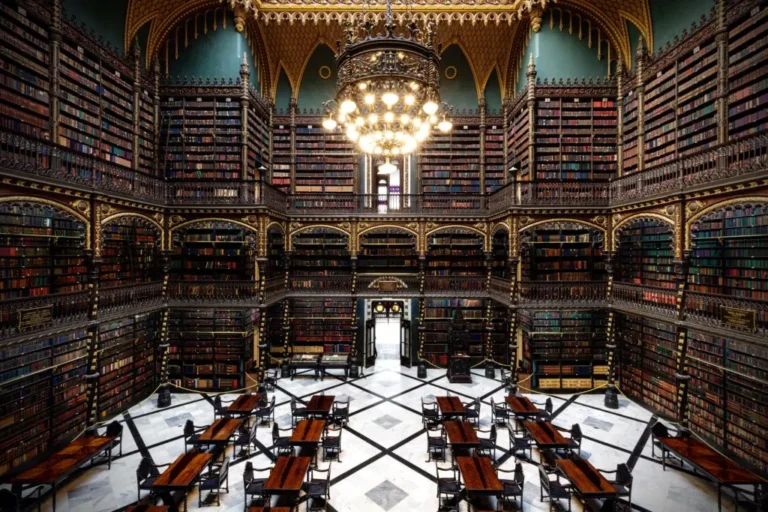
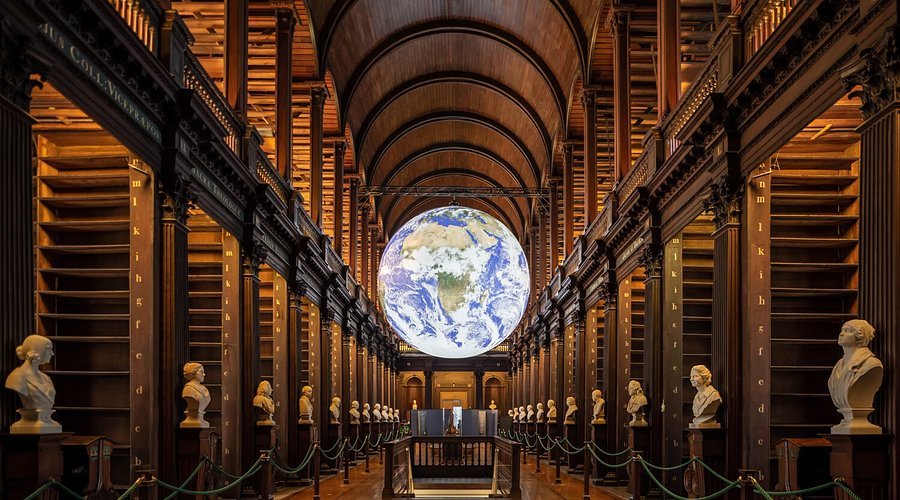
The most visually famous part of the library is the Long Room, an impressive eighteenth-century library hall containing historic books and architectural features. Its long wooden galleries, classical design, and rows of old books have made it one of Dublin’s most recognizable interiors.
Trinity College Library is not simply a tourist attraction. It remains an important research library and an essential part of Trinity College Dublin. Its collections support research in literature, history, languages, religion, science, politics, art, music, and many other disciplines.
This article explores the history of Trinity College Library, its architecture, collections, the Book of Kells, the Long Room, preservation work, digital developments, educational importance, and continuing cultural significance.
1. The Foundation of Trinity College Dublin
To understand the history of Trinity College Library, it is necessary to understand the history of Trinity College Dublin itself.
Trinity College Dublin was founded in 1592 by a charter issued under Queen Elizabeth I. The institution was established during a period when Ireland was experiencing major political, religious, and cultural changes. The creation of a university in Dublin was intended to provide higher education and support scholarly learning.
From its earliest years, books and manuscripts were essential to the institution. A university could not function effectively without access to texts for teaching, research, theology, philosophy, law, medicine, languages, history, and other subjects.
As the college developed, its library became increasingly important. Books were acquired through purchases, donations, bequests, institutional collections, and other means. Over time, these materials formed a substantial scholarly resource.
The growth of the library reflects the development of Trinity College itself. As the college expanded its academic programs and attracted scholars, the demand for books and research materials increased.
2. Early Development of the Library
The early Trinity College library was considerably smaller than the institution visitors see today. Like many European academic libraries of the period, it developed gradually.
In the seventeenth century, books were expensive and difficult to produce. Printed materials were therefore valuable possessions. Manuscripts were even more significant because they represented unique texts and could contain historical or artistic information unavailable elsewhere.
Donations played an important role in building Trinity’s collections. Scholars, clergy, collectors, and members of society donated books to the institution. Some collections arrived through bequests, while others were acquired by purchase.
The library’s growth also benefited from Ireland’s changing legal and educational environment. Over the centuries, Trinity College became one of the major centers of scholarship in Ireland, and its library developed accordingly.
3. The Library’s Legal Deposit Role
One of the most important developments in the history of Trinity College Library was its legal deposit privilege.
Legal deposit is a system through which publishers are required to provide copies of their publications to designated libraries. Such systems help preserve a nation’s intellectual output.
Trinity College Library has long held an important legal deposit role for publications produced in Ireland and, historically, publications within the United Kingdom under relevant legal arrangements. This has contributed enormously to the growth of its collections.
The principle behind legal deposit is simple but powerful: important publications should not disappear simply because they are no longer commercially available. By collecting and preserving published works, libraries create long-term records of intellectual and cultural life.
For researchers, this means that Trinity College Library can provide access to materials representing generations of publishing.
4. Growth During the Eighteenth Century
The eighteenth century was an important period in the development of Trinity College Library.
The college expanded its buildings and academic facilities, and the library required a larger and more suitable home. This eventually resulted in the construction of the building now known as the Old Library.
The eighteenth century was also a period of significant intellectual development in Europe. Enlightenment ideas influenced universities, literature, science, philosophy, history, and politics.
As scholarship expanded, libraries needed increasingly sophisticated collections. Trinity College responded by developing its holdings and improving facilities for students and scholars.
The construction of the Long Room was one of the most important architectural achievements of this period.
5. The Old Library
The Old Library is the historic heart of Trinity College Library.
Construction began in the early eighteenth century, with the library building developing over several stages. Its design reflects the architectural traditions of the period while also responding to the practical requirements of storing books.
The building is composed of several important spaces, but the Long Room is its most famous feature.
The Old Library demonstrates an important principle in historic library design: architecture and scholarship were closely connected. A library was not merely a storage facility. It was intended to represent learning, knowledge, and intellectual achievement.
Its grand proportions and carefully designed interior communicate the importance of books and scholarship.
6. The Long Room
The Long Room is perhaps the most recognizable part of Trinity College Library.
The hall is approximately 65 meters long and is lined with thousands of historic books. Its wooden shelving extends along both sides, creating a dramatic visual effect.
Originally, the Long Room had a lower ceiling design. As the library’s collection expanded, additional space was required for books. The interior was subsequently altered, including changes that created the impressive barrel-vaulted ceiling visitors see today.
The Long Room contains rows of books arranged in an orderly system. Historic busts of notable figures also stand among the shelves, adding to the room’s scholarly atmosphere.
The combination of books, woodwork, sculpture, and architecture makes the Long Room one of the world’s best-known historic library interiors.
7. Architecture of the Long Room
The architecture of the Long Room is both functional and symbolic.
Its great length provides extensive shelving space, while the galleries allow books to be stored vertically. The use of timber creates a warm atmosphere and contrasts with the stone architecture of the surrounding college.
The ceiling is another defining feature. Its curved form contributes to the room’s monumental character.
Large windows provide natural light, while the arrangement of shelves creates a strong sense of symmetry.
The architecture reflects the idea that knowledge should be preserved in an environment designed specifically for intellectual activity.
Today, the Long Room is photographed by millions of visitors through tourism images, documentaries, books, and online publications. Its visual identity has become closely associated with Dublin and Ireland.
8. The Book of Kells
The most famous treasure held by Trinity College Library is the Book of Kells.
The Book of Kells is an illuminated manuscript containing the four Gospels of the New Testament. It was produced around the beginning of the ninth century and is associated with the early medieval Christian manuscript tradition.
The manuscript is famous for its extraordinary decoration.
Its pages contain elaborate initials, intricate patterns, human and animal figures, and vibrant artistic compositions. The artwork demonstrates the remarkable skills of medieval scribes and artists.
The manuscript was created long before modern printing technology. Every page had to be prepared manually. Producing a richly decorated manuscript required significant time, knowledge, materials, and artistic ability.
The Book of Kells therefore represents both a religious text and an extraordinary work of medieval art.
9. Historical Background of the Book of Kells
The precise origins of the Book of Kells have been debated by scholars.
It is traditionally associated with monastic communities connected with St Columba. Its production appears to have involved more than one location and multiple scribes and artists.
The manuscript is incomplete in certain respects, and its history before arriving at Trinity College is complex.
The manuscript eventually came to Trinity College Library in the seventeenth century. Since then, it has become one of the institution’s most important treasures.
Its survival is remarkable. Many medieval manuscripts have been damaged, lost, or destroyed over the centuries. The preservation of the Book of Kells allows modern researchers to study early medieval writing, art, religion, materials, and cultural history.
10. Artistic Features of the Book of Kells
The Book of Kells is particularly famous for its decorative pages.
One of its defining characteristics is the complexity of its ornamentation. Interlaced patterns appear throughout the manuscript, creating visual designs that require close examination to fully appreciate.
Animals and human figures also appear in the artwork. Some are highly stylized, reflecting artistic traditions of the early medieval period.
Large decorated initials are another important feature.
The manuscript demonstrates how writing and visual art could be combined to create a powerful religious object.
For modern viewers, the pages may appear incredibly complex. However, the designs were created without modern digital tools, requiring careful planning and manual execution.
11. The Book of Kells Exhibition
The Book of Kells is displayed as part of a dedicated exhibition at Trinity College.
The exhibition provides visitors with information about the manuscript and the wider historical context in which it was produced.
Because the original manuscript is extremely valuable and fragile, only selected pages can be displayed at a time. Pages are periodically changed to reduce exposure and help protect the manuscript.
The exhibition helps visitors understand that the Book of Kells is not simply an attractive old book. It is a historical source that provides evidence about medieval religious culture, artistic traditions, writing practices, and book production.
12. Other Manuscripts in the Library
Although the Book of Kells receives much attention, Trinity College Library contains many other important manuscripts.
These materials cover numerous periods and subjects.
The manuscript collections include medieval religious texts, literary works, historical documents, correspondence, maps, and other materials.
Some manuscripts are written in Latin, while others represent Irish, English, and additional languages.
Manuscripts are especially valuable to researchers because they can preserve information unavailable in printed editions.
They may also contain annotations, corrections, ownership marks, illustrations, and other physical evidence showing how texts were used.
13. The Library’s Printed Collections
Trinity College Library contains a vast collection of printed books.
These books cover hundreds of years of publishing history.
Researchers can find works relating to literature, philosophy, religion, politics, science, medicine, law, history, languages, geography, art, and many other subjects.
Older printed books are particularly valuable because they can provide evidence about how knowledge circulated in earlier centuries.
A historical book can tell researchers not only what people wrote but also how books were produced, distributed, owned, read, and preserved.
14. Rare Books
Rare books form an important part of Trinity College Library’s collections.
Rare books may be valuable because of their age, scarcity, historical significance, provenance, artistic characteristics, or importance to a particular subject.
Some early printed works provide evidence about the development of European printing.
The invention of movable-type printing transformed the circulation of knowledge. Libraries such as Trinity’s preserve examples of this transformation.
Researchers can study differences between editions, printing techniques, illustrations, typography, binding, paper, and ownership markings.
15. Irish History and Culture
Trinity College Library has an especially important role in preserving Irish history and culture.
Its collections include materials relating to Irish literature, language, politics, religion, society, and historical events.
Irish-language materials are particularly significant.
For researchers studying the development of the Irish language, manuscripts and printed works can provide evidence of vocabulary, grammar, literary traditions, and changes over time.
The library’s collections also support research into Irish writers and cultural figures.
16. Irish Literature
Ireland has produced many internationally important writers, and Trinity College Library holds materials connected with Irish literary culture.
Researchers can use library collections to study the development of Irish literature from earlier periods through modern times.
The library’s collections can help researchers examine literary manuscripts, correspondence, first editions, criticism, and historical contexts.
Literature is not created in isolation. Writers are influenced by society, politics, language, education, religion, and other cultural forces. A research library allows scholars to investigate these relationships through primary and secondary sources.
17. Samuel Beckett and Literary Collections
Trinity College has connections with numerous important writers and intellectuals.
Among the modern literary figures associated with the institution is Samuel Beckett, the Irish writer and playwright.
Beckett’s work became internationally influential, particularly through plays such as Waiting for Godot.
Collections connected with major writers are valuable because they can contain manuscripts, letters, notes, drafts, and other materials.
Such documents can reveal how literary works developed from early ideas to finished publications.
18. Jonathan Swift and Trinity College
Another major literary figure associated with Trinity College is Jonathan Swift.
Swift was an Irish writer and satirist best known for works including Gulliver’s Travels.
His association with Trinity reflects the college’s long connection with Irish literary and intellectual life.
Historical library collections can help researchers study Swift’s era, literary culture, political debates, and publishing environment.
19. The Brian Boru Harp
Another famous object associated with Trinity College Library is the Brian Boru harp, commonly known as the Trinity College Harp.
The harp is one of Ireland’s most recognizable historical symbols.
It has been associated with Irish identity for centuries, although the specific historical connection to the medieval king Brian Boru is uncertain.
The harp is important because it represents the relationship between music, history, national symbolism, and cultural memory.
Its design has influenced later representations of Ireland, including the harp symbol used by the Irish state.
20. Maps and Cartographic Collections
Trinity College Library also contains important maps and cartographic materials.
Maps are valuable historical sources because they show how people understood geography at particular moments in time.
Historical maps can reveal changing borders, settlements, roads, coastlines, place names, political territories, and geographic knowledge.
Researchers can compare maps from different periods to understand how landscapes and political boundaries changed.
The study of historical maps can therefore contribute to research in geography, history, archaeology, politics, and environmental studies.
21. Music Collections
Music is another important area of library collecting.
Historical musical materials can include printed music, manuscripts, correspondence, and archival documents.
Such materials provide researchers with evidence about composers, performers, musical institutions, and cultural traditions.
Music collections are particularly valuable because musical works exist in both written and performed forms. Manuscripts and printed scores can reveal how music was originally documented.
22. Archives and Special Collections
Special collections differ from ordinary library materials because they often require specialized preservation and handling.
Trinity College Library’s special collections contain materials that are particularly rare, fragile, valuable, or historically important.
These collections may include personal papers, institutional archives, manuscripts, rare books, photographs, maps, and other documents.
Archivists carefully organize and describe such materials so researchers can locate relevant information.
Preservation work may include environmental monitoring, conservation treatment, protective storage, and digitization.
23. Conservation of Historic Materials
A library holding centuries-old books and manuscripts faces significant preservation challenges.
Paper, parchment, leather, ink, pigments, thread, and other materials can deteriorate over time.
Environmental conditions such as humidity, temperature, light, pollution, and dust can affect historical materials.
Conservators therefore work to create appropriate storage conditions.
Physical handling must also be carefully controlled. Fragile books may require special supports when opened.
The objective of conservation is not to make historic objects look new. Instead, the goal is generally to stabilize and preserve them so they can survive for future generations.
24. Fire Protection and Library Safety
Historic libraries must also protect collections from major risks such as fire and water damage.
Because books are highly vulnerable to environmental disasters, libraries use carefully designed safety systems.
Fire prevention is especially important in historic buildings containing large quantities of books.
Water can also cause severe damage. A major leak or flooding incident could affect thousands of volumes.
Modern library management therefore combines traditional preservation practices with advanced building safety systems.
25. Digitization
Digitization has transformed how researchers access historical library collections.
Instead of requiring every researcher to travel to Dublin, libraries can make selected materials available digitally.
Digitized manuscripts and books can be viewed by researchers around the world.
Digital copies also reduce the need to handle fragile originals.
However, digitization does not eliminate the importance of physical materials. The original object contains information that may not always be visible in a digital image, including paper texture, binding, annotations, dimensions, and physical construction.
Digital preservation is therefore an important complement to physical preservation.
26. The Library in the Digital Age
Modern academic libraries have changed significantly because of computers and the internet.
Today, students and researchers can search catalogs, databases, electronic journals, digital books, archival materials, and other resources online.
Trinity College Library operates within this changing academic environment.
The modern library therefore has two major responsibilities.
The first is to preserve historic collections.
The second is to provide access to modern information resources.
Balancing these responsibilities is one of the defining challenges of contemporary research libraries.
27. Trinity College Library as a Research Institution
The library supports research across many academic disciplines.
Historians can use manuscripts and archives.
Literary scholars can examine rare editions and authors’ papers.
Scientists and historians of science can study older scientific publications.
Linguists can investigate historical languages.
Art historians can examine illuminated manuscripts and visual materials.
Genealogists and cultural historians may also benefit from historical records.
The library’s interdisciplinary character is one of its greatest strengths.
28. Importance for Students
For students at Trinity College Dublin, the library is an essential academic resource.
Students use library services for coursework, research projects, examinations, dissertations, and independent study.
Modern university libraries provide much more than shelves of books. They offer electronic resources, research guidance, study spaces, catalog services, archives, and specialist assistance.
The historic environment can also provide students with a strong connection to the institution’s centuries-long academic tradition.
29. The Library and Public Education
Trinity College Library also has an educational role beyond the university.
Visitors who come to see the Book of Kells and the Long Room encounter aspects of Irish history, medieval culture, manuscript production, architecture, and scholarship.
Exhibitions can transform specialized academic knowledge into material that is accessible to a broad audience.
This public role is important because cultural institutions help communities understand their shared heritage.
30. Tourism and Cultural Heritage
Trinity College Library is one of Dublin’s major cultural attractions.
Visitors are drawn particularly by the Book of Kells and the Long Room.
The library demonstrates how historic academic institutions can become important parts of cultural tourism.
Visitors may come primarily for architecture or famous manuscripts, but they often leave with a greater understanding of Ireland’s literary and historical traditions.
The library therefore contributes to Dublin’s identity as a city associated with education, literature, history, and culture.
31. Photography and Popular Culture
The Long Room has become one of the most photographed interiors in Ireland.
Its distinctive appearance has made it recognizable in books, documentaries, websites, films, social media, and travel publications.
Images of its wooden shelves and rows of historic books often represent the traditional idea of a grand European library.
However, photographs capture only one aspect of the institution.
Behind the famous interior is a complex research organization involving librarians, archivists, conservators, researchers, digital specialists, administrators, and other professionals.
32. Challenges of a Historic Library
Historic libraries face numerous challenges.
One challenge is maintaining aging buildings.
Another is preserving collections while allowing researchers and visitors to access them.
Tourism can create additional pressure because large numbers of visitors must be managed carefully.
Climate and environmental changes also raise concerns about the preservation of cultural heritage.
Libraries must therefore constantly evaluate preservation strategies.
33. Balancing Access and Preservation
One of the central challenges for Trinity College Library is finding the right balance between access and preservation.
A collection has value because people can study it, but excessive handling can damage fragile materials.
Digital copies can help by providing alternatives to physical access.
At the same time, researchers sometimes need to examine original objects.
Professional librarians and conservators therefore establish rules for handling rare materials.
These procedures protect the collections while allowing legitimate scholarly research.
34. The Importance of Cataloging
A collection is only useful if researchers can discover what it contains.
Cataloging is therefore one of the most important tasks performed by librarians.
Catalog records may provide information about an item’s title, author, publication date, subject, edition, language, location, and other characteristics.
For manuscripts and archival materials, description can be especially complicated because collections may contain thousands of individual documents.
Good cataloging allows scholars to locate sources efficiently.
35. Libraries as Guardians of Memory
Trinity College Library illustrates a broader principle: libraries are guardians of collective memory.
A library preserves more than information.
It preserves evidence of how societies thought, communicated, created art, recorded events, and transmitted knowledge.
A medieval manuscript represents the intellectual world of its creators.
An eighteenth-century printed book can reveal the publishing culture of its period.
A modern archive can preserve evidence of twentieth- or twenty-first-century life.
Together, these materials create a long historical record.
36. Why Historic Libraries Matter Today
In an age of digital information, it might seem that physical libraries are becoming less important.
However, historic libraries remain essential.
Digital information can disappear, change, or become inaccessible. Physical books and manuscripts provide durable historical evidence.
Original documents can also contain information that has never been digitized.
Furthermore, libraries provide reliable systems for organizing and preserving information.
Trinity College Library demonstrates that physical collections and digital technologies can work together rather than being competing alternatives.
37. Trinity College Library and Irish Identity
The library has a strong connection to Irish cultural identity.
The Book of Kells, the Trinity College Harp, Irish manuscripts, and collections of Irish literature all contribute to this relationship.
These objects have become symbols that connect Ireland’s medieval past with its modern cultural identity.
However, their importance extends beyond national symbolism.
They are also significant sources for international scholarship.
Researchers from many countries study Irish history and culture through collections preserved in the library.
38. International Importance
Trinity College Library is internationally significant because its collections are relevant to research beyond Ireland.
The Book of Kells attracts global attention.
The library’s rare books contribute to studies of European intellectual history.
Its manuscripts support research into medieval Christianity and manuscript culture.
Its literary archives are relevant to international studies of modern literature.
Its maps and historical documents can contribute to global research in geography and history.
Thus, the library serves both local and international scholarly communities.
39. The Experience of Visiting the Library
For visitors, entering the historic library is an experience combining architecture, history, and literature.
The journey typically includes an introduction to the Book of Kells before visitors reach the Long Room.
The exhibition helps explain the historical background of the manuscript.
The Long Room then provides a visual experience of historic book culture.
Visitors see shelves filled with old volumes, wooden architecture, sculptures, and other historic features.
The experience demonstrates how a working research institution can also function as a major cultural heritage site.
40. The Long Room and the Future
The preservation of the Long Room is an ongoing responsibility.
Historic buildings require continual maintenance and careful planning.
The library must consider structural conservation, environmental control, fire safety, collection protection, accessibility, visitor management, and research needs.
Future conservation projects will likely require careful coordination between historians, architects, engineers, conservators, librarians, and heritage professionals.
The challenge is to preserve the character of the historic space while ensuring that the library remains functional.
41. Educational Value of the Book of Kells
The Book of Kells provides an extraordinary educational opportunity.
Students can study it from multiple perspectives.
History students can investigate medieval Ireland.
Art students can examine its decoration.
Religious studies students can investigate its Christian context.
Language students can study its textual traditions.
Conservation students can examine its materials and construction.
Digital humanities researchers can study high-resolution images and develop new methods for analyzing manuscripts.
One object can therefore support many different academic disciplines.
42. Medieval Book Production
The Book of Kells also teaches us about medieval book production.
Creating a manuscript required materials such as parchment, pigments, ink, thread, and covers.
Scribes had to prepare text carefully.
Artists created decorative elements.
Errors could require corrections.
The process was slow compared with modern printing.
The result was an object that could take enormous effort to produce.
The Book of Kells provides evidence of the high level of craftsmanship achieved by medieval communities.
43. The Role of Scribes and Artists
The people who created medieval manuscripts often worked within religious communities.
Their work required patience, training, and technical skill.
A scribe needed to copy text accurately while maintaining consistent handwriting.
An artist needed to create decorative patterns and figures within carefully planned spaces.
In illuminated manuscripts, text and decoration had to work together.
The Book of Kells demonstrates the extraordinary artistic and technical abilities of its creators.
44. Historical Research Using Library Collections
Researchers working at Trinity College Library can investigate questions that cannot always be answered through modern sources.
For example, historians may examine handwritten correspondence to understand relationships between historical figures.
Literary scholars may compare manuscript drafts with published editions.
Book historians may examine different editions of the same work.
Genealogists and social historians may investigate names, places, and institutions.
This is why libraries with historic collections remain essential to academic research.
45. The Library as a Bridge Between Past and Present
Trinity College Library connects different historical periods.
Medieval manuscripts represent the distant past.
Early printed books represent the development of European printing.
Eighteenth-century collections reflect Enlightenment-era scholarship.
Nineteenth-century materials document major social and political changes.
Modern archives preserve more recent intellectual and cultural history.
The library therefore functions as a bridge connecting generations of knowledge.
46. Professional Librarians and Archivists
The preservation of a collection like Trinity College Library requires specialized professionals.
Librarians manage collections and assist researchers.
Archivists organize historical records.
Conservators protect physical objects.
Digital specialists manage electronic collections and digitization projects.
Cataloging specialists create detailed records.
Building and heritage professionals help maintain historic facilities.
The library’s success therefore depends on a large community of expertise working behind the scenes.
47. The Future of Research Libraries
Research libraries are changing as technology develops.
Artificial intelligence, machine-readable texts, digital humanities, high-resolution imaging, online catalogs, and new preservation technologies are creating new possibilities.
Researchers can analyze large collections digitally.
Texts can be searched in ways that were previously impossible.
Images can be studied remotely.
Historical documents can reach audiences far beyond the physical library.
Nevertheless, professional judgment remains essential.
Technology can assist preservation and discovery, but it does not replace the need for expert librarians, archivists, conservators, and scholars.
48. Why Trinity College Library Remains Relevant
Trinity College Library remains relevant because it combines three important roles.
First, it is an academic research library.
Second, it is a guardian of cultural heritage.
Third, it is a public educational and tourism institution.
Few places combine these functions so visibly.
The library’s historic collections provide evidence for scholars, while its exhibitions introduce those collections to the public.
Its continued development demonstrates that historic institutions can adapt to modern needs without abandoning their heritage.
49. Frequently Asked Questions
What is Trinity College Library famous for?
Trinity College Library is especially famous for the Book of Kells and the historic Long Room. It is also an important research library with extensive manuscript, rare book, archival, map, and other collections.
Where is Trinity College Library?
It is located within Trinity College Dublin in Dublin, Ireland.
What is the Book of Kells?
The Book of Kells is an early medieval illuminated manuscript containing the four Gospels of the New Testament. It is famous for its intricate decoration and historical importance.
What is the Long Room?
The Long Room is the famous historic library hall in the Old Library at Trinity College Dublin. It contains extensive historic book shelving and is one of Ireland’s best-known library interiors.
How old is Trinity College Dublin?
Trinity College Dublin was founded in 1592.
Can researchers use Trinity College Library?
Yes. Trinity College Library supports academic research and provides access to many collections, subject to relevant library rules and conditions.
Does the library contain only old books?
No. The library contains both historic and modern research resources, including printed books, manuscripts, archives, electronic resources, maps, music materials, and other collections.
Why is the library important to Irish history?
Its collections preserve important evidence relating to Irish literature, language, religion, politics, society, art, and intellectual history.
Why is the Book of Kells so important?
It combines historical, religious, artistic, and manuscript significance. Its survival provides researchers with valuable evidence about early medieval culture and book production.
Is the Long Room still a library?
The Long Room is part of the historic Old Library and is associated with Trinity College Library’s collections and heritage functions. The institution as a whole continues to operate as a major academic research library.
50. Conclusion
Trinity College Library is much more than a beautiful historic building. It is a major center of knowledge, research, preservation, and cultural heritage.
Its history is closely connected with the development of Trinity College Dublin and with the intellectual history of Ireland. Over centuries, the library has accumulated an extraordinary range of books, manuscripts, archives, maps, music materials, and other resources.
The Book of Kells remains its most famous treasure. Its intricate artwork and early medieval history make it one of the world’s most recognizable manuscripts. Yet the significance of Trinity College Library extends far beyond this single object.
The Long Room represents another major part of the library’s cultural importance. Its architecture, historic shelves, books, and atmosphere have made it a symbol of traditional scholarship and one of Dublin’s most recognizable cultural spaces.
At the same time, the library continues to serve a modern academic purpose. Students and researchers use its resources to investigate questions across numerous disciplines. Librarians, archivists, conservators, and digital specialists work continuously to protect and provide access to collections.
The library also demonstrates why physical cultural heritage remains important in a digital world. Online resources have transformed research, but original manuscripts, rare books, maps, and archives continue to provide unique evidence that cannot always be reproduced digitally.
For Ireland, Trinity College Library is an important part of the country’s cultural heritage. For international scholars, it is an important research institution. For visitors, it offers an opportunity to encounter extraordinary examples of historical books, manuscripts, and architecture.
Ultimately, Trinity College Library represents the enduring human desire to preserve knowledge and pass it from one generation to another. From medieval manuscripts to modern digital resources, its collections tell stories about people, ideas, languages, religions, literature, science, and society. Its continued preservation ensures that these stories remain available not only to today’s researchers and visitors but also to future generations.